How to Raise Broiler Chickens Successfully? A Detailed Explanation of Ten Key Farming Points
Broiler chickens are characterized by: fast growth rate, high feed efficiency, and a short farming cycle, generally ready for market in 7 to 9 weeks. Broilers grow fast in the early stage, which is an important characteristic of broiler chickens. Rich Farmer fellow enthusiast Xiao Zhang shares some farming experience with everyone.
1. Receiving the chicks. The chicks must be commercial hybrid chickens from healthy, high-yielding parent stock. The breeder chickens must be free of pullorum disease and free of mycoplasma disease. The chicks should be strong and lively, with uniform development. Before receiving the chicks, the temperature inside the house must be controlled in advance. Properly raising the temperature on the first day can ensure the survival rate. After receiving the chicks, make sure they can promptly drink clean water at a suitable temperature. The first feeding should be 2 hours after drinking water. If the hatchery is far from the farm, liquid vitamins or 5% glucose need to be added to the water, which helps the chicks recover their strength and grow. The first feeding is not restricted; let the chicks eat freely. Feed should not be added in excessive amounts, and the feed and water should be kept at an appropriate distance from each other.
2. The farming density should not be too high. At the time of market, it should not exceed 15 birds per square meter. Excessive density easily causes poor air quality, poor feathering, slow growth, and cannibalism.
3. Temperature control. Chicks have very poor body temperature regulation ability, so artificially providing a suitable temperature is very important. When the chicks enter the house, the temperature should be controlled at 35°C. If the temperature is too low, the chicks will not be lively, which affects feed intake. Starting from the second week, it is best to lower the temperature by 3°C each week. After the fifth week, keep the chicken house temperature at 23°C until market.
4. Humidity control. In the first week, the humidity should be kept at 65%. At this time, if the temperature is too high and the humidity is too low, it easily leads to dehydration in the chicks, affecting their development. At the same time, humidity should be adjusted according to different seasons. It is sufficient to observe that the chicks' feeding, activity, and sleep are normal.
5. Adjustment of air quality in the chicken house environment. We generally use ventilation to improve the air quality inside the house, with the purpose of removing harmful gases such as ammonia and carbon dioxide. Note that when ventilating, guard against the formation of drafts. During ventilation, the temperature must not become too low, and organic coordination is needed. The wind speed should be controlled at 0.2 m per second.
6. Lighting management. The purpose of artificial supplementary lighting is to ensure broiler chickens' feed intake and growth. In the first two days after the chicks enter the house, there should be continuous supplementary lighting for 48 hours. Starting from the third day, reduce it to 23 hours, with lights off for one hour to maintain darkness, so the chicks can adapt to occasional power outages. During power outages, be careful of deaths caused by chicks huddling together. Light intensity should be gradually reduced, ensuring 3 watts per square meter, and after the third week, ensuring 0.75 watts per square meter is sufficient. The intermittent lighting method is now being used in some places with good results. Turning off the lights for two hours after two hours of lighting can significantly increase economic benefits. This can promote broiler chickens' feed intake** and is beneficial for increasing growth speed. This requires farmers with good environmental control chicken houses to use it.
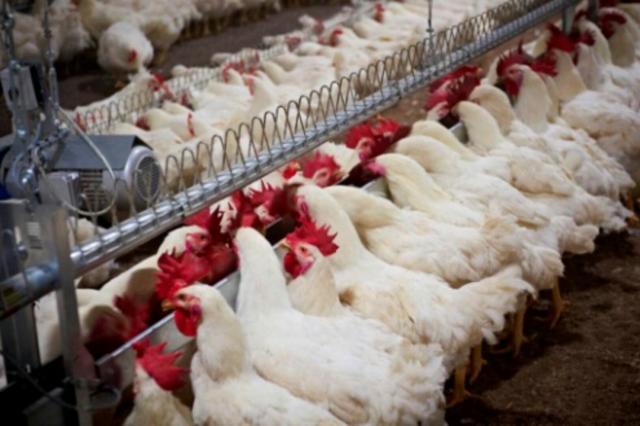
7. The broiler farming cycle is short. Once disease occurs, it must be quickly controlled, otherwise there will not be enough time to recover before sale. This requires us to focus on prevention. In management, we should pay attention to checking and adjusting the chicken house temperature, humidity, and air quality environmental conditions, and eliminate stress caused by improper management. Broiler epidemic prevention work must be in place, and the vaccination program must be formulated to suit local epidemiological investigations. The prevention of coccidiosis in broiler chickens must start with management, strictly control humidity, and during the disease onset period, check and clean feces every day. Now cage-free floor rearing is generally used, which can achieve this. This is only to eliminate the environmental conditions for the development of coccidial oocysts.
8. Broiler chickens grow fast and have a short raising cycle. The feed must have relatively high energy and protein, and the requirements for trace components such as vitamins and minerals are quite strict. When energy and protein are insufficient, growth is slow and feed utilization is low. When trace substances are insufficient, various metabolic disorder symptoms appear. The protein content for broiler chickens should be above 23% in the early stage, and 21% is optimal in the later stage.
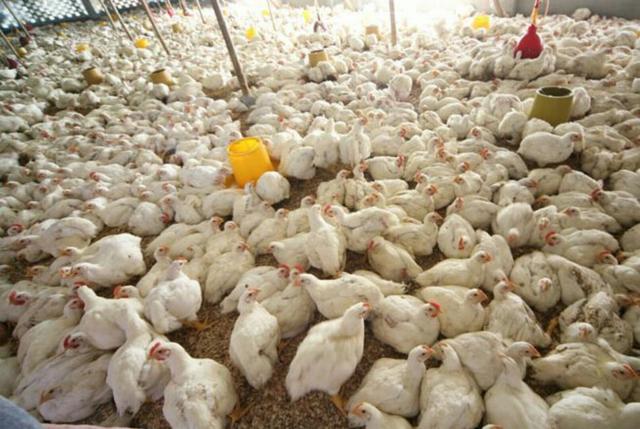
9. Broiler chicks generally eat freely, and feed should be added no fewer than four times per day. Frequent feeding can stimulate the chickens' appetite and increase feed intake. Each feeding should not exceed one third of the trough. If it exceeds that, hooking of feed easily occurs, which easily wastes feed and increases farming costs.
10. Fresh and clean water is an important condition for ensuring the growth and development of broiler chickens. Generally, water intake is 3 times the feed intake. In summer, it is even higher. High-quality water can help reduce the occurrence of E. coli and intestinal diseases, support healthy growth, and help maintain flock uniformity.