How to Achieve High Yields in Rice-Field Crayfish Farming? A Full Breakdown of the Key Techniques
I. Removing Silt and Disinfecting in Winter and Spring
Due to the characteristics of crayfish living habits, they generally prefer water environments with good water quality and abundant dissolved oxygen, and in the water environment, silt needs to be kept to a minimum. If a large amount of silt is present, it will not only cause oxygen deprivation in crayfish, but also lead to crayfish not feeding due to excess organic matter, affecting their survival. In addition, a poor water environment will also cause more harmful gases such as biogas in their living environment, which in severe cases can lead to crayfish poisoning. If the silt harbors a large amount of pathogens, it is also harmful to the health of crayfish. Therefore, in order to ensure the normal survival and reproduction of crayfish, it is necessary to regularly clean the water environment in which they live. In particular, during winter and spring, the rice field needs to be desilted and dried to reduce pathogens in the water, and quicklime also needs to be used for disinfection to reduce the probability of crayfish diseases.
II. Rice Field Modification and Reinforcement of Field Ridges
The survival habits of crayfish generally involve burrowing in both winter and summer, so in the process of building infrastructure for rice-field farming, the quality of the rice field ridges must be ensured. The most basic ridge construction should be required to be sturdy, not greatly affected by the external environment, and also prevented from being washed away by heavy rain. Generally, a ridge height of about 1 m and a width of about 0.8 m is sufficient. In addition, the base of the ridge should also be widened to about 1.5 m. The upper part and both sides of the ridge must be fully compacted to keep the overall surface level.
Also note that each year's rice field cultivation must ensure that some crayfish that have not been completely harvested are not harmed.
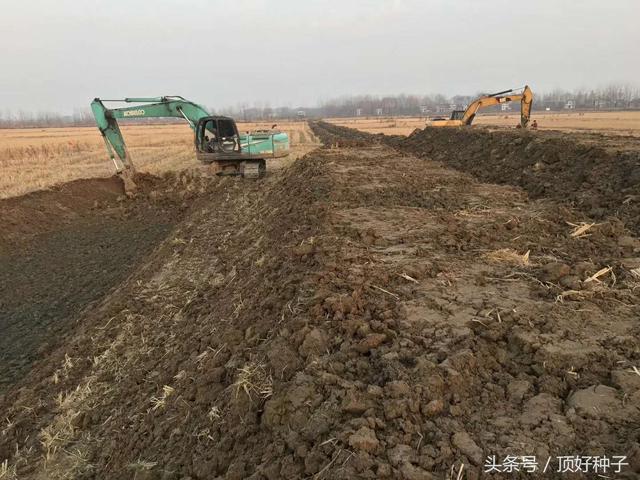
Rice Field Modification
III. Feeding in Fixed Quantities, at Fixed Times, with Fixed Quality, and at Fixed Points
Because crayfish have the habits of being voracious and competing for food, and also like to come out at night to forage, feed can be given at the shallow water areas along the pond edge, with feeding once each morning and evening every day. The amount of bait put in the morning is relatively small, accounting for only 30% to 40% of the whole day's feeding amount; the amount of bait put in the evening is relatively large, accounting for 60% to 70% of the whole day's feeding amount. It is worth noting that crayfish do not have good swimming ability and can often only move within a relatively small range, so it is essential to achieve feeding in fixed quantities, at fixed times, with fixed quality, and at fixed points.
IV. Pay Attention to Water Quality
It is essential to pay attention to the cleanliness of the water quality in the pond, and ensure that the pond water appears tea-brown or mung-bean green. The frequency of changing the pond water should be controlled at 15 to 20 d/time. If it is a hot summer, then the frequency of changing the pond water can be faster, controlled at 5 to 7 d/time, ensuring that the dissolved oxygen content of the pond water is higher than 4 mg/L and the pH value is controlled at 7 to 9. Each time, 20% to 30% of the water in the pond should be replaced.
V. Regular Water Quality Disinfection
Regularly splash disinfectant or quicklime over the whole pond; in the middle and late stages of crayfish farming, each month it is also necessary to use 40 to 60 g/m3 of substrate improver + 5 to 6 g/m3 of photosynthetic bacteria to disinfect the pond.

Crayfish