A detailed explanation of the various filtration equipment used in koi farming
A complete aquarium needs life-support systems for aquatic animals and plants, mainly including a filtration system, lighting system, temperature control system, and aeration system. Disinfection system, etc. Among them, the most important and most complex in structure is the filtration system. This is also the most costly and indispensable core part of the aquarium. Harmful substances in the breeding water, including fish metabolic waste, leftover bait, etc., must all be filtered out by the filtration system. Only when an aquarium has a complete filtration system can it maintain a good water quality environment.
There are mainly two filtration methods in an aquarium: biological filtration and mechanical filtration. Biological filtration mainly refers to a filtration system in which anaerobic bacteria that do not depend on oxygen and aerobic bacteria that depend on oxygen are cultured in a biological circulation filtration system, using oxidation-decomposition and reduction-decomposition to bring the breeding water quality up to breeding standards. Mechanical filtration mainly refers to the use of submersible pumps, pipeline pumps, filter pumps, etc. as the driving force for water to separate the tiny suspended substances in the aquarium from the circulating water.
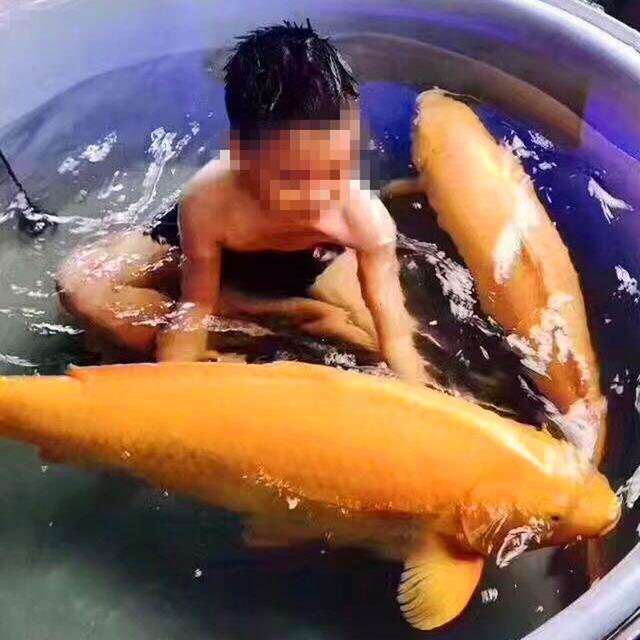
Golden Koi
According to the position of the aquarium filtration system in the aquarium, it is usually divided into external filtration systems and internal filtration systems. The former is mostly used for medium and large aquariums; the latter is generally used for small aquariums. According to the needs of the aquarium, it can be placed in any position of the aquarium. External filtration systems can be further divided according to different positions installed in the aquarium into above-tank filter boxes and below-tank filter boxes, side filter boxes, etc. When talking about an aquarium's filtration system, one naturally cannot do without filter materials. At present, commonly used filter materials include filter cotton, activated carbon, sand and gravel, biological filter balls, etc.
Filter cotton is usually a synthetic material, such as sponge, loose cotton, etc. It is stable in nature and has the function of filtering out large particulate substances such as leftover bait and feces.
Activated carbon is a filter material with an acid-base neutralization function. Its greatest advantage is that it can make the pH of the breeding water tend toward neutral, preventingKoifish from acid poisoning or alkaline poisoning. At the same time, activated carbon can also effectively remove bubbles and small-molecule compounds in the aquarium. Similar to filter cotton, it can remove many pollutants that filter cotton cannot remove. In view of the many advantages of activated carbon, it has become the most commonly used and most important filter material in aquarium breeding.
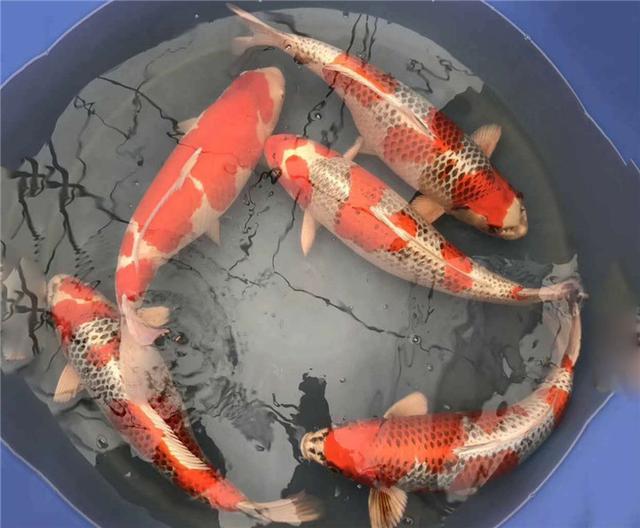
Peacock Koi
Sand and gravel is also an effective filter material. Its nature is also relatively stable, mainly including large-particle stream sand and quartz sand, etc.
Biological filter balls are a filter material made of high-grade plastic. They are spherical, usually 2-3 cm in diameter, and have many holes inside the ball. The surface area is usually 2 sq m. They have the function of storing oxygen and cultivating a large amount of nitrifying bacteria. This kind of filter material is mostly used in trickle filters.
Because koi are relatively large in body size and consume a large amount of oxygen, living in the limited space of an aquarium, a good aeration system must be installed to improve the living environment. Otherwise, it will lead to water quality deterioration and worsening, causing koi to "gasp at the surface" due to lack of oxygen, or even die.