How to Grow a Jade Plant? Detailed Guide to Cultivation Methods and Precautions
The jade plant, botanically known as Portulacaria afra, is an evergreen succulent. Its leaves are small but glossy and shiny, fleshy, and very attractive. Succulent plants are always appealing, so do you knowhow to grow a jade plant? Today we will introducethe cultivation methods and precautions for the jade plant。How to Grow a Jade Plant
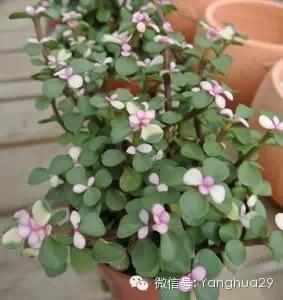
To know how to grow a jade plant, you first need to understand its growth habits. The jade plant is native to South Africa and prefers a sunny, warm, dry environment. It tolerates drought and partial shade, but not waterlogging. Although the jade plant can grow in shady spots, its leaves will become larger, thinner, and lose their gloss, and the distance between stem nodes will increase, which affects its ornamental value.
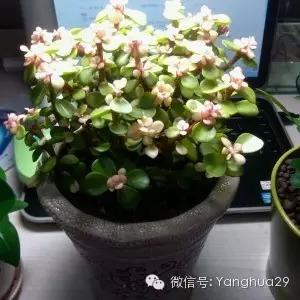
How to Grow a Jade Plant
The jade plant grows best in sandy soil of medium fertility with good drainage and aeration. During the growing season, water according to the principle of "don't water until dry, and water thoroughly when you do," avoiding water accumulation in the pot. In winter, the temperature is best kept above 10°C; at around 5°C the plant will not die, but a large number of leaves will drop.
Cultivation Methods for the Jade Plant
Soil:The jade plant likes loose, fertile, well-draining sandy soil. You can use a potting mix of leaf mold and garden soil, then add an appropriate amount of river sand to improve soil aeration and help with drainage.
Temperature:The jade plant likes a warm, dry, and sunny environment and tolerates partial shade. Its most suitable growing temperature is 15-25°C. The jade plant is not cold-hardy, so it needs protection from freezing in winter; the overwintering temperature should be above 10°C, and below 5°C it is prone to cold damage. In summer, provide shade to prevent scorching from the blazing sun.
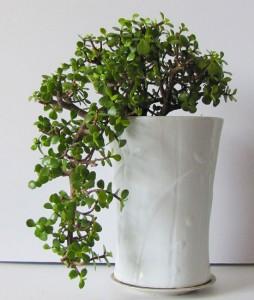
Cultivation Methods for the Jade Plant
Light:Although the jade plant likes ample sunlight, it needs appropriate shading during the high temperatures of summer to prevent scorching from the blazing sun, and ventilation should also be ensured. In winter, move the jade plant to a sunny spot indoors to keep its leaves green and fresh. If the jade plant is kept in insufficient light for a long time, the distance between its stem nodes will increase and its leaves will become larger, thinner, and lose their gloss.
Watering:From spring to autumn is the growing season for the jade plant, and it can be watered moderately, but no water should accumulate in the pot. In the hot summer, you can spray water around the jade plant to increase air humidity. In winter, watering should be controlled to keep the potting soil slightly dry. Note that watering the jade plant should follow the principle of "don't water until dry, and water thoroughly when you do."
Fertilizing:During the growing season, the jade plant needs a dilute liquid fertilizer made from decomposed cake fertilizer or a dilute fertilizer solution mainly based on nitrogen fertilizer once every half month. If the jade plant grows too weakly, add a liquid fertilizer containing potassium. Fertilizing the jade plant should be light and dilute, never thick or concentrated. Stop fertilizing in winter.
Repotting:The jade plant can be repotted once every two years in spring, and part of the root system should be trimmed, with 1/2 to 1/3 of the old soil removed, then replanted with fresh potting soil.
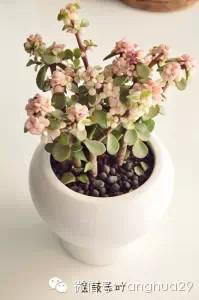
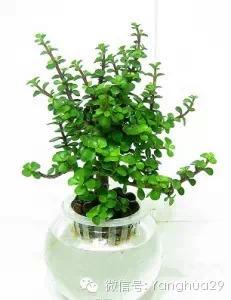
Jade Plant Pictures
Pruning:The jade plant has strong sprouting ability and should be pruned and its buds pinched regularly to keep the tree shape beautiful. Also, when repotting the jade plant, you can do a heavy pruning, cutting off weak branches and other branches that affect the tree shape, and trim part of the root system, then replant.
Pests and Diseases:The jade plant is prone to anthracnose damage, which can be controlled by spraying with a 1500-fold dilution of 50% thiophanate wettable powder. Pests include whiteflies and scale insects, which can be killed by spraying with a 1000-fold dilution of 50% fenitrothion emulsifiable concentrate.
Precautions for Growing the Jade Plant
1. Scatter a few soybeans in the soil where the jade plant is grown; this can improve the soil and also release nitrogen fertilizer.
2. Remember never to keep the jade plant indoors for a long time. It is best if the potting soil is mixed with things like sawdust or decomposed charcoal.
Precautions for Growing the Jade Plant
3. When watering the jade plant, observe and keep records carefully; its root system is fleshy, and too much water makes it rot easily.
4. In winter, keep the room temperature for the jade plant no lower than 10°C so it can overwinter safely; at around 5°C, the jade plant's leaves will drop in large numbers.
5. The jade plant likes ample sunlight, so you can let it bask in the sun more, but the sunlight must not be too intense; about three hours a day is enough.
Propagation Methods for the Jade Plant
The jade plant is generally propagated by cuttings, which can be done in all four seasons, though spring and autumn are preferable, as rooting is fast and the survival rate is high. The cuttings should be 8-12 cm long; place them in a cool, ventilated place to dry for 1-2 days until the cut surface is slightly dry, then insert them into a propagation sand bed. You can also use the main stem and leaves, let them dry slightly, and insert them into a sand bed; with suitable temperature and humidity, they will root in about half a month.
Propagation Methods for the Jade Plant
-----------------------------
Gardening Knowledge
WeChat: yanghua29
Gardening knowledge, questions and answers, solving your gardening problems!