A comprehensive sharing of key points on mealworm breeding techniques
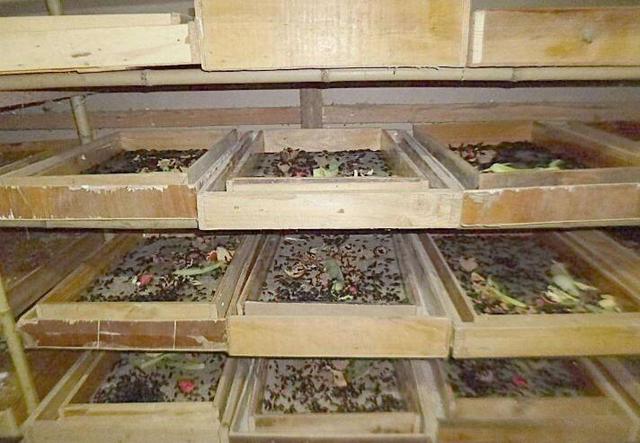
Mealworms are holometabolous insects, meaning they undergo four stages: adult, egg, larva and pupa. The adult has an elongated, flattened body, 1.4-1.8 cm long, dark brown with a metallic sheen; the head is of the prognathous type, and the sides of the clypeus do not extend beyond the base of the antennae. During eclosion the head, thorax and legs of the adult are pale brown, while the abdomen and elytra are milky white; at first the body is tender and the insect is reluctant to move, but after 2-3 days the color darkens, the elytra harden, and it becomes agile though unable to fly, crawling rather quickly. After careful rearing, the adult colony mates and lays eggs. Each time an adult lays 2-4 eggs, and each female lays about 300-600 eggs, scattered on the screen mesh at the bottom of the feed; the adult stage
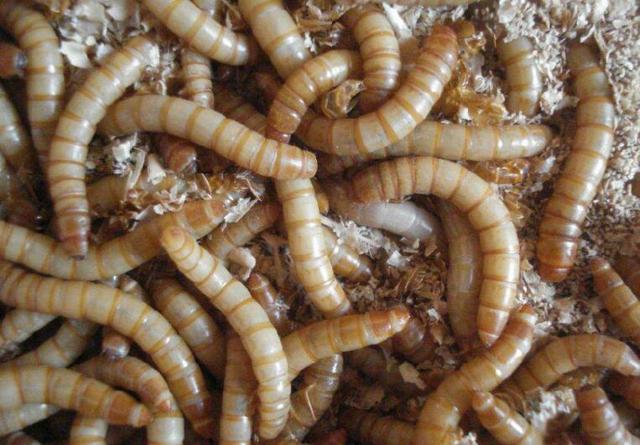
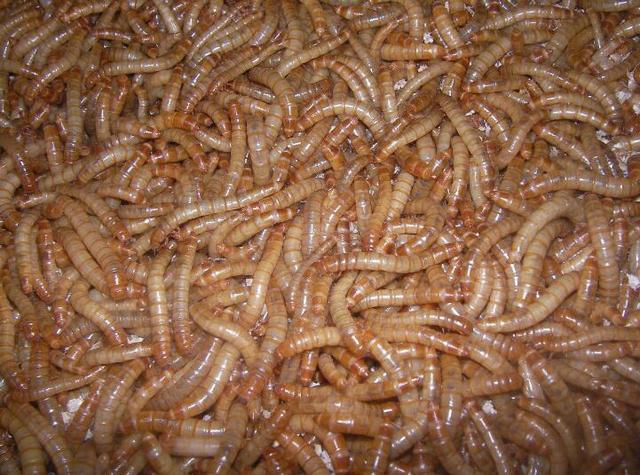
Larva: its appearance closely resembles wireworms and false wire beetles, with a slender body and a distinct clypeus, that is, a clear suture between the labrum and the frons, and it is phytophagous. The newly hatched larva is milky white and about 2 mm long; it then molts, and each molt constitutes one instar. It turns brownish yellow; the fully grown larva is 20-30 mm long, with distinct body segments, 3 pairs of thoracic legs, and a pair of tail projections on the 9th abdominal segment. A large larva is 3-3.5 mm wide and weighs 0.13-0.24 g. At the final molt it pupates at the surface of the feed. The larval stage lasts about 50-70 days.
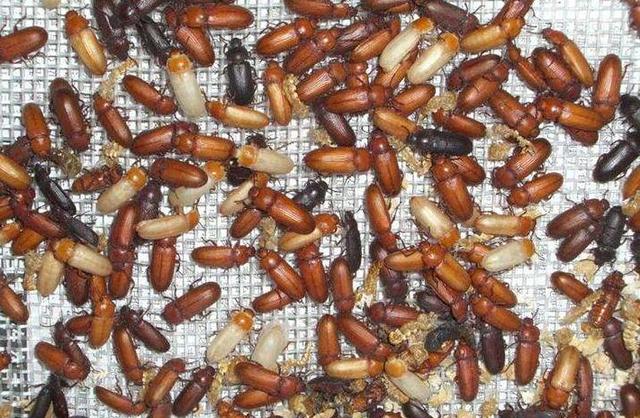
Pupa: the pupa just formed from the fully grown larva is milky white, with a soft body surface, very tender. Afterwards the body color turns grayish white and the body surface hardens somewhat; it is a typical naked pupa. The pupa is 15-20 mm long, about 3 mm wide, and weighs about 0.15-0.25 g each. There is a pale longitudinal stripe down the middle of the back, and the mouthparts are black. The sides of the abdomen bear papillary processes (in the male pupa the papillary processes are inconspicuous, with the base fused and the tip directed rearward; in the female pupa they are conspicuous, with a flattened tip, slightly keratinized, forked and markedly curved outward). The thoracic segments are large, with rudimentary wings and appendages on the sides; the head segment is also large, with a pair of black eye spots.
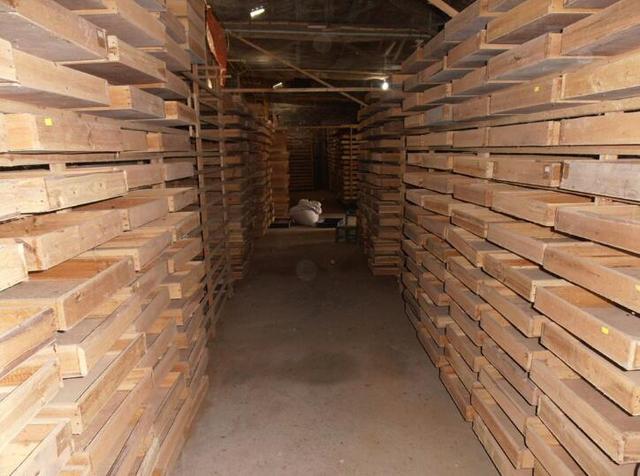
Each time an adult lays 2-4 eggs, and each female lays about 300-600 eggs, scattered beneath the screen mesh at the bottom of the feed. The adult stage lasts about 30-90 days; the adult resembles a firefly, with a body 10-18 mm long and 4-6 mm wide. The body weighs 0.1-0.2 g each and is divided into three parts - head, thorax and abdomen - with 13 segments in total. The head is 1 segment, with a pair of antennae whose terminal 2-3 segments are enlarged and club-shaped; the mouthparts are located on the lower side of the head. The head is small and partly sunken into the prothorax, and bears a pair of black mandibles and chewing mouthparts. The thorax has 3 segments; there is no obvious boundary between the pronotum and the pleuron, which are largely fused, and the prothoracic pleurosternal suture is distinct.
Egg: extremely small, milky white, elongated oval, 0.7-1.2 mm in long diameter and about 0.3-0.8 mm in short diameter. The outer surface of the egg is the eggshell, the inner layer is the vitelline membrane, and inside it is filled with milky white egg contents. The egg stage lasts 8-10 days. At 25°C-32°C the adults lay the most eggs, and of the highest quality; below 15°C they rarely mate or lay eggs, and below 10°C they do not mate or lay eggs.