Muzi Bingfa's Secret Guide to Health Preservation with Flowers and Plants from the Huangdi Neijing
Maintaining good health and preventing disease is a shared aspiration of humankind. Our ancestors recognized this issue very early on. According to relevant records, people in the era of Tang Yao already knew how to use dance to prevent joint diseases. In the works of the various schools of the pre-Qin period, such as the Laozi, the Zhuangzi, and the Lushi Chunqiu, there are many discussions of theories and methods of health preservation. However, systematic and complete academic thought and theoretical systems of health preservation should begin with the earliest traditional Chinese medical classic, the Huangdi Neijing (abbreviated as the Neijing). The Huangdi Neijing not only comprehensively and profoundly discusses the thoughts, theories, principles, and methods of health preservation and disease prevention, but also places health preservation and disease prevention in the foremost position. The idea of focusing on health preservation and healthcare, with disease prevention being more important than treatment, runs throughout the entire Huangdi Neijing.
After many years of research on the Huangdi Neijing and in combination with the characteristics of contemporary life, Muzi Bingfa believes that one of the secrets of health preservation is not to make oneself overly fatigued. When the human body is overly fatigued, yang qi becomes excessively exuberant, and yin essence will gradually be consumed. If this happens repeatedly, then yang becomes ever more abundant and yin ever more deficient; yin and yang lose their balance, and the person will fall ill.
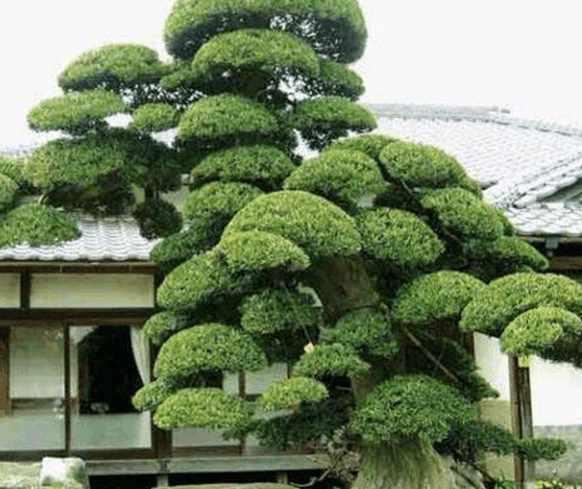
One secret of health preservation is not to become angry
When a person is in a great rage, yang qi surges upward, and blood follows the qi upward and accumulates in the upper half of the body, becoming blocked from the rest of the body. Thus, imperceptibly, negative pressure is added to the heart, small intestine, and face. Over time, this can lead to physical illness and thereby endanger physical and mental health.
Muzi Bingfa's Secret Guide to Health Preservation with Flowers and Plants: Methods of Resolution
Choose plants whose Five Elements attribute is water, such as glossy privet (Ligustrum lucidum), Fujian tea (Carmona retusa), Buddhist pine (Podocarpus macrophyllus), broadleaf lady palm (Rhapis excelsa), staghorn fern (Platycerium), and dragon juniper (Juniperus chinensis), and place them on the north side of the home or workspace, thereby transforming the upward surging force of yang qi and preventing blood from following the qi upward and accumulating in the upper half of the body. If at home, one may also accompany this with music in the "yu" tone (that is, music containing the "La" note) as guidance, so that blood and qi can flow more smoothly to all parts of the body and the body can be in its best state of health.
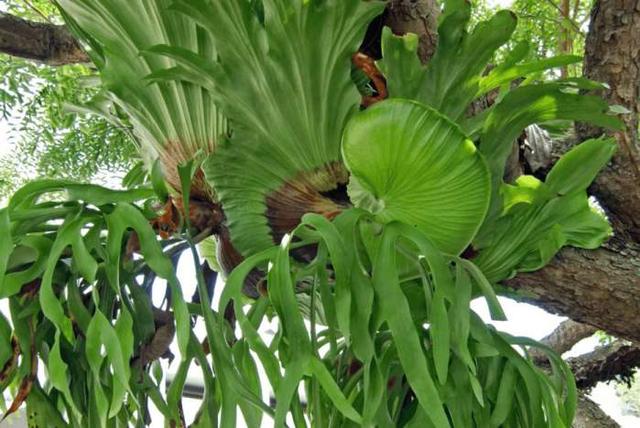
Muzi Bingfa's Secret Guide to Seasonal Health Preservation
When pathogenic qi harms people in spring, illness is mostly in the head; when pathogenic qi harms people in summer, illness is mostly in the heart; when pathogenic qi harms people in autumn, illness is mostly in the shoulders and back; when pathogenic qi harms people in winter, illness is mostly in the limbs. In treating disease in spring, one mostly selects the luo-connecting points of the various meridians; in treating disease in summer, one mostly selects the shu-stream points of the various meridians; in treating disease in autumn, one mostly selects the he-sea points of the six fu organs; in treating disease in winter, one should mostly use medicines and use acupuncture sparingly. If there is coughing in autumn, it is because the lungs have been affected by external pathogenic qi. If there is coughing in other seasons, then it is a condition transmitted to the lungs from the various zang organs. In spring the liver is first affected by pathogenic qi, in summer the heart is first affected, in autumn the lungs are first affected, and in winter the kidneys are first affected.
Muzi Bingfa's Secret Guide to Seasonal Health Preservation with Flowers and Plants: Methods of Resolution
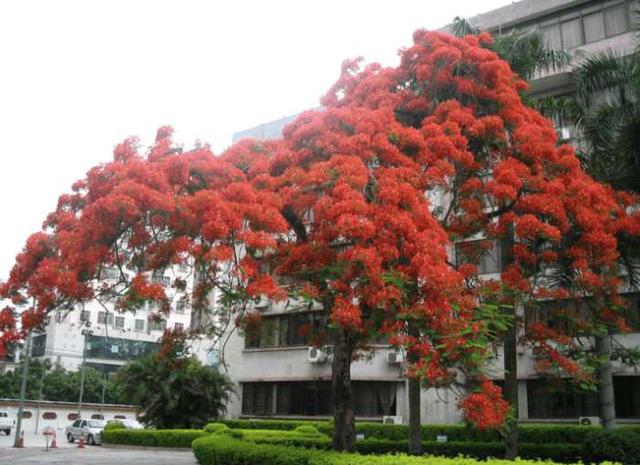
In spring, choose plants whose Five Elements attribute is fire, such as flame tree (Delonix regia), African tulip tree (Spathodea campanulata), and peach trees, and place them on the south side of the home or workspace, thereby resisting the harmful effects of spring pathogenic qi on the body.
In summer, choose plants whose Five Elements attribute is water, such as Chinese evergreen (Aglaonema), sapodilla (Manilkara zapota), and water lily (Nymphaea), and place them on the north side of the home or workspace, thereby resisting the harmful effects of summer pathogenic qi on the body.
In autumn, choose plants whose Five Elements attribute is earth, such as Buddha belly bamboo (Bambusa ventricosa), yellow chrysanthemum, and banana shrub (Michelia figo), and place them on the northeast or southwest side of the home or workspace, thereby resisting the harmful effects of autumn pathogenic qi on the body.
In winter, choose plants whose Five Elements attribute is wood, such as southern magnolia (Magnolia grandiflora), orange trees, and ginkgo (Ginkgo biloba), and place them on the east or southeast side of the home or workspace, thereby resisting the harmful effects of summer pathogenic qi on the body.
The yin and yang of the human body are in relative balance
If yin qi is too abundant, then yang qi is damaged and illness results; if yang qi is too abundant, then yin qi is consumed and illness results. Excessive yang qi manifests as heat-type diseases, and excessive yin qi manifests as cold-type diseases. For a person whose yang qi is too deficient, the most dangerous time is midnight, when yin qi is at its most abundant; for a person whose yin qi is too deficient, the most dangerous time is noon, when yang qi is at its most abundant; for a disease of intermingled cold and heat, the most dangerous time is early morning, when yin and yang intersect.
When yang qi is too abundant, the most direct manifestations in the human body are generally lips as red as cinnabar, dry and painful throat, and inflamed eyes; when yin qi is too abundant, the most direct manifestations in the human body are generally pale lips (not ruddy in color), blocked nasal passages, a tendency to break out in cold sweat, and a pale red tongue color.
Muzi Bingfa's Secret Guide to Health Preservation with Flowers and Plants: Methods of Resolution
When yang qi is too abundant, one should choose plants whose Five Elements attribute is metal or water, such as metal-attribute spider plant (Chlorophytum comosum), white chrysanthemum, narcissus (Narcissus), and jasmine (Jasminum sambac), and water-attribute clivia (Clivia miniata), bayberry (Myrica rubra), and Syzygium hainanense, and place them on the northwest side (metal attribute) or north side (water attribute) of the home or workspace, thereby reducing or resolving excessive yang qi. If at home, one may also accompany this with music in the "shang" tone (that is, music containing the "Ruai" note) as guidance.
When yin qi is too abundant, one should choose plants whose Five Elements attribute is fire or wood, such as wood-attribute lucky bamboo (Dracaena sanderiana), jilucha, and Kadsura japonica, and fire-attribute red chrysanthemum, wisteria (Wisteria sinensis), and plum (Prunus mume), and place them on the east side, southeast side (wood attribute), or south side (fire attribute) of the home or workspace, thereby reducing or resolving excessive yin qi. If at home, one may also accompany this with music in the "jue" tone (that is, music containing the "Mi" note) as guidance, thereby bringing the body's yin and yang into balance.
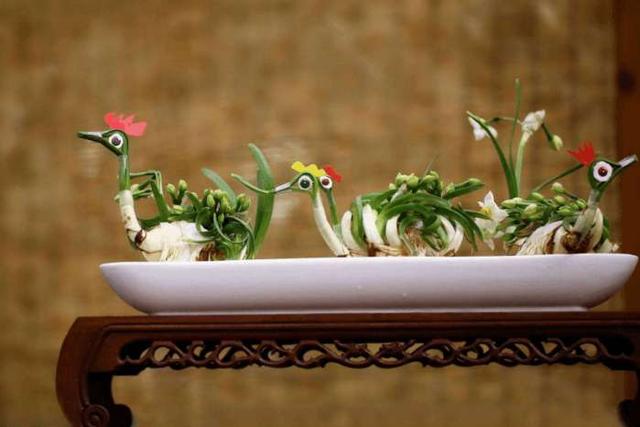
The joints are where pathogenic qi resides
The human body has 12 major joints throughout, and 354 minor joints and bone seams. When the human body is ill, these are the places where pathogenic qi resides. Therefore, in general treatment of disease, one may use methods such as acupuncture, gua sha, and cupping at these places to expel pathogenic qi. In bone disease, the pain is in the joints, and the disease is in the cartilage.
Muzi Bingfa's Secret Guide to Health Preservation with Flowers and Plants: Methods of Resolution: use the "fire generates earth" layout method, such as arranging lychee, plum, and red crape myrtle (Lagerstroemia indica) plants, or use red garden and yellow garden layout methods belonging to fire and earth, such as arranging plants like orange osmanthus (Osmanthus fragrans), red flowered Bauhinia (Bauhinia blakeana), golden osmanthus, Buddha belly bamboo, and golden stripe bamboo (Bambusa vulgaris 'Vittata').
The yang qi of the human body governs protection on the outside, and yin qi governs nourishment on the inside
Whenever unfavorable weather harms a person, the external yang qi is the first to be affected by pathogenic qi; whenever diet and daily living are disrupted, the internal yin qi is the first to be damaged. Yang is located on the exterior of the human body and is the body's externally pivotal "protective umbrella," at all times resisting the invasion of external pathogenic qi for the body; yin qi is located in the interior of the human body, guarding and directing the environmental operations of most of the body's life, with a responsibility heavier than Mount Tai, at all times carefully regulating the body's internal coordination and balance, and serving as another important line of defense for the body against pathogenic qi after yang qi.
Muzi Bingfa's Secret Guide to Health Preservation with Flowers and Plants: Methods of Resolution
Choose yang-type plants, such as Norfolk Island pine (Araucaria heterophylla), six-angled cactus, and green monthly rose, and place them on the south or southeast side of the home or workspace (the plants are required to be in sunlight, with an illuminance of 1,800 lux); choose yin-type plants, such as broadleaf lady palm (Rhapis excelsa), sago palm (Cycas revoluta), night-blooming jasmine (Cestrum nocturnum), and inch plant (Tradescantia zebrina), and place them on the north or northeast side of the home or workspace. In this way, a layout of balanced yin and yang is formed, which is beneficial to the body's physical health.