The most complete orchid appreciation guide: see which orchid is the most beautiful
Orchids have no striking gaudy show, no enormous flowers or leaves, only a quiet, plain and elegant temperament. Their beauty lies in form and spirit. Nowadays many people are crazy about orchids, obsessed and enchanted. They are not only a spiritual pursuit but have also become a commodity for market investment. Now let us take a look at the true faces of various orchids!
Cymbidium ensifolium
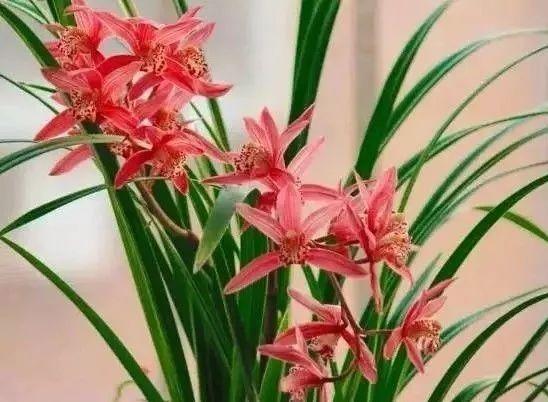
Cymbidium ensifolium generally grows on the mountainside and valley walls of deep mountains and secluded valleys, on sloping hillsides or in rock crevices with good water permeability and water retention, beside sparse mountain grass, and in the shade of secondary mixed woods. Its flowers bloom in midsummer, and the cool breeze brings wafts of delicate fragrance, making one feel especially serene.
Cymbidium sinense
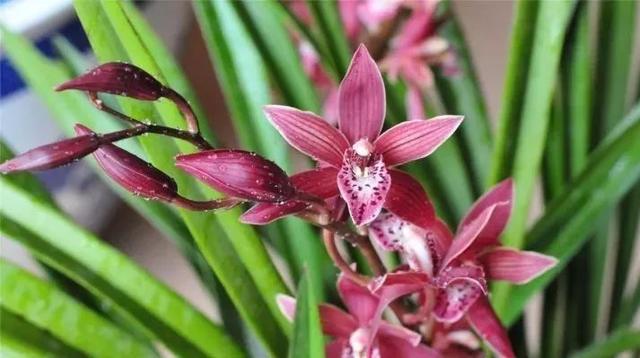
Cymbidium sinense, also called the New Year orchid, is a famous precious potted flower with a distinctive style and drifting delicate fragrance. When not in bloom, its leaves are graceful and remain green through all four seasons, earning it the reputation of "watching the leaves is better than watching the flowers." When it blooms, the flowers are delicate and refined, the colors quietly elegant, and the delicate fragrance overflows, worth savoring.
Cymbidium kanran
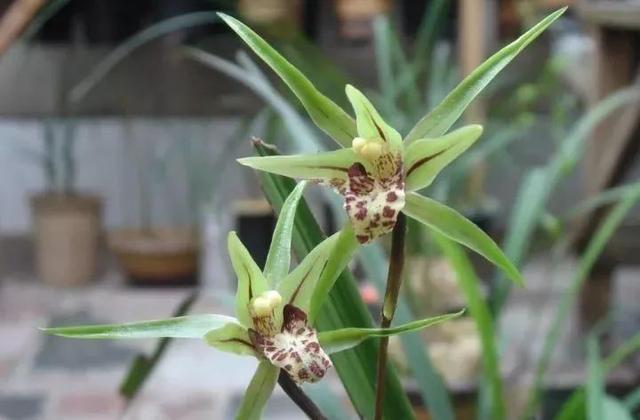
Cymbidium kanran rarely produces flowers with petal forms in nature. Its greatest feature is that it is slender overall, fitting today's aesthetic taste that admires a tall and slender figure. Its appreciation must be judged by whether the floral fragrance is delicate and elegant or rich and strong.
Cymbidium faberi
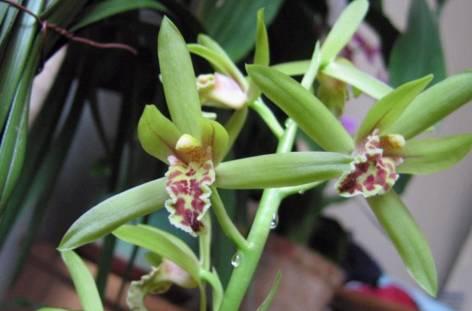
Cymbidium faberi is now a second-class key protected plant on the shelves. In the Qing Dynasty and the Republic of China period, it was already introduced to Japan and South Korea. Especially in the 1930s and 1940s, Japanese people collected large quantities of Chinese Cymbidium faberi and sold them to Japan for cultivation. In China, due to years of war and, after the founding of the People's Republic, two or three man-made devastations over several decades, by the end of the last century, as the country prospered and orchids flourished and a wave of orchid enthusiasm emerged domestically, some traditional varieties of Cymbidium faberi could no longer be found in mainland China and had to be sold back from Japan. The development history of Cymbidium faberi also reflects the history of rise and fall of the nation from one side.
Song Mei
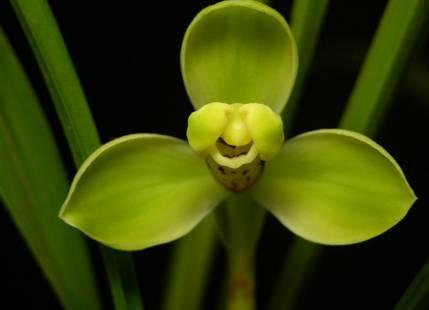
It is said to have been selected during the Qianlong period of the Qing Dynasty. Its flowers are of the plum-petal type, and each petal is relatively round; sometimes it can produce narcissus petals in the shape of a lotus flower. Song Mei is a variety of Cymbidium goeringii and is listed among the four great famous varieties of Cymbidium goeringii.
Duan Mei
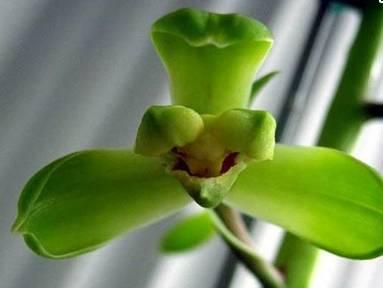
The flower shape is upright and proper, and the flower color is emerald green. Very few are currently in circulation, and people often pass off "Cui Mei" or "Duan Hui Mei" as it.
Cymbidium lowianum
The flower is just as its name suggests, a modest beauty, with yellow-green petals and a dot of red at the center of the petals. It is distributed in China, Myanmar and Thailand. It has relatively high horticultural value.
Cymbidium insigne
It mainly grows on moist thickets of weeds or on rocks. Its light pink petals, together with its deep purple flower center, are especially dazzling in that environment.
Dendrobium
It is both medicine and flower, and likes to grow in warm, humid, half-shade and half-sun environments. Because of its peaceful and amiable temperament, Dendrobium is also praised as the flower of fathers.
Phalaenopsis
It is named because its flower shape resembles a butterfly. Its flower posture is graceful and its colors are gorgeous. It is a treasure among tropical orchids and has the reputation of "queen of orchids."
Anguloa
Like a baby sleeping in swaddling clothes, could you have imagined it was an orchid if I had not told you?
Caleana major
From the side, the flowers look exactly like little ducks flying up into the air, very vivid. Hence the name flying duck orchid.
Peristeria elata
Also known as the Holy Spirit orchid, it is the national flower of Panama. Because it has a faint delicate fragrance when blooming, and the column and lip inside the flower are closely pressed together, looking like a white dove sitting inside, it gained this beautiful name.
Gladiolus
Native to South Africa, it has rich flower colors, including yellow, red, purple, blue, etc. It is currently an important cut flower and can be used in flower baskets, bouquets, vase arrangements, etc. Together with cut roses, carnations and gerbera, it is praised as one of the "four great cut flowers of the world."
Grammatophyllum scriptum
The leopard orchid blooms from March to May each year. It is native to Taiwan, China, and often grows in low-altitude mountain forests. Nowadays it is also cultivated in Japan and the Philippines. It is a very rare orchid variety.
Cymbidium tortisepalum
Its form is graceful, its flower shape varied, and its flower colors rich. It is deeply loved by people in China, Japan, South Korea and Southeast Asian countries. The petals of this orchid are elliptical and strip-shaped, very much like the petals of a blooming lotus root. In folk usage, the flower is used as a metaphor for another flower, and it was named "lotus-petal orchid."
Magnolia denudata
In ancient times it was mostly planted in front of pavilions, terraces, buildings and towers. Now it is mostly seen in gardens and factory and mining areas as solitary plantings, scattered plantings, or as street trees on both sides of roads. After blooming, its fragrance is pleasant. Because the plant is tall and the flowers are positioned relatively high, it sways in the wind with a spirited look, just like a heavenly maiden scattering flowers, very lovely.
Coelogyne
Spathoglottis
Cymbidium mastersii
An epiphytic orchid with a flowering period as long as October to December. It grows on trees or rocks in forests at an altitude of 1600-1800 m.
Dendrobium primulinum
Cymbidium hybridum
Coelogyne
It has a slight fragrance. This variety is also easy to identify by its appearance: the three petals are light yellow, and the flower bud in the center has light purple spots.
Suguan Hedin
Suguan Hedin is a very precious orchid with a graceful posture and extremely few in number. On the market, the selling price of one plant reaches as high as 4 million.
Phalaenopsis amabilis
Dendrobium unicum
Ghost orchid
Its flower shape is ethereal and strange, and its flower color is deathly white. Its swaying posture in the wind is like a ghost, hence the name "ghost orchid."
Pleione
Cymbidium eburneum
Oncidium
Also called the dancing lady orchid, it is an extremely beautiful orchid with great ornamental value and is one of the important orchid cut flower varieties in the world. It has brilliant yellow, and every flower is like a beautiful young girl, skirt fluttering, dancing gracefully. Its flower language is happiness without worry, implying forgetting one's troubles.
Cymbidium floribundum
It generally blooms in summer, with a flowering period of 3 to 4 months. The flowers are reddish brown and have no fragrance.
Dendrobium secundum
Calanthe tricarinata
Houlletia
Dracula simia
Rhynchostylis
Paphiopedilum tigrinum
Arachnis
Cypripedium flavum
Miltonia
Cattleya Big Shot Genting
Angraecum
Cypripedium debile
Coelogyne fimbriata
Bulbophyllum lobbii
Paphiopedilum malipoense
Dendrobium cat's-eye
Bulbophyllum medusae
Vanda
Mormodes
Aerides
Phalaenopsis stuartiana
Jellyfish orchid
Cymbidium lancifolium
Cymbidium aloifolium
Odontochilus
Brassia verrucosa
Prosthechea cochleata
With so many varieties, are your eyes dazzled? In fact, orchids are far more than these. According to incomplete statistics, there are more than 20,000 kinds of orchids in the world. I will not list them one by one here. If you love orchids and have something you want to share, you can leave us a message on the backend.~