How to grow orchids? Cultivation methods and pest and disease control
Orchids like shade and dislike direct sunlight; they like moisture and dislike dryness; they like fertile, humus-rich, well-drained, slightly acidic sandy loam. The most suitable temperature for growth is 15-30°C, and growth is poor above 35°C. Temperatures below 5°C affect their growth vigor, and at this time orchids are often in a dormant state: direct sunlight will cause leaf scorch or withering within one or two days. Therefore, there is a key orchid-growing saying: "Do not take them out in spring, do not expose them to sun in summer, do not let them dry in autumn, do not keep them wet in winter." Next, let us understand in detail how to grow orchids and the cultivation methods for orchids.
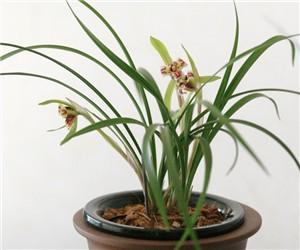
Varieties suitable for home care
① Cymbidium goeringii. Its flowers are not showy in color, but their fragrance is rich, the flowering period is long, and care is easy. ② Cymbidium faberi. Its leaves are lustrous and bright, and its flowers are elegant and strongly fragrant, with the flowering period from summer to autumn. ③ Cymbidium ensifolium. It has strong adaptability, is easy to cultivate, and has long and numerous flower scapes, with sword-like upright leaves. ④ Cymbidium hookerianum types. The plants are robust, the flowers are large and brightly colored, the flowering period is long, and management is easy. ⑤ Cymbidium sinense. Its leaves are slender, and its flower scapes reach up to 60 cm, standing upright above the leaves. Its petals have purplish-brown stripes and are very beautiful.
Orchid cultivation methods: potting
Flowerpot: For planting orchids, it is suitable to choose clay pots with relatively good air permeability. Small, tall and narrow, well-ventilated, and attractive pots are preferred. Porcelain pots or glazed pots should not be used.
What to pay attention to when potting orchids: ① Choose pots with good air permeability, such as clay pots or purple clay pots; avoid plastic pots. ② Choose loose, breathable, acidic soil. ③ At the bottom of the pot, place more broken tiles, charcoal pieces, or ceramsite to facilitate drainage and ventilation. ④ The planting depth should be such that the top end of the pseudobulb is level with the soil surface. ⑤ When planting orchid seedlings, wait until the root system becomes soft before planting. If there are wounds, apply sulfur powder to prevent pathogens. ⑥ When potting, place the seedling in the center of the pot so that the roots are evenly distributed. While filling with soil, shake the pot so that the seedling roots and soil fit closely. ⑦ After potting, water thoroughly and place in a wind-sheltered, slightly shady and humid place. Water frequently until new buds sprout, and only then can normal watering begin.
How to grow orchids: soil selection
Orchids like fertile, humus-rich, well-drained, slightly acidic sandy loam. For the growing medium for planting orchids, you can buy prepared orchid soil, or mix it yourself.
Preparation method 1: Mix leaf mold or peat soil, sandy soil, and cake fertilizer in a ratio of 6:3:1.
Preparation method 2: Mix leaf mold, compost soil, and coarse sand in a ratio of 5:3:2.
How to grow orchids: watering
Orchids prefer a relatively humid environment, and the pot soil should be kept moist, but watering should not be too much, so as to avoid water accumulation causing root rot. In spring, as the temperature continues to rise, orchids grow rapidly. At this time they need a large amount of water, so watering can be appropriately increased, once every 1-2 days.
In summer, the temperature is high, water evaporation is large, and orchids grow vigorously, so they can be watered once in the early morning and once in the evening. Never water at noon. During the rainy season, pay attention to draining the flowerpot to avoid excessive water accumulation in the pot. Water as appropriate according to how moist the pot soil is.
By late autumn, the temperature begins to drop and plant growth slows. At this time, the amount and frequency of watering can be gradually reduced, to once every 2-3 days. In winter, the temperature is low, and most orchids enter dormancy at this time. Then they can be watered once every 5-7 days, keeping the pot soil alternately dry and moist. However, Cymbidium sinense and Cymbidium kanran, which bloom in winter, can be watered more as appropriate to ensure sufficient water for their growth.
Orchid cultivation methods: fertilizing
When fertilizing orchids, apply light fertilizer and never concentrated fertilizer. Newly planted orchid plants do not need fertilizer in the first year. Wait until after Qingming in the second year to begin fertilizing, and stop fertilizing at Start of Autumn. During this period, apply fully decomposed dilute cake fertilizer water 1-2 times a month.
For older orchid plants, before flower bud differentiation, more nitrogen fertilizer can be applied to promote new bud germination and rapid growth. Before flower bud differentiation in autumn, apply liquid fertilizer based mainly on phosphorus and potassium fertilizer 2 times in succession. During the bud stage, on clear evenings, spray the plant leaves with a 0.2% monopotassium phosphate solution or apply wood ash water to the roots, which helps the flowers open healthily. About 20 days after the flowers fade, apply 2 more applications of liquid fertilizer based mainly on nitrogen fertilizer or compound fertilizer to promote plant growth.
For both new and old plants, do not fertilize on rainy days, and stop fertilizing during winter dormancy. However, Cymbidium sinense and Cymbidium kanran, which bloom in winter, can be given phosphorus and potassium fertilizer as appropriate to ensure sufficient water for their growth. Stop watering 1-2 days before fertilizing, and apply after the pot soil is slightly dry. After fertilizing, water once the next morning to prevent the fertilizer liquid from contaminating the orchid roots and causing root disease. You can also rinse the leaves to prevent the liquid fertilizer from splashing on the leaves and causing leaf disease.
Environmental requirements for orchid cultivation
Temperature: Orchids have relatively high temperature requirements, and the generally suitable growth temperature is between 20°C-30°C. In winter, the daytime temperature should be 10°C-20°C, and at night 0°C-10°C. Because varieties differ, their cold tolerance also differs. For Cymbidium sinense, Cymbidium kanran, and Cymbidium ensifolium, the minimum temperature should be above 5°C; too low a temperature affects flower bud development. Cymbidium goeringii and Cymbidium faberi require a winter temperature between 0°C-5°C; too high a temperature is unfavorable for development and flowering. In summer, when the temperature is above 30°C, orchids will stop growing. Therefore, in summer, shade and cooling are necessary.
Light: Although orchids like shaded environments, if they remain in a cool environment for a long time without sufficient light, the leaves will grow excessively, the flowers will be sparse, and pests and diseases are also likely to occur. But if the light is too strong, it will destroy the chlorophyll in the leaves, causing the leaves to turn yellow. In more severe cases, it can scorch the leaves, causing them to wither and die. In April, they can receive more sunlight to promote growth. In May, receive 6 hours of sunlight per day, but avoid midday. In June, the plant can be placed in the shade all day, or a shade net can be used to block all light.
How to grow orchids: shaping and pruning
When pruning orchids, disinfect the scissors beforehand. When old orchid leaves are found to be yellow and withered, cut them off promptly to help the plant ventilate. For some leaves with dry tips, the dry parts can be cut off; for appearance, they can be cut at a slant.
Diseased and pest-infested leaves should also be cut off promptly to prevent spread. When pruning diseased leaves, you can cut from the disease-free part. To ensure safety, after cutting diseased leaves, disinfect the scissors again. After flower buds emerge from the soil, cut off weak buds and keep strong buds. Each orchid seedling only needs 1 flower bud, so as to reduce nutrient consumption and ensure good flowering. After the flowers fade, cut off the flower scapes to avoid nutrient consumption and affecting flowering the next year.
How to grow orchids: flowering period management
If the orchid flowering period is managed well, it can not only make the orchids bloom in the current year with beautiful form and color and rich fragrance, but also lay a solid nutrient foundation for them to have vigorous stems and lush leaves the next year and bloom persistently.
Overall, the flowering period of Chinese orchids lasts a full year. It can be said that there are orchids blooming every day and delicate fragrance every month. After Cymbidium goeringii blooms, Cymbidium faberi blossoms, followed by Cymbidium ensifolium, and in winter Cymbidium kanran blooms, Cymbidium sinense blooms to herald spring, and then in early spring Cymbidium lianpan and Cymbidium goeringii var. longibracteatum bloom. Orchids bloom continuously throughout the four seasons.
Orchid cultivation methods: cold protection and overwintering
For winter orchid temperature content, you can refer to the light and temperature management section. In addition, we should emphasize the following points here:
Do not move them indoors too early, otherwise it will be unfavorable for orchid growth and may even cause them not to bloom the next year; also do not move them indoors too late, to avoid frost damage. During frost, for some cold-tolerant varieties that have not yet been moved indoors, a shade net should be set up at night to prevent frost.
If the indoor temperature is too low, you can add a layer of plastic film or cover with straw curtains to increase the temperature. In addition, the day-night temperature difference indoors should not be too large. If the temperature alternates between cold and hot, orchids are prone to disease. Pay attention to frequently ventilating orchids. But do not let them be exposed to cold wind.
When moving them outdoors in spring, generally when the minimum temperature is 20°C, Cymbidium faberi can be moved outdoors first, but to avoid frost and snow, it still needs a net covering at night. At Qingming, Cymbidium goeringii can be moved outdoors. At Grain Rain, Cymbidium kanran, Cymbidium goeringii var. longibracteatum, and Cymbidium lianpan can be moved outdoors. At Start of Summer, Cymbidium ensifolium and Cymbidium sinense can be moved outdoors. After orchids are moved outdoors, also pay attention to weather changes. Once the temperature drops, move them back indoors promptly, or take warmth measures.
Orchid propagation methods and precautions
Orchids are mainly propagated by division. Generally, most orchid varieties need to be divided once every 2-3 years. Division can be done in both spring and autumn. In spring, March-April is suitable, when the plants are still dormant. Division will not greatly affect their growth. In autumn, it can be done in October, when new roots and new buds have not yet sprouted and the stems and plants have accumulated a lot of nutrients. Division at this time is conducive to survival.
Control water two days before division, only ensuring the pot soil is moist. This can ensure the orchid roots are relatively soft and can effectively reduce root breakage during division.
For division, choose a robust mother plant. After selecting the mother plant, take the orchid plant with soil out of the pot, remove the soil around the roots, and cut off rotten roots, dead roots, and withered leaves on the plant. Then disinfect the roots, and dry them in a shady place. When the roots turn white and soft, use scissors to cut open at the pseudobulb junction (commonly called the "road"), then apply charcoal to the wound for antisepsis, and afterward repot.
Orchid pest and disease control methods
The main pests and diseases of orchids include southern blight, anthracnose, and scale insects.
Southern blight: This disease mostly occurs in the plum rain season. Pay attention to keeping the plants ventilated and exposed to light, and the pot soil should have good drainage. If infected plants are found, replace the pot soil and sprinkle pentachloronitrobenzene powder or lime for disinfection.
Anthracnose: This disease is also more common in high-temperature and rainy seasons. If infected plants are found, spray with a 50% thiophanate-methyl wettable powder 800-1500 times solution.
Scale insects: In environments with high temperature, high humidity, and poor air circulation, this pest is most likely to reproduce. It can be killed by spraying dimethoate or by manual capture or scraping.
Control tips: Mix pig bile and clean water in a ratio of 1:100, and add a small amount of laundry detergent. Spraying orchid plants with this solution can control anthracnose. Mix baijiu and water in a ratio of 1:2, spray the orchid plants, once a week for 3 consecutive times, and it can also kill scale insects. Mix vinegar and clean water in a ratio of 1:8, and evenly spray the front and back of orchid leaves, which can likewise treat scale insects.