Simple Methods for Identifying the Authenticity and Quality of Chemical Fertilizers
Author: Shengshi Dragon Fruit
Editor's note: As the saying goes, "A fine crop depends on fertilizer." In agricultural production, chemical fertilizers are essential. Using chemical fertilizers can not only improve soil fertility, but also provide the nutrients crops need, improve crop quality, and increase crop yields.
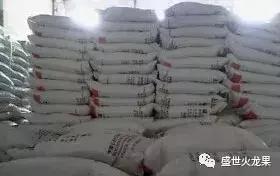
At present, there are a great many manufacturers producing chemical fertilizers on the market, and the types of chemical fertilizers are also diverse. Quite a few fake and inferior fertilizers flood the market, and cases of farmers being cheated still occur frequently. Therefore, for farmers, it is still necessary to understand some simple methods for identifying the authenticity and quality of chemical fertilizers.
So today, the editor will introduce to everyone some simple methods for identifying the authenticity and quality of chemical fertilizers!
The methods for identifying the authenticity and quality of chemical fertilizers can be summarized as "five looks, one smell, one touch."
Five looks: look at the packaging, look at the color, look at the shape, look at the solubility, look at the hygroscopicity
Look at the packaging: When buying fertilizer, first look at the fertilizer packaging. Fertilizer produced by legitimate manufacturers generally indicates the production license, registration license, execution standard, product name, manufacturer, factory address, trademark, nutrient content, net weight, etc., and its outer packaging is standard and sturdy; the outer packaging of fake and inferior fertilizers is generally relatively rough, of poor quality, easy to break and leak, and the information marked on the packaging is unclear and incomplete.
Look at the color: Different fertilizers have their own distinctive colors, and their authenticity and quality can be identified from their color. Color identification of several common chemical fertilizers: nitrogen fertilizers are almost all white (except calcium cyanamide), some slightly yellowish-brown or light blue (except those with other added ingredients); potassium fertilizers are mostly white crystals, for example, potassium dihydrogen phosphate is white, but potassium fertilizers with high potassium content are reddish-brown; phosphate fertilizers are mostly gray powder, for example, superphosphate is gray, diammonium phosphate is brown, etc.
Look at the shape: Generally, high-quality chemical fertilizers have uniform particle size, smooth surfaces, and relatively uniform granularity and specific gravity. Fake and inferior fertilizers have uneven particle size and rough surfaces.
Look at the solubility: Take 1g of chemical fertilizer, put it into a clean glass, add 10ml of clean distilled water (or cooled boiled water), shake fully, and observe its dissolution: what dissolves completely is nitrogen fertilizer or potassium fertilizer; phosphate fertilizer only partially dissolves in water or does not dissolve in water, among which superphosphate dissolves in water but leaves residue and produces a sour smell; what dissolves in water but has a strong ammonia smell is ammonium bicarbonate; what does not dissolve in water but produces bubbles and has a calcium cyanamide smell is calcium cyanamide.
Look at the hygroscopicity: In order to maintain the fertilizer efficiency of chemical fertilizers, manufacturers usually change the hygroscopicity of chemical fertilizers through a certain process during production. High-quality chemical fertilizers generally do not easily absorb moisture or clump (except after exposure to the sun, moisture, or water), while fake and inferior chemical fertilizers have more serious moisture absorption and clumping.
One smell: Simple identification by smelling the odor. For example, ammonium bicarbonate has an obvious pungent ammonia odor; ammonium sulfate has a slight sour smell; superphosphate has a sour smell; calcium cyanamide has a special fishy odor. Fake and inferior fertilizers, however, have no obvious odor or an overly irritating odor.
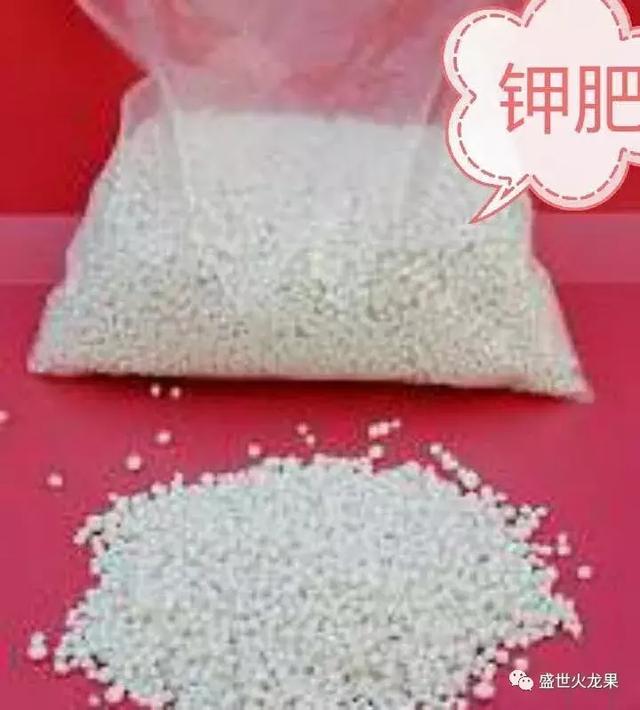
One touch: This method judges by the sense of touch of the hand, and generally only people with many years of fertilizer experience can judge accurately. Put the fertilizer in the palm of the hand, grip hard or press and rotate it, and judge the quality of the fertilizer according to the feel.
Others: burning method, chemical experiment method, etc.