What should you pay attention to when buying chemical fertilizers? Keep these points in mind
Issues to note when buying chemical fertilizers
Around the Spring Festival is the season when farmer friends buy chemical fertilizers in concentrated fashion. There are many varieties of chemical fertilizers sold on the market, and various new types of fertilizers are also coming onto the market one after another, such as slow-release fertilizers, controlled-release fertilizers, slow and controlled release fertilizers, stabilized fertilizers, urea-formaldehyde slow-release compound fertilizers, humic acid compound fertilizers, alginic acid coated urea blended fertilizers, alginic acid compound fertilizers, humic acid compound fertilizers, organic-inorganic blended fertilizers, and so on. In order to help farmer friends buy fertilizers of good quality, at a reasonable price, and to their satisfaction, farmers are reminded to pay attention to the following issues when buying chemical fertilizers:
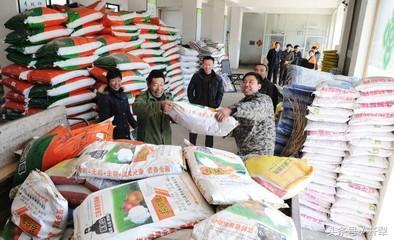
1. Choose fertilizers that performed well last year and have a high reputation
1. Buy soil-testing formula fertilizers
Farmer friends are advised to give priority to fertilizers produced by local designated soil-testing formula fertilization production enterprises or fertilizer blending stations, because formula fertilizers produced by designated formula fertilizer enterprises or blending stations are, first, prepared and produced according to local soil nutrient content and crop nutrient requirements, with strong targeting and suitability for local crops. Second, designated formula fertilizer enterprises and blending stations are enterprises with high integrity and good production equipment and processes that have passed strict checks and screening by local agricultural administrative departments. Third, formula fertilizers produced by designated formula fertilizer enterprises and blending stations have quality strictly controlled by local agricultural technology departments, with formula provision based on soil testing, crop nutrient requirements, and many years of field trial results, supervision of production, technical guidance on fertilizer use, field surveys and summaries, and full-process technical services. They are genuine in quality and price, and do not cut nutrient content.
2. Choose agricultural supply departments with fixed business premises for purchase
Buy from agricultural supply stores with fixed business premises and storefronts. Do not buy products from mobile peddlers who go from village to village. Generally, mobile fertilizer peddlers do not have legal agricultural supply dealership licenses and procedures, have low credibility and are highly deceptive, and their product quality is poor, making fake and inferior fertilizers likely. Farmers are advised to choose fertilizers from large manufacturers and well-known brands that performed well last year. Fertilizers from large manufacturers and well-known brands generally have advanced production equipment and processes, strong economic strength, and abundant technical force, and the slow and controlled release effect and actual nutrient content of the fertilizer match the labeled indicators. Be cautious about buying products sold by "hype teams" under the guise of factory direct sales. Although the price is not high, there are many tricks in nutrient content, the probability of quality problems is high, and it is difficult to defend rights. At the same time, do not easily believe products recommended by non-authoritative departments that you have not seen with your own eyes, and do not easily believe unrealistic exaggerated publicity, so as to avoid being deceived.
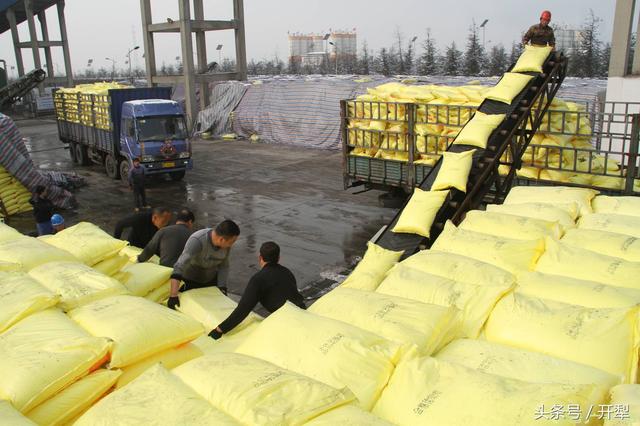
2. Rationally purchase and correctly use new types of fertilizers
With the rapid development of science and technology and technological progress in fertilizer production equipment and processes, researchers have successively developed and produced a series of new slow and controlled release fertilizers aimed at controlling and extending fertilizer efficacy and improving chemical fertilizer utilization. At present, the national and industry standards that have been issued and implemented for slow and controlled release fertilizers include: slow release fertilizer (GB/T23348-2009), slow and controlled release fertilizer (HG/T3931-2007), controlled release fertilizer (HG/T4215-2011), stabilized fertilizer (HG/T4135-2010), urea-formaldehyde slow release fertilizer (HG/T4137-2010), humic acid compound fertilizer (HG/T 5046-2016), alginic acid fertilizers (HG/T 5046-2016), etc. The promotion and application of these slow and controlled release fertilizers has extended fertilizer efficacy and improved chemical fertilizer utilization, and contributed to realizing the Ministry of Agriculture's proposal of "zero growth in chemical fertilizer use by 2020" while stabilizing grain output. The common characteristics of these new slow and controlled release fertilizers are: first, they mainly focus on nitrogen fertilizer, followed by potassium fertilizer, and adopt chemical compounding and physical action so that the available nutrients for crops are slowly (or controllably) released over time; second, the total nutrient content of nitrogen, phosphorus, and potassium in new slow and controlled release fertilizers is mostly between (45%-51%), lower than the nitrogen, phosphorus, and potassium content of ordinary blended fertilizers (52%-55%). There is no doubt that under the same content and same application amount, the fertilizer efficacy of new slow and controlled release fertilizers is definitely better than that of ordinary fertilizers, with obvious yield-increasing effects. However, some slow and controlled release fertilizer enterprises and sales personnel publicize that applying 80 jin of a certain slow and controlled release fertilizer per mu of corn is better than 100 jin of ordinary 55% blended fertilizer, and the price per ton of new slow and controlled release fertilizer is 300-500 yuan higher than that of ordinary 55% blended fertilizer. There is no lack of exaggerated publicity and the suspicion of selling high technology. Farmer friends are advised to purchase new fertilizer products rationally, and especially as to application amount, conduct small-area trials and demonstrations first, and then apply them on a large scale after success. Do not overly trust manufacturers' publicity.
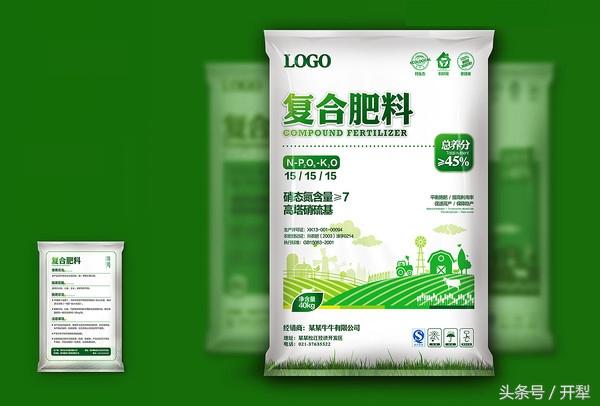
3. Check packaging labels and instructions
Checking packaging labels should include: product name, nutrient content (especially the types and content of slow and controlled release nutrients), implementation standards (slow and controlled release fertilizers generally need to mark 2 implementation standards), production license number, fertilizer registration certificate number, factory name and address, contact telephone number, and other contents; there should be labels for the content of main nutrients such as nitrogen, phosphorus, and potassium, and product instructions inside or on the back of the packaging bag. Checking the instructions should include: crops to which the product applies, applicable regions, method of use, recommended dosage, and other related contents. Inferior fertilizers have crude packaging and no trademark. For example, for a certain slow and controlled release fertilizer, the implementation standard only marks the core fertilizer standard, not the slow and controlled release fertilizer standard, and also does not mark the types of slow and controlled release nutrients or the content of slow and controlled release nutrients.
4. Pay attention to nutrient types and content
Many farmers, when buying fertilizer, often decide which type of chemical fertilizer to buy based on the price level, while asking less about weight and nutrient content, and the quality of low-price chemical fertilizers often cannot be guaranteed. Therefore, when buying fertilizer, performance, content, and other factors should be considered for comprehensive judgment. In terms of nutrients, look at both the total nutrient content and the content of pure nitrogen (N), pure phosphorus (P2O5), and pure potassium (K2O). A small number of fertilizer enterprises have chaotic fertilizer packaging labels that mislead consumers. For example, the "magnetic slow and controlled release blended fertilizer" produced by Lianyungang XXX Fertilizer Co., Ltd. marks in small characters on the front: N22+P2O510+K2O5≥37%, sulfur≥8%, amino acids 5%, humic acid≥6%, while the back marks in conspicuous large characters: compound fertilizer 25kg, 26-15-15≥56%, and in medium characters marks amino acid granules 20kg, sulfur-coated urea N≥37% 5kg. The actual total nitrogen, phosphorus, and potassium nutrient content of this fertilizer is only 37%, while buyers mistakenly believe that the total nitrogen, phosphorus, and potassium nutrient content is 56%.
5. Ask for a fertilizer purchase voucher
When buying chemical fertilizers, be sure to ask for a fertilizer purchase invoice. The fertilizer purchase voucher is an invoice or receipt, and the ticket should indicate the name, quantity, price, and other contents of the fertilizer purchased. If there is no formal invoice, also ask the dealer to provide a fertilizer purchase voucher stamped with an official seal, so as to use it as a basis for defending rights if fertilizer quality problems occur.
Source: Kaili
Author: Wang Housheng
Editor: Li Meng
If reprinted, please indicate the source