What are the harms of excessive fertilizer application?
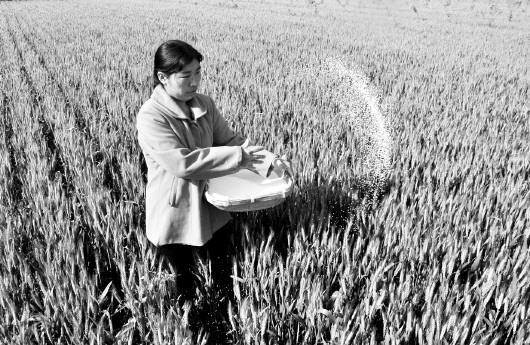
"A crop is a flower, and it all depends on fertilizer to keep it going" - this is a familiar farming proverb. However, data from sample surveys of farming households by relevant experts show that 80% of farming households in China are accustomed to fertilizing based on traditional experience, blindly adopting simple methods such as "flushing with water" and "one-shot application" without considering the characteristics of various fertilizers, and one-third of farming households nationwide apply more fertilizer than their crops need; as farmers increase their investment in farming, the phenomenon of "excessive fertilization, increased output without increased income" is becoming more and more common in rural areas.
We must attach great importance to the harms of excessive fertilization and further improve the traditional fertilization model in China's rural areas, so as to improve fertilizer use efficiency, save resources and energy, ensure national food security, protect the ecological environment, and build a new socialist countryside where people and nature live in harmony.
Harm one: Weakening crop production capacity
Crops are just like people - eating too much is not only bad for growth, but also bad for health. According to Professor Zhang Fusuo, head of the National Soil Testing and Formula Fertilization Expert Group and dean of the College of Resources and Environmental Sciences at China Agricultural University, excessive fertilization causes two main harms to crops: one is that they are prone to lodging, and once lodging occurs, it will inevitably lead to reduced grain output; the other is that they are prone to pests and diseases. Applying too much nitrogen fertilizer weakens the crops' resistance to pests and diseases, making them vulnerable to infection, which in turn increases the amount of pesticides used to control pests and diseases, directly threatening food safety. China is a large agricultural country, producing and consuming more than 45 million tons of chemical fertilizer each year, while the national nitrogen fertilizer use efficiency is only about 30%. In fact, grain production does not require applying so much fertilizer. Crop growth is like a child's growth - when the child is still a baby, he does not need to eat too much, and only when he is growing taller does he need more nutrients. Crops also need different amounts of nutrients at different stages. For example, for winter wheat in Beijing, growth is very small in the four or five months after sowing in October, but the traditional fertilization method is to apply all the fertilizer for the entire growth period before sowing. During these first four or five months, the crops can absorb and use relatively few fertilizer nutrients, so most of them are lost and wasted. Then, during the peak growth period of the crops, chemical fertilizer cannot meet the crops' growth needs, limiting the improvement of grain output.
Harm two: Aggravating environmental pollution
Experts once conducted this kind of survey: nitrogen that falls from the atmosphere with natural phenomena such as rainfall and sandstorms can reach 80 kg per hectare, while high-yield wheat needs only 160-180 kg of nitrogen per hectare. In other words, wheat planted in the soil obtains nearly half of its nutrients from the atmosphere alone. If people ignore the role of this portion of nutrients and still fertilize according to previous fertilizer amounts, it will cause excessive fertilization. When the amount of excess fertilizer applied exceeds the soil's retention capacity, it will flow into surrounding water, forming agricultural non-point source pollution and causing water eutrophication, leading to algae growth and then damaging the water environment. According to statistics, China loses more than 10 million tons of nitrogen from farmland each year due to irrational fertilization, with direct economic losses of about 30 billion yuan.
Excess fertilizer can seep into shallow groundwater within 20 m, increasing the nitrate content of groundwater. We originally thought this was a good thing. In the 1970s, many farmers in many areas proclaimed that we had fertile water - once this water was pumped up and used for irrigation, crops could grow directly. But by the mid-1980s, Europeans discovered that long-term consumption of water with high nitrate content is harmful to human health. Although so far there is still scientific controversy over whether nitrate is harmful to human health, one point is certain: judging from the reality of increasing nitrate content in China's shallow groundwater, the amount of nitrogen fertilizer applied is excessive.
Harm three: Wasting large amounts of scarce resources
Nitrogen, phosphorus and potassium are the "three essential elements" of crop nutrition. Nitrogen gas in the atmosphere is a form of nitrogen that the vast majority of crops cannot use. It must be converted into ammonia active nitrogen through high pressure and high temperature, that is, by consuming large amounts of energy, and then converted into other forms that plants can use as fertilizer. In the past, nitrogen fertilizer production mainly used petroleum as a raw material; now it relies on natural gas and coal. These energy sources are all scarce resources in China. This is also one of the main reasons why the production cost of chemical fertilizer remains high.
If the wasted chemical fertilizer could be saved, it would ease China's energy shortage. In 2004, China's chemical fertilizer production consumed about 100 million tons of standard coal, exceeding 5% of the country's energy consumption; in addition, chemical fertilizer production consumed more than 100 million tons of high-grade phosphate rock each year, and phosphate rock has already been listed by the Ministry of Land and Resources as one of the scarce resources after 2010; chemical fertilizer production also consumed 72% of China's sulfur resources.
We can calculate it this way: if all the natural gas produced in the country were used to produce chemical fertilizer, it could still only meet 55% of maximum demand; if the excess chemical fertilizer applied by one-third of farming households in developed areas could be saved and supplied to areas with insufficient fertilizer application, it would enable the country's grain production to increase output even more without increasing the total amount of fertilizer applied. According to expert estimates, if the excessive fertilizer application in developed areas were reduced by 30%, and at the same time the vast majority of farmers applied fertilizer rationally, it would not affect crop growth, while also saving energy, protecting the environment, and reducing the burden on farmers. It can be seen that comprehensively promoting scientific fertilization technology has enormous social, economic and ecological benefits.
Vigorously promote soil testing and formula fertilization technology
Relevant survey data show that 80% of farming households in China fertilize only based on experience and do not pay attention to scientific methods. To this end, the Ministry of Agriculture launched the "Soil Testing and Formula Fertilization Action" nationwide to further comprehensively popularize the concepts and techniques of scientific fertilization among farmers.
According to Zhang Fusuo, the main nutrients in general chemical fertilizers include nitrogen, phosphorus, potassium, etc. Since phosphorus and potassium are not easily lost, while nitrogen is more active and easily lost, balanced monitoring methods can be used for phosphorus and potassium nutrients, while nitrogen must be regulated in real time. In particular, nitrogen fertilizer should be applied during the key period when crops have the greatest demand, according to the laws of crop growth and development and the soil nutrient supply situation. This is the basic idea of soil testing and formula fertilization technology.
At present, farmers' fertilization generally shows the phenomenon of "three emphases and three neglects", namely emphasizing chemical fertilizer and neglecting organic fertilizer, emphasizing nitrogen and phosphorus fertilizer and neglecting potassium fertilizer, and emphasizing macronutrient fertilizers and neglecting medium and trace element fertilizers. Soil testing and formula fertilization technology is a scientific fertilization method that uses soil testing to promptly grasp soil fertility conditions and, according to the fertilizer requirements of different crops and agricultural production needs, applies organic fertilizer and chemical fertilizer, nitrogen fertilizer and phosphorus and potassium fertilizers, and medium and trace element fertilizers in appropriately balanced proportions, so as to improve fertilizer nutrient use efficiency and promote high-yield, high-quality and efficient agricultural production.
PS: You are welcome to follow the Junong Network Toutiao account and WeChat official account; just search for "Junong Network".