Bamboo rat farming techniques explained: how to raise bamboo rats in one article
Site construction
The bamboo rat house is best built on flat mountainous land with good ventilation, facing south, and rich in plant resources, so that mountain resources can be used effectively to feed the bamboo rats and reduce costs.
The main body of the bamboo rat house is built with hollow bricks. After completion, the rat house is 15 m long, 4.5 m wide and 2.5 m high. The walls of the bamboo rat house must have ventilation openings to help with ventilation and air exchange inside. On the floor of the bamboo rat house, build 3 cement pillars 10 cm high, 10 cm wide and 30 cm apart, to serve as the foundation for the rat pools. The rat pools are built with ceramic tiles, which are low in cost, simple to build and easy to clean.
Selection of breeding rats
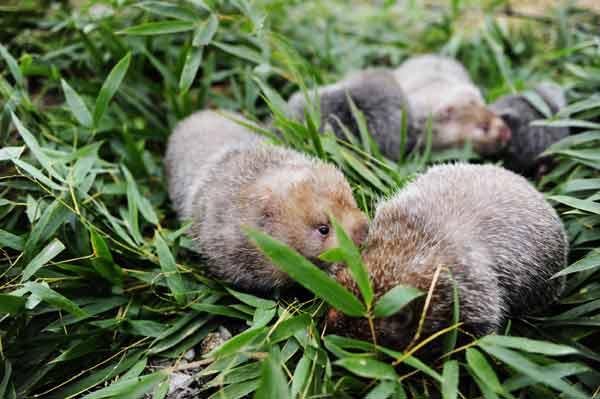
Breeding male rats should be over 1.5 years old and weigh 1.5-2.5 kg. High-quality breeding males must be strong in constitution, with visible testicles, and gentle rather than aggressive. Breeding female rats should be over 8 months old and weigh 1-2 kg. High-quality female bamboo rats must have visible and evenly arranged nipples, strong mothering ability and a gentle temperament.
For the breeding rats selected for the first time, males and females should be raised separately, with two bamboo rats placed in each rat pool. When the suitable mating season arrives, put the males and females together for breeding.
Feeding management of breeding rats
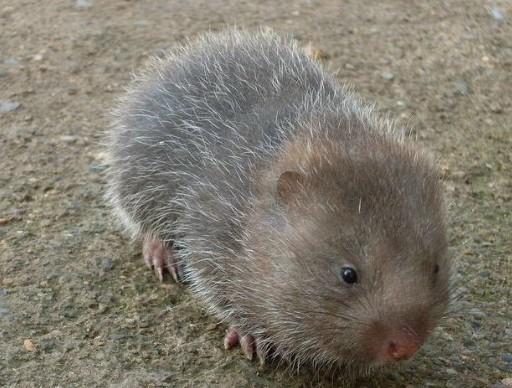
Bamboo rats do not like to drink water, so the daily feed should be fresh, tender green plants full of moisture. The plants fed to bamboo rats are mainly bamboo, sugarcane and napier grass.
Bamboo rats are generally fed at noon. For adult bamboo rats, feeding one segment each of bamboo, sugarcane and napier grass per day can meet the nutrition a bamboo rat needs for a day.
The temperature suitable for bamboo rat growth is between 8-28 degrees C. If the temperature is too high, bamboo rats become restless and are prone to heatstroke and death. If the temperature is too low, bamboo rat growth slows and reproductive ability declines. When the temperature in the bamboo rat house is too high, you can sprinkle water on the floor to increase the humidity inside.
Management during the breeding period
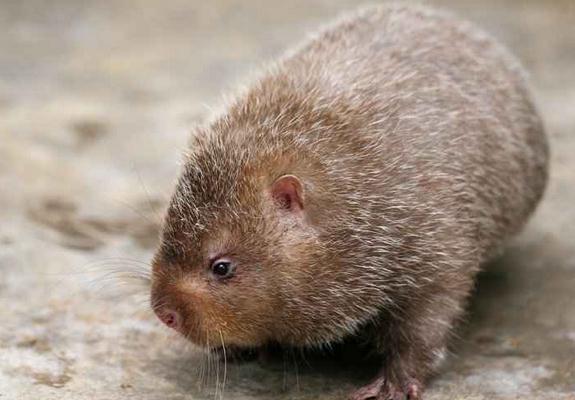
When bamboo rats mate for the first time, the breeding males used must have grown for more than one year and weigh more than 1.5 kg, and the breeding females must have grown for more than 8 months and weigh about 1.5 kg before mating.
The breeding period of bamboo rats is about 80 days, including a gestation period of 45 days and a lactation period of 35 days. Avoid the times when local temperatures are highest and lowest, and it is best to choose spring and autumn.
Management during gestation
After the female rat mates, observe the female rat's growth and development every day. After the female rat becomes pregnant, raise her separately to prevent the male rat from biting the young rats to death.
During gestation, strengthen the nutritional level of the female rat's daily diet to ensure the female rat has sufficient nutritional supplementation during pregnancy, laying a good foundation for giving birth to young rats. Cooked rice and bran can be mixed with clean water at a ratio of 1:1 and fed to the bamboo rats. During pregnancy, feed the female rat 2-3 times per week, 40-50 g per rat each time.
Postpartum care of the female rat
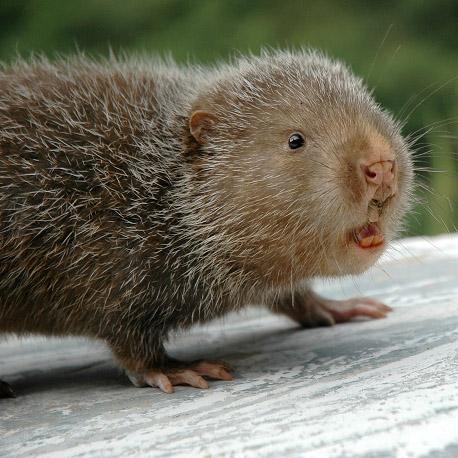
The female rat is relatively sensitive to the environment before and after giving birth, so keep the female rat's house quiet during birthing. After the female rat gives birth, shade the rat pool from light to create a good nursing environment for the female rat.
After the female rat gives birth, care for her promptly. Mix milk powder and glucose at a ratio of 1:1, dissolve it in warm water and give it to the female rat to drink, continuously for 2-3 days, 3-4 spoonfuls per rat each time. This ensures the female rat has sufficient nutrition after giving birth to quickly recover her strength.
Feeding management of young rats
After young rats are born for 20 days, their digestive system has gradually developed and matured, and they can be fed concentrated feed together with the female rat. This allows them to adapt to the female rat's nursing schedule, helps weaning and promotes growth and development.
At 35 days of age, the young rats have been weaned. Begin separating the young rats from the female rat and raise the young rats in groups. The female rat, after weaning, continues to be raised separately for 10-15 days to let her recover. When the female rat's weight returns to her pre-birth weight, she can be put back into the breeding male rat's nest to wait for the next mating.
When young rats are raised in groups, separate males and females to prevent random mating. During group raising, the young rats' teeth are still fragile, so feed them mainly softer foods such as sugarcane, napier grass and concentrated feed to avoid injuring the young rats' teeth.
Feeding management during the young adult stage
During the young adult stage, feed each bamboo rat 2 segments of bamboo, one segment of sugarcane, one segment of napier grass and 30 g of corn kernels every day. Check every afternoon, observe the bamboo rats' eating condition, and select high-quality bamboo rats to keep for breeding.