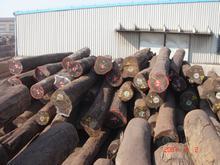
Material Characteristics and Quality Introduction of Premium Bubinga Wood
Bubinga is a wood name, also called Brazilian rosewood, with prominent interlocked grain and light brown stripes. It is mainly distributed in tropical Africa, has a luster; no special odor. The structure is fine and uniform, the wood is hard, and the strength is high. It is a precious hardwood comparable to Burmese rosewood. It can be used to make luxury furniture, flooring, household utensils, and more.
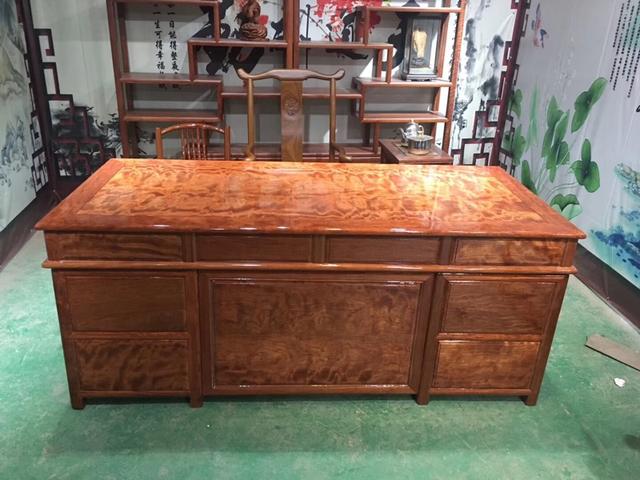
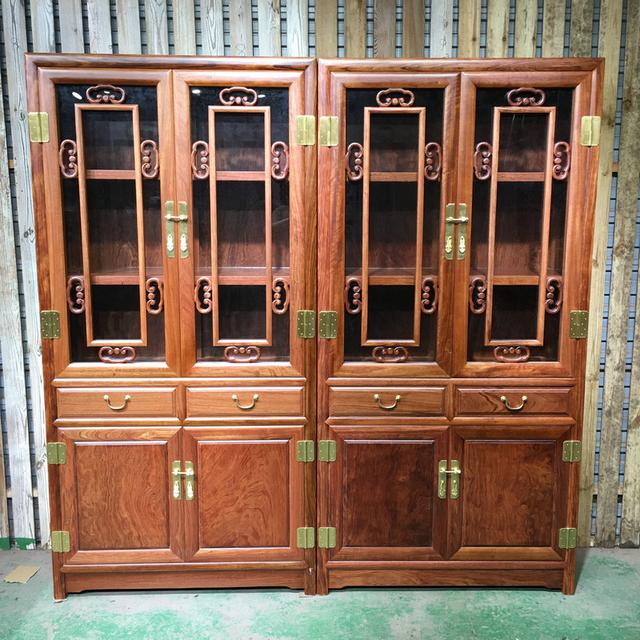
The air-dry density of "Brazilian rosewood" is about 0.80-0.86g/cm3, and green wood can even reach 1.2g/cm3. The wood has a luster, no special odor or taste, and the grain is oblique to interlocked, with a fine and uniform structure. The wood is heavy and high in strength. It is rarely damaged by termites.
The wood is diffuse-porous. The distinction between heartwood and sapwood is obvious. The heartwood is yellow-brown to red-brown, and the sapwood is white to light yellowish-white. Growth rings are slightly distinct. Pores are clear under a magnifying glass, slightly small to medium, solitary and a few short radial multiples (2-4), often containing dark deposits, scattered. Axial parenchyma is clear under a magnifying glass, mainly paratracheal, winged, confluent, and marginal. Wood rays are non-storied, clear under a magnifying glass, medium to slightly dense, very fine to slightly fine. Grain is straight, often interlocked, structure fine and uniform, shrinkage large, nail-holding power good, drying slightly fast, not easy to crack or warp.
Morphological Characteristics
Macroscopic features: diffuse-porous wood. Heartwood red-brown, often with dark stripes, clearly distinct from sapwood. Sapwood cream-colored, 2-8cm wide. Growth rings slightly distinct. Delimited by marginal parenchyma. Pores obvious under a magnifying glass; scattered; very few to few; medium in size. Axial parenchyma obvious under a magnifying glass; vasicentric, winged, marginal. Wood rays visible under a magnifying glass; density sparse; narrow. Ripple marks and intercellular canals absent.
Distribution Range
Large tree; height 24-30M, diameter more than 1.0M; with large buttress roots. This genus has 15 species, distributed in tropical Africa, of which 11 species are in Africa. They are mainly imported from Cameroon, Equatorial Guinea, and Gabon, in large quantities. There is a misconception here: everyone has always thought that Bubinga is Brazilian rosewood, but in fact Bubinga has nothing to do with Brazil.
Main Value
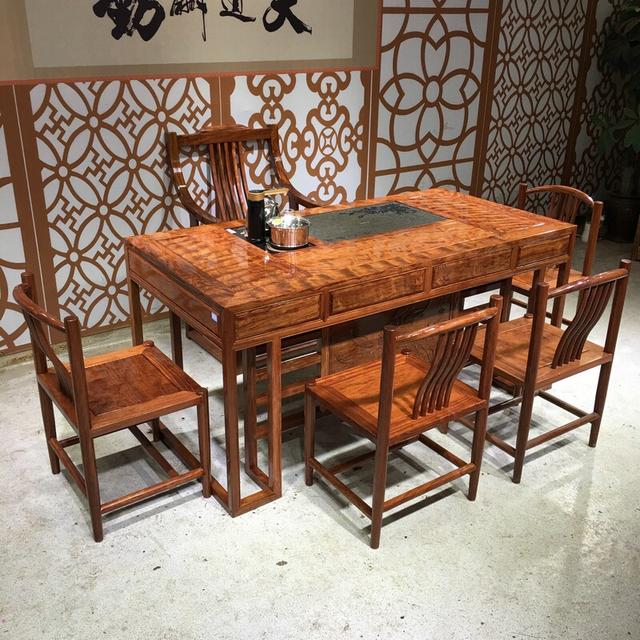
Suitable for luxury furniture, sliced veneer, joinery, decorative veneer, flooring, carving, household utensils, and more.
Identification Points
The outer bark sheds in round small scales, leaving oval shallow pits after shedding. The bark exudes a red gum when injured. Pores are few and not large. Heartwood red-brown with purple stripes.
Distribution or main producing areas: produced in the Congo River Basin in west-central Africa, Congo, Gabon, Cameroon, Equatorial Guinea, Central Africa, and other places.
African rosewood; and because its heartwood color is lighter than other rosewoods, it is also
called African yellow rosewood. The heartwood color of Pterocarpus erinaceus is purplish red-brown to red-brown, with dark stripes. Obvious ripple marks can be seen on the tangential section. The wood is diffuse-porous, with a clear tendency toward semi-ring-porous. The difference from other tree species in the rosewood category is that Pterocarpus erinaceus has almost no fragrance.
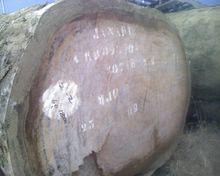
Tree species easily confused: 1. Erythrophleum fordii: heartwood is yellow-white, wood rays are non-storied, tangential section has no ripple marks. 2. Afzelia: commonly known in the market as Merbau, the wood has no fragrance, the wood body has many and long pores, no ripple marks, and the parenchyma on the polished cross-section is winged, resembling bird's eyes. 3. Sub-rosewood category: sub-rosewood refers to other woods of the genus Pterocarpus with a density of less than 0.76g/cm3, not necessarily produced in Africa; nor is wood produced in Africa necessarily sub-rosewood. Although Pterocarpus erinaceus is also commonly called African rosewood, it cannot be equated with sub-rosewood.[1]