Growing orchids well starts with understanding orchid roots
Orchids are higher plants, and like other higher plants, an orchid plant is made up of roots, stems, leaves, flowers, fruits and other parts.
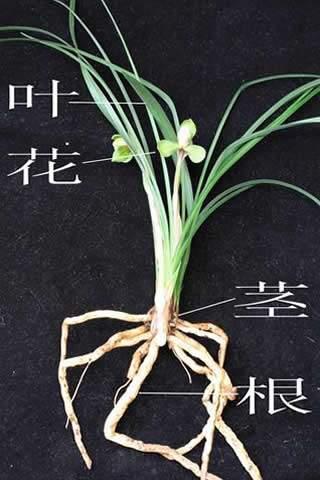
When we grow orchids, everything from choosing potting media and watering techniques to dividing plants and repotting is in fact closely related to the orchid's roots. Whether an orchid is grown well or not shows in the leaves and flowers, but the root cause actually lies in the roots. When problems appear in orchid roots, they are directly reflected on the leaf surface; what is more, the leaves may still look fine while the orchid roots are quietly undergoing changes. Therefore, in orchid growing, care of the orchid roots is very important, and growers must first understand orchid roots.
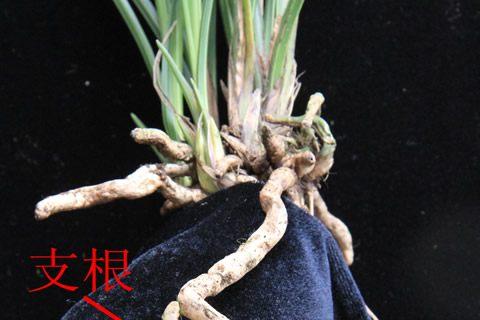
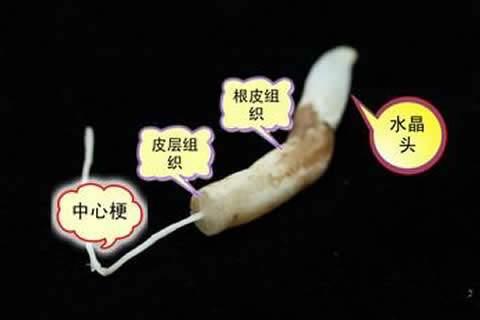
Orchid roots connect to the base of the orchid's pseudobulb. They are fleshy roots, usually several in number, occasionally with branch roots. Orchid roots grow in clusters. If orchid roots are exposed, they are generally green. The thickness and length of the roots vary by variety. The main roots of orchids generally have no branches and are cylindrical in shape. At the tip of an orchid root there is a distinct root canal, commonly called the crystal head.
By structure, orchid roots can be divided into an outer layer, a middle layer and an inner layer. The outer layer is the root skin, which serves a protective function and absorbs and retains water. The middle layer is the cortex, which stores water and nutrients. The inner layer is the central core, which is relatively thin and tough and transports water and nutrients.
The main function of orchid roots is to absorb and store water and nutrients. They have an extremely strong water-retention capacity. If orchid roots become waterlogged, they easily rot; if they lack water, they easily become hollow roots. Both affect the normal growth of orchids. Therefore, when growing orchids, material selection and watering should keep the soil environment for orchid growth "moist but not wet," which is suitable for the normal growth of orchids. The images in this article are from the internet, and the content refers to online sources. Source: Lao Yao Blog