How to divide orchids? A step-by-step guide to growing and caring for orchids
Orchids growing in the wild all spread and divide on their own, and the clumps and patches of orchids you see are basically the result of a single seedling growing and then dividing by itself. But for orchids grown by hand or kept as potted plants at home, the limits of the pot and the space make it unlikely that the orchid can divide on its own, so at this point the grower has to step in and divide it by hand. There are many situations that call for division, such as transplanting, exchanging varieties, companion planting, and trading, all of which require manual division. When dividing, you need to pay attention to the method so you do not accidentally injure the orchid; in serious cases this can lead to infection by pathogens and affect the orchid's healthy growth.
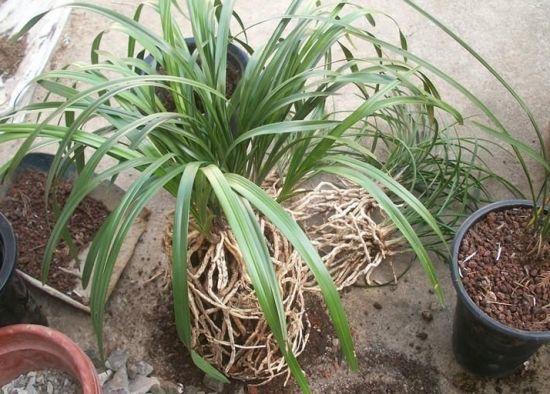
To understand orchid division, you first need to start with its growth structure. Orchid seedlings grow from pseudobulbs, and the pseudobulb of a new seedling sits right against the pseudobulb of the old seedling. In the second year, as the new and old seedlings grow, their bulbs slowly pull a little distance apart. When the new seedling produces another new seedling, the contact surface between the bulbs of the new and old seedlings becomes smaller, and at the same time it shifts downward to form an obvious connecting crossing point. Generally after three or four years, this connecting crossing point grows into a short, solid connecting line, known as the "connecting tendon." At this point the bulbs of the new and old seedlings are considered completely separated, each occupying its own side. It is also at the position of this connecting line that a gap is clearly visible; what is usually called the orchid's "horse mouth" refers to this gap. To divide, simply cut or snap off the "connecting tendon" along this gap, and the manual division is complete.
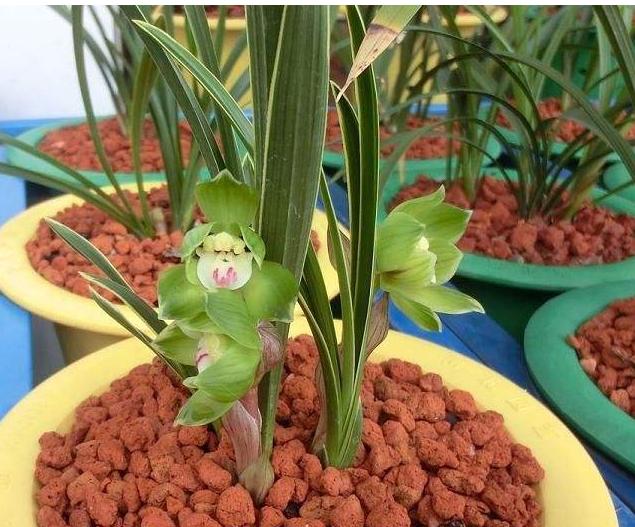
When dividing orchids, pay attention to the following points:
1. The orchid being divided should have three generations of seedlings growing together; generally a clump of orchids has more than five seedlings. In this situation, damage to the seedlings is less likely, and the divided orchids adapt strongly; generally, valuable orchids are divided according to this key point.
2. The orchid being divided must not be a one-year-old seedling, because the "connecting tendon" and "horse mouth" are not yet obvious. If you insist on dividing it, it easily creates a wide wound surface, and the possibility of infection by pathogens is very high; its ability to adapt to a new growing environment is also weak, so the survival rate is naturally low.
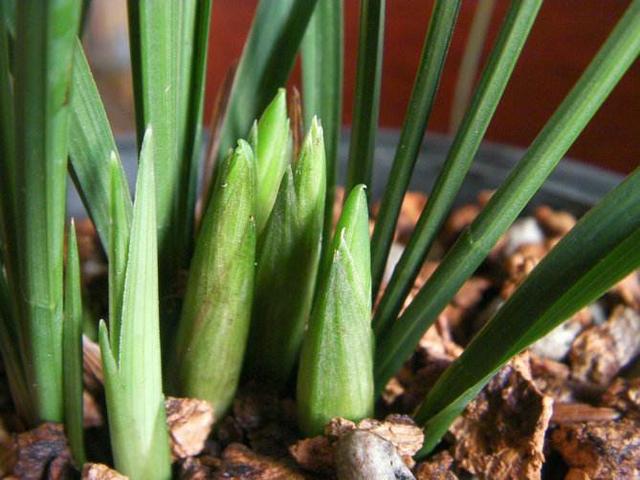
3. When dividing, if you encounter situations such as emerging shoots or flower buds, you should carefully observe whether shoots or flower buds have grown on the pseudobulbs. If shoots or flower buds are present, it can still be divided, but it is best not to injure the shoots or flower buds.
4. When dividing, look at how many roots there are. If there are many roots, it can be divided; if there are few roots, division is not recommended. Every divided orchid must have roots.
5. To prevent the horse mouth at the division point from being contaminated or causing disease, you can coat it with a paste made from wheat flour, or sear and coat it with the head of a match, so that the wound surface hardens and seals as quickly as possible and does not become infected.
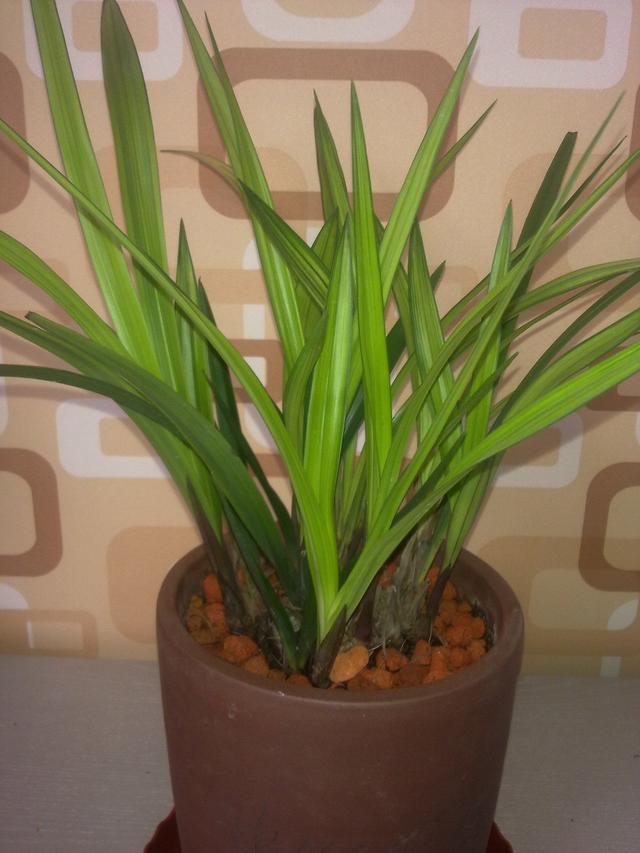
6. For orchids that need dividing, the horse mouth is generally easy to see on clumps with many old seedlings, and you can cut them apart with a knife. On clumps with many new seedlings it is not so obvious, and you can use your hands to probe for the position of the horse mouth. The specific method: find two pseudobulbs with a distance between the seedlings, pinch each one with the thumb and index finger of each hand, and gently twist left and right in opposite directions. If the two pseudobulbs shift apart, then this is the horse mouth. Keep twisting, and the connection point will become apparent and distinguishable, then cut it apart with a knife and you are done. If twisting does not go smoothly, you need to identify the position of the horse mouth by another method.
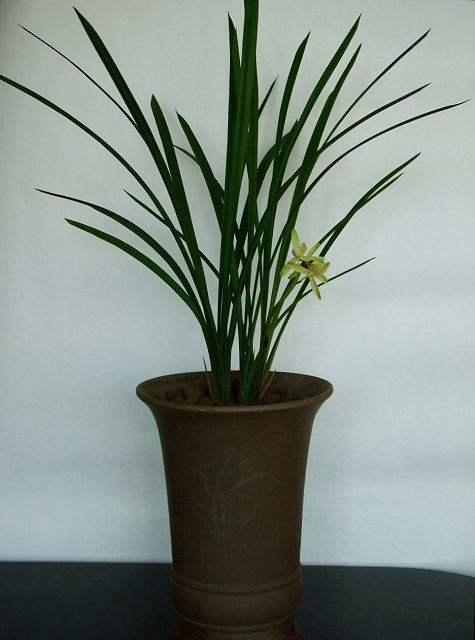
7. Orchid division can be done directly in the pot. After finding a place where the seedlings are widely spaced, scrape aside part of the potting soil, look for the connecting tendon or connection point, then gently cut through the connecting tendon or cut open the connection point with a blade, and take out the orchid plants that need to be separated. On the wound surface of the orchid plants left in the pot, put a handful of dry soil, and restore the soil you scraped aside. The advantage of this division method is that the growth of the orchid plants left in the pot is not greatly affected.