What should orchid beginners pay attention to when introducing new plants?
1. Grow orchids native to your region
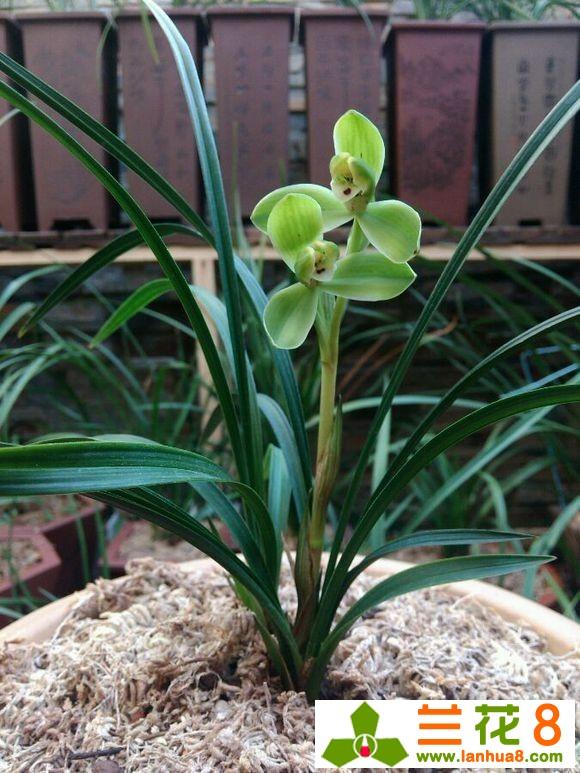
Orchids have their regions: Jiangsu and Zhejiang grow spring and cymbidium orchids, Sichuan people grow spring sword orchids, Yunnan and Guizhou grow lotus-petal orchids, and there is roughly a regional pattern. Any orchid that crosses regions will inevitably fail to adapt to the local environment, and new orchid enthusiasts find such situations harder to handle. Even someone like me, who has grown orchids seriously for eight years, still cannot manage it properly. For example, a high-mountain cold orchid from Yunnan that I introduced five years ago sends up new shoots every year but loses its old pseudobulbs; only last year did the old pseudobulbs finally lose just half, and now at least I have one and a half plants. By the time it blooms, I'm afraid my daughter will already be married. Yet the person who introduced it to me already has two large pots and it has rebloomed. We both started from a single plant, which leaves me with no temper at all. A sent spring orchid I have is in the same situation. Another example is the Great Snow Plain, which can be called Yunnan's number one famous flower; in Yunnan its petals look somewhat diamond-shaped when it blooms, but in Shanghai, if not specially treated, they are just bamboo-leaf petals, and it is completely impossible to appreciate the flower's elegance. There is another point: after all, relatively few people grow orchids across regions, so once a problem arises there are relatively few people around to consult. In addition, there is another form of non-local plant, which I mean as re-exported plants. Because I have not introduced old varieties for a long time, I do not know the situation of re-exported plants in recent years. Re-exported plants mainly refer to traditional old-variety plants re-exported back from Japan and South Korea (perhaps also Taiwan, China, but I do not know the situation there, so orchid enthusiasts who know can add to it). These plants are no problem in terms of variety, and according to my experience, after growing them for several years they are no different from locally grown plants. Because these plants are grown in greenhouses with high temperature, high humidity and high fertilizer, their price is also relatively cheap, but after ordinary orchid enthusiasts introduce them they all face a process of adaptation. The first two years are often very difficult, with heavy loss of pseudobulbs, and if you are not careful they die, which is a great psychological blow to new orchid enthusiasts. Therefore, in the first few years of growing orchids, I suggest mainly growing local orchids. As for those orchid enthusiasts in non-orchid-producing areas, honestly I have no experience either, but I think they should also introduce second- and third-generation plants grown locally, and plants in good condition are more suitable.
2. Before you have some basic experience, please do not rush to introduce new varieties.
Owning a new variety, especially one you can name yourself, is the wish of many orchid growers. But for new orchid enthusiasts this often means great risk. I rarely hear of orchid enthusiasts being badly cheated when introducing old varieties or new and old varieties; those who are badly cheated are mostly buying new flowers at street stalls. The ability to judge varieties is not developed in a day. Although orchid books write a lot about experience in identifying fine flowers through the plants, old orchid enthusiasts all understand in their hearts that what is written is often useless in practice, and relying on that to follow clues usually means what you buy back is a toad. Add to that the endless tricks of orchid counterfeiting, and some people's "handiwork" is really authentic, so it is better not to trust your own judgment so much. Build a good foundation, and only after you have at least some identification experience should you consider it. Of course, it is still unavoidable that old masters buy misjudged goods. At the same time, you should also accumulate a certain amount of growing experience, at least not often kill plants before you consider it. You should know that it is not easy for God to create a fine product, and letting it die and thus become extinct is very sinful.
3. Accumulate identification experience and growing experience from growing old varieties.
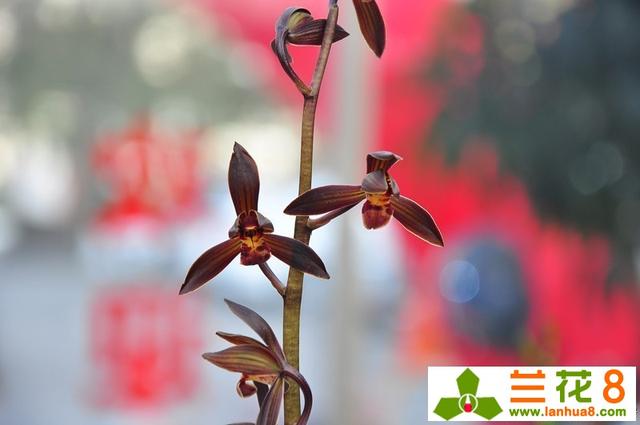
Actually I already said this in the last paragraph of "Talking About Technology Orchids Again," but it seems to have attracted no attention. It was around 2002, when I had not been growing orchids long, and I was bent on finding bargains at street stalls. As a result I paid a lot in tuition, but bought nothing. It happened that I met Mr. Dai Xianqin, so I kept asking him how to judge plants, and even took those dogmas from books to him to explain to me. Later, when Mr. Dai was pressed by me, he said, go grow all the old varieties of spring orchids for 10 years yourself and you will know everything. That was a sharp wake-up call to me. From then on I began to seriously grow representative classic old varieties of various petal forms such as Song Mei and Ji Yuan, carefully observing the whole process from new shoots before they emerge from the soil to growing into mature plants. Sometimes I did comparative experiments with sunny growing, shady growing, fertilized growing, lean growing and so on, and made records of every watering and fertilizing. After growing them for several years, I unknowingly developed some feeling. When an empty plant is in my hand, I basically have a rough sense of whether it is a coarse flower or a fine flower, and as for what petal form it is, sometimes I can also get one or two right. But this is limited to spring orchids; for cymbidium orchids I still cannot tell. As for technology orchids, I saw them in large numbers for the first time during this year's Spring Festival, mixed among traditional plants. I could not give any specific reason, but it just felt wrong, and the more I looked the more wrong it felt, especially the plants. Among a large pile they can almost be distinguished immediately, clearly separated. I think this kind of feeling can in fact only be obtained through daily continuous observation, and there is no shortcut. Perhaps it really is as Mr. Dai said: grow them honestly for ten years, and only then will you suddenly understand.
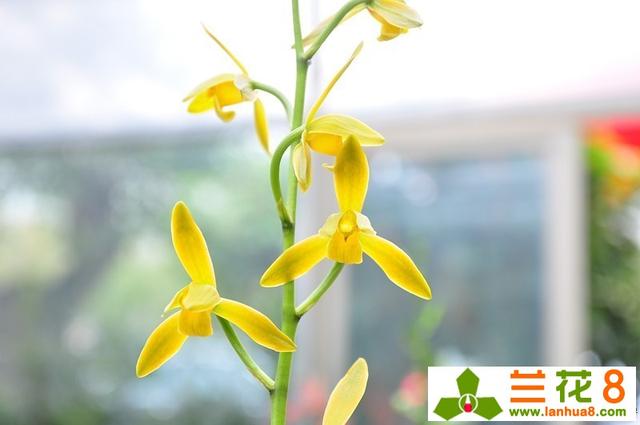
As for growing experience, I think it is also more valuable when obtained from growing old varieties. I do not know how others' experience is. In any case, my feeling is that fine flowers are much harder to grow than ordinary flowers. I suppose this is because ordinary flowers are the normal state among orchids, while fine flowers are abnormal, so ordinary flowers have stronger adaptability and vitality. Therefore, experience in growing ordinary flowers is often of little use for growing fine flowers. Also, solid-color flowers seem harder to grow than Song Mei and others. The leaves of the solid-color flowers I grow always tend to develop black spots, possibly because they are not adapted to my environment. I also hope orchid enthusiasts with experience in this can talk about it.
4. Listen widely and gather broadly on growing experience, but rely mainly on yourself
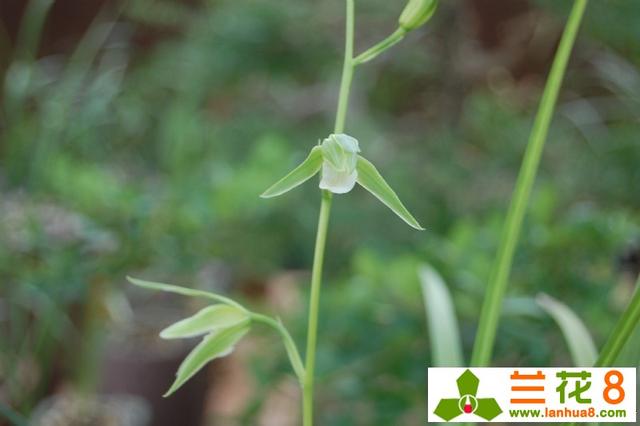
Growing orchids is not easy, so some orchid enthusiasts like to ask around, and when they hear experience that works for others they immediately copy it when they get back. The result is constant wavering, and in the end they imitate others awkwardly without forming their own fixed growing pattern. In fact, everyone's growing environment is different: different floors, different orientations, different climates, different water quality, different growing media, and different surrounding environments. Therefore, other people's experience is only a reference; the key is still to have your own little calculations in growing orchids. I spent several years sacrificing a few pots of orchids. With those pots, I used different media, placed them in different positions, used different watering methods, applied different fertilizers, and almost every month took them out to look at root growth. In this way I gradually accumulated my own growing experience, and I am still doing this work now, only because I do not have enough time I am not as careful as before. But to be honest, God is especially harsh on those of us growing orchids in Shanghai. Even with such careful care, all I have achieved is merely keeping them alive. To speak of thriving, I am afraid I will have to wait until I retire and have time to ponder more. When I went to Shengzhou, Zhejiang, China, and saw in the local development zone office how spirited the Song Mei they casually grow was, I truly felt endless emotion in my heart.
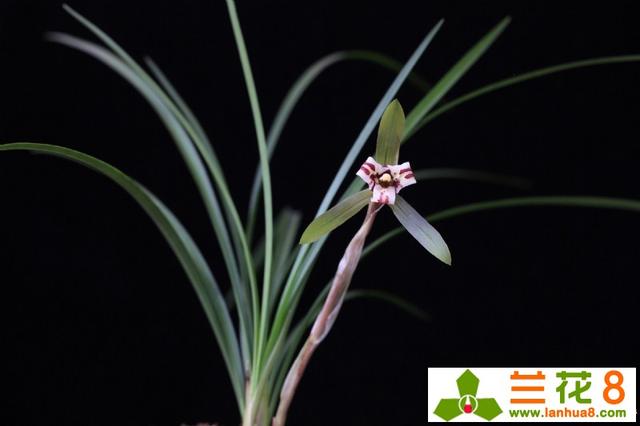
5. Increase varieties mainly by exchange, and know when to stop
Introducing varieties is quite expensive. We all earn money through hard work, and spending large sums on buying flowers is irresponsible to one's family. So to increase varieties, the best policy is still to exchange orchids with orchid enthusiasts, each increasing varieties. This requires that in the first introduction or first few introductions you obtain some varieties that others will later be willing to exchange with you. You must at least have some capital that can be used for exchange later, so that you can spend less money afterward. Therefore, if what you introduce is a variety that will later flood everywhere, everyone should know what I mean, and I am afraid exchanging it will be a bit difficult.
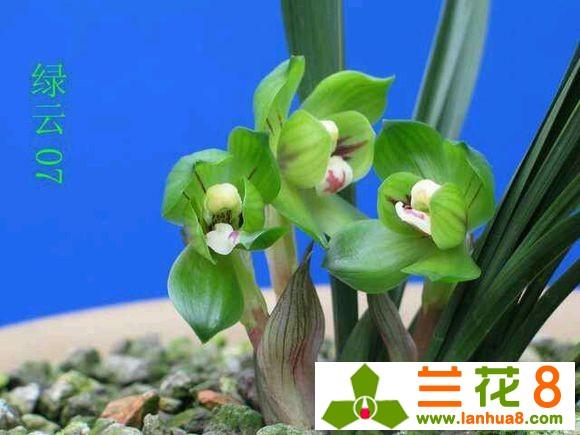
Orchid varieties can never all be introduced. When I first started growing orchids, I once resolved to collect all the varieties in the old orchid manuals and, after retirement, publish the most complete orchid manual and comprehensive growing guide. Now I gave up that idea long ago; with personal ability it is actually impossible. I think growing a few representative works of each different petal form is enough. With more, you really cannot manage them.
The above are some of my reflections. Some things I consider experience may later be proven by myself to be lessons; it is hard to say. I hope more orchid enthusiasts can also talk about their experience and lessons without reservation, not be conservative, and not hold the attitude of a mother-in-law watching her daughter-in-law. That does no good to the entire orchid world. Please correct anything wrong; this also counts as me seeking reputation again. I publish orchid knowledge and pictures every day, taking you to understand orchids in depth and teaching you to grow orchids easily. If there is anything you do not understand about orchids, you can ask me anytime or leave a message below. If my knowledge has helped you, I hope you can give me a like or forward it to help more people!