How to raise river snails? Master these key points of rural farming techniques
River snails can not only be made into delicious dishes, but are also useful in various types of farming. River snails can not only purify water quality, but are also a high-quality bait for various special aquaculture species. For example: leech and black carp farming rely entirely on snails as bait, and in the farming of crayfish, turtles and soft-shelled turtles, crabs, and others, river snails are also an indispensable bait.
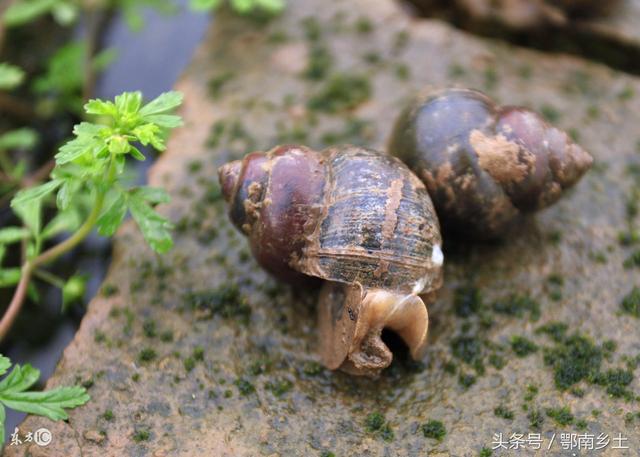
Below is a share of some basic knowledge about river snail farming. I hope it can help everyone.
The farming methods for river snails include dedicated pond farming, rice field co-culture, and fish-snail mixed culture. For dedicated pond farming, the pond area should be small, the soil soft, and the water source sufficient. Aquatic plants such as wild rice stem and arrowhead can be appropriately planted in the pond to make full use of the land and create a sheltered ecological environment for the river snails. The quality of the water in the farming pond is one of the keys to the success or failure of river snail farming. Note: water containing large amounts of iron and sulfur must absolutely not be used.
The most suitable water temperature for river snail farming is 20°C-26°C, at which time feeding is vigorous. When the water temperature rises to 30°C-33°C, the river snails burrow into the soil to escape the heat, not eating, not moving, and not growing. The flesh also becomes hard and tasteless. Therefore, attention must be paid to regulating the water temperature below 26°C. The farming water depth is generally 30 cm. In winter, to raise the water temperature, it can be lowered to about 20 cm. This amount of water is not only needed for the river snails' growth, but also serves to defend against enemies.
For rice field co-culture of river snails, choose marshy fields that do not dry up all year round and are moist, which are most suitable for river snail life. The organic fertilizer and weeds in the rice field can provide food for the river snails, and when the stocking density is relatively high, some artificial bait can be supplementarily fed. Under the shade of the rice, the river snails can maintain growth in summer. Therefore, raising snails in rice fields is a simple and labor-saving farming method, only attention must be paid to avoiding the use of pesticides, otherwise it will poison the river snails.
River snails can be mixed-cultured with one-year-old carp fingerlingsThe feed fed to the carp, after decomposing in the mud, serves as feed for the river snails. However, it is not suitable to mix-culture with two-year-old carp, because carp of this age will swallow young river snails. They can also be mixed-cultured with other fish or aquatic animals. Sometimes, in order to increase the output of famous and premium aquatic products, river snails are used as high-quality feed in the raising of black carp, turtles, and soft-shelled turtles.
In the natural state, river snails grow fastest in the first three to four months, then gradually slow down, and after two years they no longer grow. Therefore, during artificial farming, river snails should seize the opportunity and be fully fed so that they grow to full size in a relatively short time; in this way, the snail meat is large, soft, and delicious, beyond what natural ones can match, and the yield is also higher.
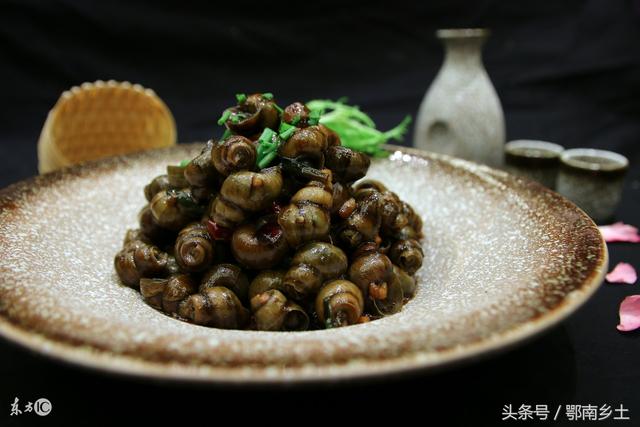
Capture methods
For capturing river snails, besides reaching into the pond with the hand to scoop them out, they can also be captured with a hand dip net. The net diameter is 20 cm, and the mesh size is 2.8 cm; during capture, small individuals can be allowed to slip through the net and remain in the pond to continue growing. If the farming pond area is relatively large, roasted rice bran can be mixed with clay and kneaded into balls, then thrown into the pond; when the river snails smell the fragrance, they will gather to feed, and at this time the large ones can be picked and the small ones left, or they can be captured with net gear.
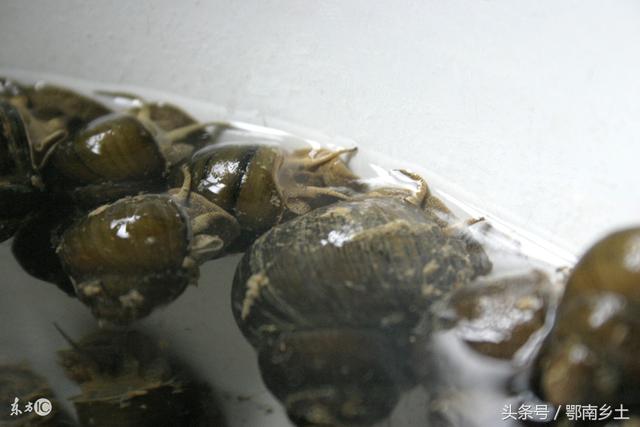
Finally, let me tell everyone a secret about high yields of crayfish and crabs. Of course, it is definitely related to river snails. Veterans who farm shrimp and crabs generally put about 300 jin of river snails into each mu of crayfish and crab ponds every year, and these river snails are all bought. Think about it: does river snail farming really have prospects!