Analysis of the Prospects for Mealworm Farming and a Detailed Guide to Farming Techniques
Mealworm farming is a new type of farming business with low input and high output. It has the "six savings" of saving land, saving grain, saving water, saving energy, saving space and saving labor. It is suitable for different regions, different environments, all kinds of people and all kinds of conditions. A factory farm of a certain scale can also solve the local problem of re-employment for laid-off workers, that is, the social problem of the loss of idle rural labor in the local area. In addition, mealworms have extremely high food value and medicinal value. Mealworms can be used directly as high-protein live feed for carnivorous animals, with high nutritional value. Beauty product substances, high-quality edible oil, health product additives, cosmetic additives and transformer oil, etc. can also be extracted from the bodies of mealworms. On the international market, mealworms have always been in short supply, the market prospects are promising, and the farming prospects are broad.
I. The Farming Advantages of Mealworms
1. Profit in spare time
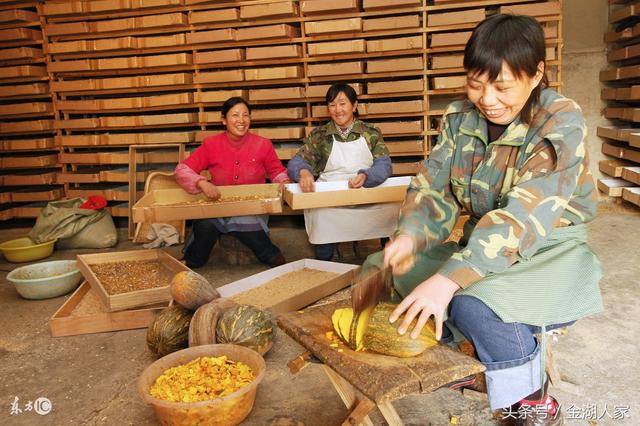
Farming mealworms involves little labor intensity, is simple to operate and easy to manage, and feeding does not take up daytime working hours; feeding them in the evening is enough. They can be farmed in urban and rural homes, on balconies, in corners or in simple greenhouses;
2. Wide range of feed. Mealworms feed on wheat bran, rice bran, corn husks, soybean meal, crop straw, green vegetables, vine stems, distiller's grains, etc., which can be found everywhere in rural areas. They only need to be fed once every 3-5 days, and the feeding utensils can be wooden boxes, wooden racks, etc.;
3. Mealworms have very low survival requirements and strong adaptability. Their characteristic is that they fear heat but not cold, and they do not have high requirements for temperature and humidity. As long as attention is paid to cooling and removing moisture in summer, and to keeping warm and ventilated in winter, they can be raised all year round;
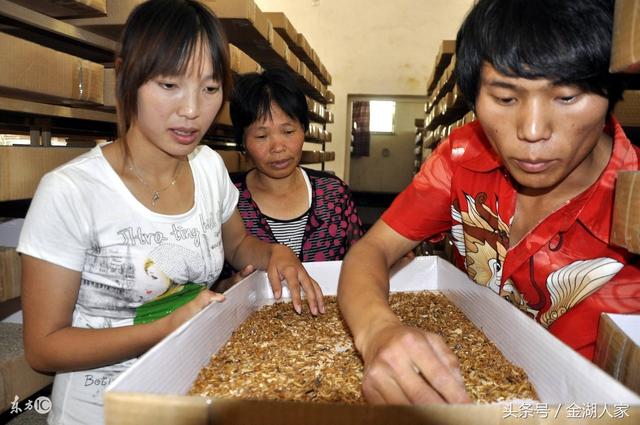
4. Mealworm farming equipment is simple. Any container will do, such as basins, vats, boxes and crates, for example wooden boxes, paper boxes, water vats, washbasins, etc.; plus some sieves, with 12, 30 and 60 mesh, etc. The 12-mesh large-hole sieve is used to sift insect eggs. The 30-mesh medium-hole sieve is used to sift the feces of large worms, and the 60-mesh small-hole sieve is used to sift the feces of small worms;
5. Easy to raise and free of epidemic diseases. Mealworms do not transmit epidemic diseases, farming does not require epidemic prevention, the feeding technology is not demanding, and farmers are not limited by their level of education; anyone can raise them successfully;
6. Fast growth and high reproduction. Mealworms have a growth cycle of 2-3 months, and each female worm can lay more than 2,000 eggs. Reproduction is fast and astonishing, and the requirements for environmental conditions such as temperature and humidity are not strict; they can grow normally at 15°C-32°C.
7. Policy encouragement. Mealworm farming projects are included in the National Agriculture, Animal Husbandry and Fishery Harvest Plan and the Spark Program, and the state has very preferential encouragement and support policies.
II. The Economic Value of Mealworms
1. Food value. Mealworms contain large amounts of chitin, antimicrobial peptide defensins and exogenous lectins that have special effects on the human body. They are also rich in the nine essential amino acids and protein needed by the human body, high-protein food additives, free amino acids, vitamins, mineral elements, unsaturated fatty acids and other nutrients, and these are consistent with the normal proportions in the human body, so they are easily absorbed and utilized by the human body. Foods, beverages and seasonings developed from fresh mealworm bodies or defatted protein as raw materials... green and nutritious, with high protein content, rich nutrition, good taste and a unique flavor.
The nutritional value of mealworms is extremely high. The protein content of their larvae, pupae and adults is 51%, 57% and 61% respectively, and the fat content is 30%. They also contain various minerals such as phosphorus, iron, potassium, calcium and sodium, as well as the 16 kinds of amino acids needed for animal growth. They are superior feed for animals such as livestock, poultry, fish, scorpions, soft-shelled turtles and snakes, and their nutritional value is about twice that of fishmeal. Feeding results show that mealworms can be used directly as high-protein live feed for carnivorous animals. They are used to raise frogs, soft-shelled turtles, scorpions, centipedes, ants, high-quality fish, ornamental birds, medicinal animals, precious fur animals and rare livestock and poultry, etc. They can accelerate animal growth, increase reproduction, enhance disease resistance and raise the survival rate. According to reports, using 3%-6% fresh mealworms to replace an equal amount of fishmeal to feed broiler chickens increased the weight gain rate by 13% and improved the feed conversion ratio by 23%. Feeding pigs with mealworms made their fur smooth, their skin color ruddy, and their fattening fast, and the feeding cycle could be shortened by 1 month. Feeding Chinese forest frogs with mealworms, they can be sold after two years, with good commercial quality and high benefits. They are the main feed for artificial breeding of Chinese forest frogs. In addition, mealworms are also good bait for fishing and for feeding ornamental birds, and they are in great shortage in fishing tackle shops and flower and bird markets everywhere.
2. Medicinal value. Mealworms are treasures all over. The bones and elytra of adults, the epidermis of larvae and the pupal shells can all be used as medicine. They contain a variety of elements essential to the human body, have significant anti-cancer effects and can ease the effects of radiotherapy and chemotherapy, and have obvious effects on improving human immunity, resisting fatigue, delaying aging, lowering blood lipids and eliminating facial wrinkles; they can also promote cholesterol metabolism and other functions. A variety of effective elements can be extracted from their bodies and made into various health products.
In addition, beauty product substances can also be extracted from the bodies of mealworms, and high-quality edible oil, health product additives, cosmetic additives and transformer oil, etc. can be produced. On the international market, mealworms have always been in short supply.
III. The Market Prospects of Mealworms
China is the largest country in poultry and livestock farming, and also a major country in feed consumption and production, with a huge demand for feed additives. Because mealworms are easy to raise, require little investment and produce quick results, they have been listed by the Ministry of Agriculture as a national agriculture, animal husbandry and fishery
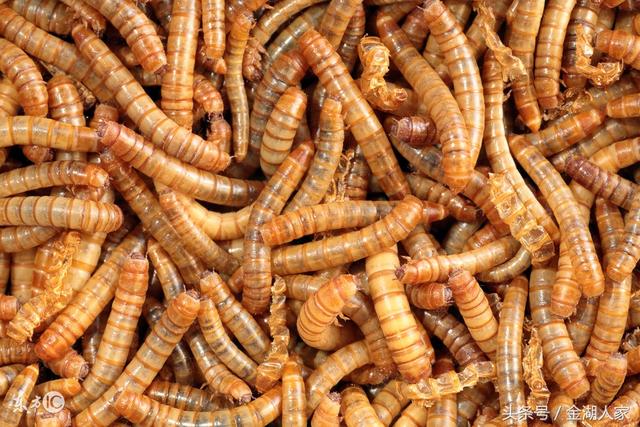
Harvest Plan. The nutritional value of one kilogram of mealworms is equivalent to the nutritional value of 25 kilograms of wheat bran, 20 kilograms of mixed feed and 100 kilograms of green feed, and they are known as a "treasure house of protein feed." The global annual demand for protein feed additives reaches 80,000 ten-thousand tons, while at present only 50% of market demand can be met. There is still an extremely large gap. From this, it can be seen that mealworms have broad prospects.
Deep-processed mealworm products have broad application fields. Mealworms are a high-quality protein feed that can replace fishmeal, and their nutritional composition is comparable to imported high-quality fishmeal, while the production cost is far lower than that of fishmeal; mealworms are high-quality edible oil, additive oil for health products, cosmetic additives and transformer oil. Foods, beverages and seasonings developed from fresh mealworm bodies or defatted protein as raw materials are constantly emerging, such as mealworm compound supplements and so on. Some large enterprises are optimistic about insect protein food and actively participate in its development. Since the scientific research results of Shandong Agricultural University on the comprehensive development and utilization of mealworm resources became available, mealworm pupa canned samples have been produced quickly in order to investigate the market and take orders. Mealworm molts are a high-quality raw material for producing chitin, and their calcium content is far lower than that of shrimp and crab shells, greatly reducing the difficulty of processing. Chitin has broad application prospects in fields such as functional foods, medical supplies, health products and environmentally friendly materials, textiles and degradable film production. Mealworm feces are also a good organic fertilizer and can also be used as roughage to feed livestock and poultry.
Relevant experts predict that the large-scale production of insect pupae as food is an emerging industry following vegetables, poultry eggs and others. It has opened up a new energy field and is an emerging project in China's shopping basket program, and will be an effective way for urban and rural people in China to become prosperous. Insect pupae are favored by consumers for being purely natural, pollution-free, fragrant and delicious, highly nutritious and uniquely nourishing. Some large supermarkets have already sold them in bulk.
The biggest characteristic of insect pupae is their fresh fragrance. "Fried cicadas", "wild bee pupae", "fried locusts", "scorpions climbing snowy mountains" and "poached scorpions" each have their own flavor. The custom of using silkworm pupae as a delicacy has also gradually taken root in people's hearts. A kind of bread worm that can be artificially farmed has recently become especially popular, and it can be eaten everywhere in large and small hotels in Tai'an, Shandong. Perhaps influenced by the people of Shandong, the nationwide trend of eating insects and pupae spread from Qingdao and Jinan in Shandong, and the prices of insect pupae in various places have continued to rise. At the New Century Hotel in Beijing, "fried insect pupae" sold for 138 yuan, and at agricultural and sideline product markets such as Dazhongsi, Baliqiao and Xinfadi in Beijing, the price of bread worm pupae was 48-60 yuan. At the Tongchuan Road aquatic products market in Shanghai, each kilogram of bread worm pupae sold for 78 yuan, and they were often out of stock.
With the continuous improvement of people's living standards, people's consumption concepts have undergone a fundamental change, from eating for flavor, eating fresh food, eating game and eating natural food, to eating exotic food, eating specialty food and eating for nutrition. According to research by relevant experts, insect pupae not only contain large amounts of chitin, antimicrobial peptide defensins and exogenous lectins that have special effects on the human body, but are also rich in the nine essential amino acids and protein needed by the human body, free amino acids, vitamins, mineral elements, unsaturated fatty acids and other nutritional components, and these are consistent with the normal proportions in the human body, so they are easily absorbed and utilized. Insect food will be the complete nutritional food for humanity in the 21st century, with an extremely huge space for development.