It is best to choose spring for brooding, and feeding management must also be done well
The best season of the year for raising ducklings is spring. Spring ducklings have fewer diseases, grow fast, are easy to raise, are easy to manage, and bring high economic returns. However, the following aspects must be noted in brooding and feeding:
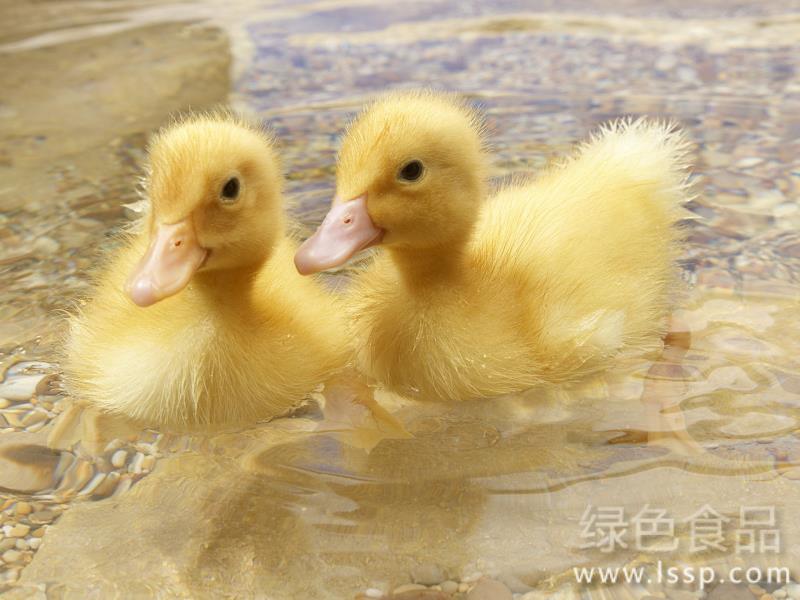
Ducklings
1. Select good ducklings.
Ducklings should be selected from those that hatched at the same time, with large and spirited eyes, a strong body, agile movement, glossy feathers, a soft abdomen, good yolk absorption, a well-healed navel, plump and moist webbed feet, a strong struggle when held, warm feet, loud calls, and a strong, moist, and clean cloaca. During brooding, weak and small ducklings often get crushed to death because they pile on top of one another.
2. Get through the brooding stage well.
The brooding period for spring ducklings is 1-20 days, and management of ducklings aged 1-7 days must be especially well handled. There should be a brooding house with wider, thickened litter, with about 20 ducklings per sq m, so the ducklings have a relatively large activity space. Warm the brooding house in advance, keep the temperature at 32°C when the ducklings arrive, and then lower the brooding house temperature by 1°C every two days until the brooding house temperature is close to the outside air temperature. The principle of temperature control is that the ducklings do not huddle together. At a suitable temperature, ducklings have a strong feeding ability, are uniform in size, and gain weight quickly. Duck raisers need to observe the flock often, drive apart huddled ducklings, and scatter the piles once every 20-30 minutes. Otherwise, moisture condensing on the ducklings' down will make them wet. Pay attention to ventilation, and there should be no pungent ammonia smell in the brooding house, to prevent poisoning by waste gas and ammonia. On sunny days, drive the ducklings to a sheltered place for herding or sunbathing. Promptly pick out the smaller and weaker ducklings and group them separately for intensified feeding; only in this way can the survival rate of the ducklings and the uniformity of the flock be improved.
3. Pay attention to feeding hygiene.
Ducklings should be given water 24-26 hours after hatching. It is best to use deep well water or relatively warm tap water, and medicine can be added to the water to prevent disease. One hour after drinking, the ducklings can be started on feed, and after that they can eat freely. Do not suddenly change the feed. Feed at fixed times, do not feed moldy feed, and frequently remove moldy feed from the corners and bottom of the trough. When ducklings are raised on the ground, it is best to use flowing water for brooding.
4. Strengthen management and prevent stress.
Provide dim light at night, which both makes it easier for the ducklings to eat and prevents rats; it is best to have someone watching over them. Duck raisers should often come into contact with and call to the flock, and train them to eat, return to the pen, and be herded. For the first time in water, ducklings should be given 10-20 minutes each time, and this should be gradually extended afterward. During the day, herd and let them into water; at night, drive the ducklings indoors or keep them in small groups on the exercise yard for warmth, to prevent death from long periods of piling and crushing when it is cold at night. Playing music can be used to guide the ducklings to go out for herding or return to the pen, and it can also reduce stress in the ducklings caused by sound. In addition, attention should be paid to rodent control and harm prevention. Clear debris from the ducklings' activity area, tidy the exercise yard, and clean manure frequently.