What to Do About Postpartum Udder Edema in Dairy Cows? A Detailed Guide to Prevention and Treatment
Udder edema in dairy cows is a perinatal metabolic disorder, especially common in first-lactation animals, and it generally resolves on its own about 15 days after calving. However, in severe cases it can persist for a long time and is difficult to resolve on its own.
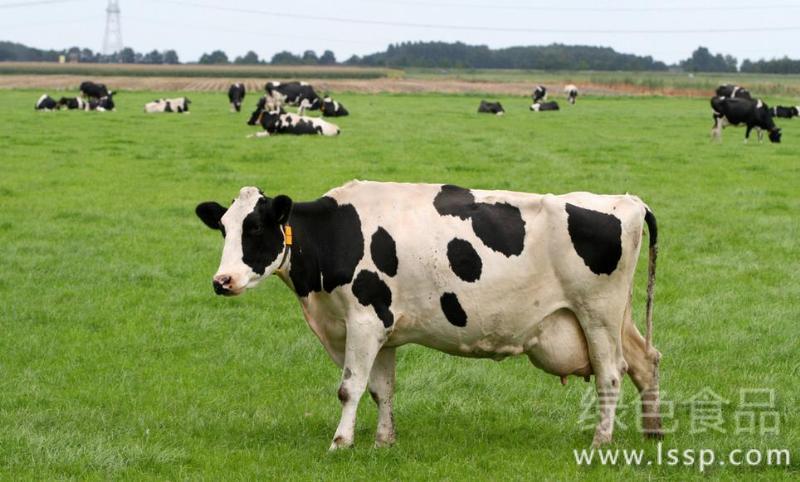
Dairy cow udder edema
1. Clinical symptoms
The disease generally has no systemic symptoms. The entire udder or part of the udder becomes edematous, with the skin tense, shiny, painless, and dough-like. When pressed with a finger, a pit forms. The swollen teats become thick and short, making milking difficult. In more severely affected cows, the edematous udder often droops, causing the hind limbs to stand splayed and making movement difficult, which can easily lead to external injuries. If the entire udder becomes swollen and nodular, milk production drops significantly and mammary atrophy may result.
2. Causes
(1) In late pregnancy, due to pressure from the fetus in the pelvic cavity, blood flowing into the udder increases while blood flowing out of the udder does not increase correspondingly, leading to elevated venous pressure. (2) Feeding a high-concentrate diet before calving. (3) Unbalanced supply of trace elements, with excessive intake of sodium chloride, potassium salts, and water. (4) Abnormal antioxidant function in the body. (5) Endotoxin metabolic disorder.
3. Preventive measures
(1) Strictly control the amount of concentrate fed during the last 3 weeks of pregnancy, generally 4 to 6 kg is appropriate.
(2) Affected cows should exercise appropriately and be fed easily digestible, nutrient-rich feed, with a proper reduction in the amount of succulent feed, concentrate, and water. Limit the amount of salt, which generally makes up 1% of a complete diet.
(3) Applying hot compresses and massage to the udder, and increasing the number of milkings, has a certain auxiliary effect on reducing edema.
(4) Adding antioxidants such as vitamin E and zinc to dairy cow feed can help alleviate the occurrence of udder edema.
4. Treatment methods
(1) Massage the cow's udder 3 times a day for 15 to 30 minutes each time, and apply hot compresses to the udder after massage.
(2) Intramuscular injection of furosemide, with each dose of 0.5 to 1 mg/kg body weight, for 2 consecutive administrations. Alternatively, 500 ml of 25% glucose solution, 500 ml of 10% calcium gluconate solution or 250 ml of 5% calcium chloride solution, 80 to 100 ml of magnesium sulfate, and 20 ml of 10% caffeine sodium benzoate can be given in a single intravenous injection for 3 consecutive days.
(3) Cows can be fed plantain, fed fresh, without limit.