Causes of Death in Grass Carp from Enteritis and Prevention and Treatment Methods
The outbreak of epidemic enteritis in grass carp can also be complicated by hemorrhage and red-skin disease. If not treated promptly, it can cause mass mortality, bringing huge losses to farmers. The following briefly discusses the causes, symptoms, prevention, treatment, and recommendations.
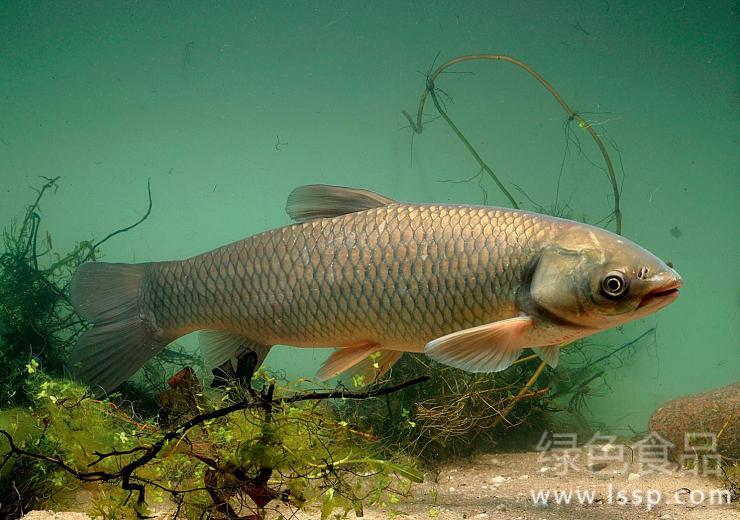
Grass carp
I. Causes
After the beginning of summer, when the water temperature exceeds 24°C, feeding grass carp large amounts of undisinfected aquatic plants or poor-quality feed makes them prone to this disease. Before the onset and in the early stages of the disease, grass carp have a strong appetite. A few days later, a few dead fish are occasionally found. At this point, farmers often do not pay much attention, because most fish have a particularly strong appetite, so they assume it is natural mortality and continue feeding, without reducing the intensity. This leads to more and more diseased fish and causes mass mortality of grass carp. By then, the situation is already quite serious. Therefore, when dead fish are found, a careful examination should be carried out to confirm the diagnosis as early as possible. At the same time, choose high-quality feed, feed moderately, and disinfect any collected aquatic plants.
II. Symptoms
The anus of diseased fish protrudes, is red and swollen, the belly is distended, and there is ascites in the abdominal cavity. When the abdomen is gently pressed, a pale yellow liquid flows from the anus. When the fish body is dissected, the liver is found to be slightly whitish, the blood vessels in the intestinal wall are congested, and the mucosa has sloughed off. When the intestine is lifted, it breaks apart section by section, and there is no food in the intestine. In addition, there is congestion at the base of the pectoral fins, the abdomen, and around the eye sockets. There is fin rot, and the areas where scales have fallen off are decayed, with symptoms of water mold. Comprehensive diagnosis: mainly bacterial enteritis, complicated by hemorrhage disease and red-skin disease.
III. Prevention
At the time of barley yellowing or when feeding begins, use chopped and mashed Chinese chives and garlic bulbs mixed into bait for feeding. Method: mix 2-3 kg of garlic bulbs and 0.3-0.5 kg of salt into 100 kg of feed.
IV. Treatment
On the first day, splash insecticide over the whole pond. (Abamectin, quick-acting insecticide, etc.)
Starting on the second day, feed medicated bait for 10 consecutive days; at the same time, splash disinfectant over the whole pond for 5 consecutive days. Preparation of medicated bait: add 150 g of norfloxacin for fish, 300 g of liver-protecting powder, and 75 g of vitamin C to every 100 kg of bait. Put these three medicines into a binder, mix with an appropriate amount of water into a paste, stir into the feed, mix evenly, and air-dry in a cool place, then feed. Because vitamin C decomposes at high temperatures, mix with cool water and do not expose it to strong direct sunlight.
Note: During the period of disease onset and medication, do not pull nets to catch fish, do not change large amounts of water, and do not apply inorganic nitrogen fertilizer or quicklime. In principle, keep the pond water stable so the fish can treat the disease quietly. Otherwise, grass carp will have a strong stress response, which will increase the ammonia nitrogen concentration in the pond water, intensify toxicity, worsen the condition, and cause mass fish deaths.