How to treat egg-laying hens with prolapse affecting egg production
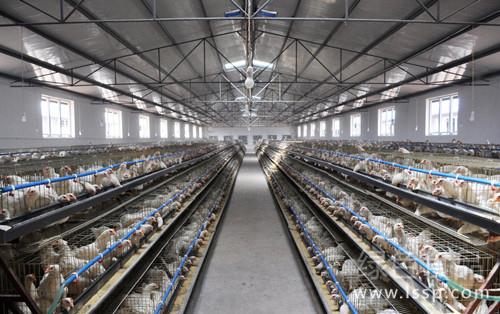
Laying hens
1 Strengthen breeding:
Breed excellent laying hen varieties; on one hand, produce laying hens that are high-yielding and strongly disease-resistant; on the other hand, breed high-quality laying hens that can be kept both in cages and free-range, to meet various needs.
2 Strengthen feeding management:
(1) Establish a reasonable lighting schedule. According to the growth conditions of each laying hen variety, formulate a reasonable lighting program. During the rearing period, provide 8h of light per day to ensure that sexual maturity and body maturity of the flock are consistent. As the hens begin laying, gradually increase the light duration until reaching 16h of light per day, with a light intensity of 10-60 Lux.
(2) Provide high-quality feed. Laying hens have different nutritional requirements at different stages of growth, and adequate nutrient supply must be ensured. After being transferred from the rearing house to the laying house, as the weekly feed amount increases, body weight shows an obvious growth process (mainly body maturity and reproductive system development). Measure the feed amount according to the hen's weight gain, so as to control excessive growth of the hens on one hand and maintain a strong appetite in the laying hens on the other.
(3) Maintain good uniformity. Ensure uniform weight gain of laying hens during the rearing period; the feed amount should be increased steadily. When the flock is subjected to stress from transfer or grouping, the feed amount should be appropriately increased so that they can grow steadily. After grouping, feed should be added by rows in a timely manner, with large, medium and small chickens fed separately, and the feed amount calculated accurately to ensure accurate and timely uniform feeding, thereby improving the weight uniformity of the flock.
(4) Improve the rearing environment. Strengthen daily environmental sanitation in the chicken house; do a good job of ventilation and insulation in the chicken house; remove manure from the chicken house in a timely manner to reduce damage to the respiratory tract mucosa of laying hens from harmful gases; before the start of laying, carry out stress training; minimize noise around the chicken house; do a good job of anti-stress work.
(5) Disease prevention. Do a good job of vaccine prevention for diseases in the flock such as avian influenza, Newcastle disease, infectious bursal disease, and infectious bronchitis; monthly routine health care is also needed to prevent digestive tract diseases and salpingitis caused by Salmonella and E. coli in chickens.
(6) Early detection, early treatment. When the keeper finds a hen with prolapse during daily management, it should be picked out in a timely manner, its feed intake appropriately reduced, and the prolapsed part fully washed with the disinfectant water in the chicken house, then the prolapsed part should be pushed back into the abdominal cavity. If conditions permit, it can be fixed with sutures; alternatively, 6-12g each of Chinese lobelia, honeysuckle, and black nightshade can be boiled in water to feed the laying hen and rinse the affected part, 2 times a day.
(7) Chinese herbal medicine prevention. Before the peak of egg production, add 1%-3% Buzhong Yiqi San to the laying hen feed: Astragalus 15 g, Atractylodes macrocephala 10 g, Codonopsis 15g, Angelica sinensis 6 g, dried tangerine peel 6 g, Bupleurum 5 g, Cimicifuga 5 g - honey-fried licorice 5g, crush and add according to the ratio. After feeding for 3 days, stop for 1 week, then feed for another 3 days; or add 1%-2% gypsum powder to the feed for prevention, with good results.