Shrimp feed feeding has its particularities: neither undereating nor overeating is acceptable
Feed is the main nutrient source for shrimp, but it is also the main source of pond pollution. The feeding process is the process of the water body being continuously polluted, so feed quality determines the growth rate of shrimp and also determines the degree of water pollution. Feed management must not only let shrimp eat their fill and grow quickly, but also reduce waste, lighten water pollution and lower farming costs. During the farming process, if feeding is insufficient, it will slow the growth rate of shrimp, prolong the interval between molts, and because of insufficient nutrition, the shrimp's constitution will decline and they will be susceptible to disease; or it will make the shrimp uneven in size and affect yield.
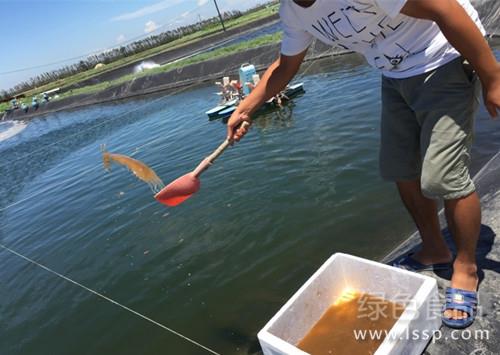
Shrimp feeding
If feeding is excessive, it will increase leftover feed, waste feed and raise the feed conversion ratio. At the same time, because too much leftover feed and feces undergo anaerobic decomposition, a large amount of harmful substances is produced, spoiling water quality and bottom sediment. In addition, because the environment deteriorates, it favors the massive reproduction of pathogenic bacteria, increases the pressure of disease prevention and control, and easily triggers disease, causing hidden deaths.
1. Choose high-quality feed. Comprehensive nutrition and reasonable matching can guarantee the nutritional needs of shrimp growth, enhance shrimp disease resistance, have a high digestion and absorption rate and good palatability, and can reduce enteritis, reduce the protein content in shrimp feces and leftover feed, thereby lightening pollution of the water body.
2. Determine the feeding amount. Appropriate feeding is a key link in the success of shrimp farming. It is also an important means of lowering farming costs and improving benefits. How to determine the appropriate feeding amount is a difficult point in feed management.
For outdoor pond shrimp farming, the daily number of feedings is 2 times from 1 to 7 days after seedling release, and afterward gradually adjusted to 3-4 times according to the feeding situation. Research shows that 3 to 15 feedings per day makes no obvious difference to shrimp growth. In addition, in the middle and late stages of farming, because the accumulated amount of organic matter is large, a large amount of oxygen will be consumed, and because there is no photosynthesis at night, the dissolved oxygen in the water body in the late farming stage is insufficient at night or in a sub-hypoxic state. Under these conditions, feed conversion and utilization decline, so in the middle and late stages of farming do not feed at night. Of course, if the farming water quality is maintained well, appropriate feeding at night is also possible.
On the first day of seedling release, the feeding amount is 100-200 grams per 100,000 tails per time (the smaller the water body, the less the first feeding amount; for a water body of about one mu, the first feeding is 1.0-1.2 jin per mu per meter), 2-3 times per day, and afterward increased by 10-15% every 3 days, until after 15 days when feed trays begin to be placed to adjust the feeding amount. Generally, the feeding amount before and after shrimp come onto the feeding net is 1.5-2.5 jin per 100,000 tails per time (seawater farming should be less than freshwater farming), 3 times per day. The feed tray area is about 0.3 sq m. If the feed is not finished within the agreed time, the next feeding should appropriately reduce or stop the feed.
The amount placed in the feed tray is related to pond area, water temperature, number of shrimp seedlings, etc. Taking a 3-5 mu pond with a seedling release amount of 40,000-100,000 per mu as an example:
Before the shrimp body length reaches 3 cm, the feed tray is generally filled with 0.5% of each feeding amount (on the first two days of checking feed, 0.1-0.2% in the feed tray), checked after 2.5 hours; for No. 1 feed, the feed tray is filled with about 1% of each feeding amount, checked after 1.5-2 hours; for No. 2 feed, the feed tray is generally filled with 2% of each feeding amount, checked after 1.5 hours; for No. 3 feed, the feed tray is generally filled with 3% of each feeding amount, checked after 1.0-1.5 hours (the checking time is counted from the start of feeding). When the water temperature is on the low side, appropriate adjustments can be made according to weather and water quality conditions.
3. Strengthen feed nutrition. High-quality feed can supply most nutrients to shrimp and meet the shrimp's needs for energy consumption and body growth and metabolism. However, due to the limitations of production technology (hard pellet feed must undergo high temperature and high pressure), feed nutrition will always be lacking; especially live bacterial preparations basically cannot be added, and nutrients such as vitamin C are easily lost during processing and storage, making it difficult for vitamin-type nutrients and microbial preparations to meet the shrimp's needs, so they need to be added separately. Of course, to treat diseases, some disease-preventing and disease-treating drugs also need to be added.
Therefore, nutrients such as multivitamins and immune polysaccharides are added to the feed, especially in high-density farming, to ensure healthy growth of shrimp. Common nutritional additives for feed include: bivalent yeast, high-stability C, shrimp multivitamins, strong growth promoter, growth-promoting big bubble king, etc. Strengthen feed nutrition, enhance shrimp constitution, improve feed digestion and absorption rate, and reduce pollution to the water body.