Excessive feeding of tilapia feed leads to water quality deterioration; how can feed be saved?
During the farming process, many farmers, in their one-sided pursuit of tilapia yields, continuously add feed and fertilizers, which not only raises costs but also deteriorates water quality, affecting tilapia growth and even survival, resulting in low profits. So how can the feed cost of tilapia be saved in production practice?
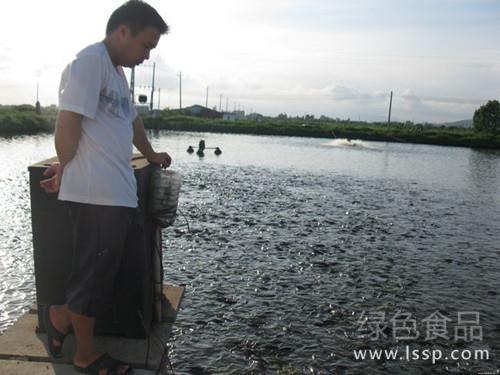
Tilapia feeding
I. Strictly carry out pond clearing and disinfection, and remove wild and trash fish:
Pond clearing and disinfection can kill wild and trash fish, reduce competitors for food, and also kill pathogenic factors, improve water quality, and provide tilapia with a good growing environment. When there are many wild fish and shrimp in the pond, they compete with tilapia for food, and predatory fish may even prey on tilapia, reducing feed utilization, so they must be removed. Therefore, before stocking fry, both new and old ponds must be cleared and disinfected. For old ponds, remove excess mud, keeping only 10cm of bottom mud. 10 to 15 days before stocking fish fingerlings, use chemicals to clear and disinfect the pond to kill pathogens and harmful organisms. Generally, two methods can be used: dry pond clearing or clearing with water. For dry pond clearing, use about 75 kg of quicklime or 4 to 5 kg of bleaching powder per mu; for clearing with water, use about 150 kg of quicklime per mu and spread it over the whole pond, trying to mix the bottom soil with the quicklime as thoroughly as possible, so as to completely kill parasites, pathogens, wild and trash fish, reduce competitors for food, and improve feed utilization.
II. Reasonable stocking to ensure mutually beneficial coexistence of fish:
To increase the survival rate of tilapia and reduce feed waste, stocking density and companion fish species are very important. At present, pond culture and cage culture can be used. The main mixed species are silver carp, bighead carp, grass carp, bream, freshwater pompano, etc. Every spring, when the water temperature rises and stabilizes above 15°C, winter fingerlings can be stocked. Stock 1500-3000 tilapia fingerlings per mu, and at the same time mixed-stock 40-70 silver carp and bighead carp fingerlings each to control water quality; when mixed with other fish, stock 200-500 per mu. Tilapia can be monocultured, mainly cultured, or polycultured in cages. Larger fingerling sizes are better, with a size at stocking of 10 g to 50 g per fish, and an average of 30 g being good. The stocking amount should be determined according to water quality conditions. When dissolved oxygen is above 3 mg/L, stock 3 kg to 20 kg per cubic meter of water. In addition, as the fish continue to grow, in order to adjust the farming density and improve benefits, they can be harvested and marketed in batches and subjected to rotational harvesting and stocking, so as to regulate the fish-carrying capacity in the water and increase the feed return rate.
III. Scientific fertilization and feeding to improve feed utilization:
Fertilizers and bait affect both tilapia growth and water quality changes. Tilapia in natural waters mainly feed on benthic organisms, aquatic insects, zooplankton, rotifers, organic debris, large algae, etc. It can use plankton as food, but of course it prefers artificial feed. During farming, moderate fertilization can also keep plankton in a good growth state, increase dissolved oxygen and nutrients in the water, and assist fish growth. Before stocking fingerlings, apply sufficient base fertilizer to improve the nutrient status of the bottom mud, increase nutrients in the pond, and favor the growth of natural bait. Apply 250-300 kg of decomposed chicken manure, etc. per mu. In the middle stage of farming, additional fertilizer can also be applied according to water quality conditions, once every 15-20 days, each time applying 2-3 kg of nitrogen fertilizer and 1 kg of phosphorus fertilizer per mu. A small amount of duckweed or azolla can also be placed in the pond to supplement the vitamin needs of tilapia.
Tilapia has a wide feeding habit. Under artificial rearing, various feeds can be given, such as wheat, corn, oilseed meal, etc. For the initial feed, the protein content is 32% to 35%, and the daily feeding amount is 3% to 5% of the total fish body weight. When the individual size grows to about 200 g, adjust the feeding amount to 2%, with a protein content of 27% to 29%. When the individual reaches about 300 g, tilapia enters its fastest growth period, with a daily feeding amount of 1% to 2% and a protein content of more than 35%. The feed can be a self-mixed blend, but it is best to process it into pellets. Feeding should follow the "four fixed" principles. Feed more than 2 times a day, and small and frequent feeding is advocated, feeding during periods with relatively sufficient dissolved oxygen, such as 8-9 a.m. and 3-4 p.m. Generally, the feeding amount is hard to control; too much causes waste, while too little leaves them not full, which is not good for growth. It is best to set up feeding platforms, with several feeding platforms around the pond. When feeding, spread the feed evenly along the pond, and check the feeding situation of tilapia 1.5-2 hours after feeding. Under normal conditions, if the full-stomach rate is 60% to 70%, the feeding is reasonable; if the full-stomach rate is too high, reduce the feeding amount; if too low, increase the feeding amount. At the same time, adjustments should be made according to weather, fish growth, water quality, etc. When the weather is clear, with gentle wind and warm sun, feed more; when the weather is bad, with continuous rain, muggy weather, or a cold current, feed less or not at all; when tilapia grows vigorously and has no disease, feed appropriately more, otherwise feed less; when the water quality is fresh and dissolved oxygen is sufficient, tilapia feeds vigorously and can be fed normally; when the water quality is poor and dissolved oxygen is low, feed less or not at all.
IV. Regularly regulate water quality and provide a good environment:
To raise fish, first raise the water. Water quality affects how fast tilapia grows and how high or low the feed coefficient is. Tilapia likes fresh water quality. With good water quality, it grows rapidly, has fewer diseases, can fully utilize feed, and reduces the feed coefficient. Therefore, when farming tilapia, attention should be paid to regulating water quality and keeping it fresh. Generally, the water is required to be yellow-green, with a transparency of 30-40 cm and dissolved oxygen above 3 mg/L. In pond culture, the pond water should be changed frequently to maintain fresh water quality and strictly prevent floating heads and pond turnover. Generally, add and change new water about once every 15 days, changing 10-20 cm each time, so that the pond water level remains about 1.5 m. In high-temperature seasons, the number of water changes can be appropriately increased. During the farming period, according to weather, water temperature, and fish feeding conditions, appropriately turn on the aerator to increase oxygen. When the weather changes, air pressure is low, and dissolved oxygen in the water is below 3 mg/L and fish float at the surface, increase the frequency and duration of aerator operation. In reservoir cage culture, brush the cages frequently to wash off dirt and attached algae on the cages, so that the water body can fully exchange. Also inspect the cages regularly and repair any damage in time to avoid fish escape or entry of predatory fish into the cages. When necessary, continuously adjust the cages. As the reservoir water level rises and falls, adjust the cages to a suitable depth so that tilapia has a good feeding environment.