- 网站首页
- Growing Techniques
- What are the propagation methods for the moonflower? Seed propagation is the main method
The moonflower is a relatively common flowering plant in people's lives, and it can be seen in many regions of our country. As more and more people cultivate it in various places, questions about its propagation have also become a point of concern. How is the moonflower propagated? What are the propagation methods for the moonflower? Below, the editor will guide everyone through an introduction.
I. How is the moonflower propagated? Seed propagation
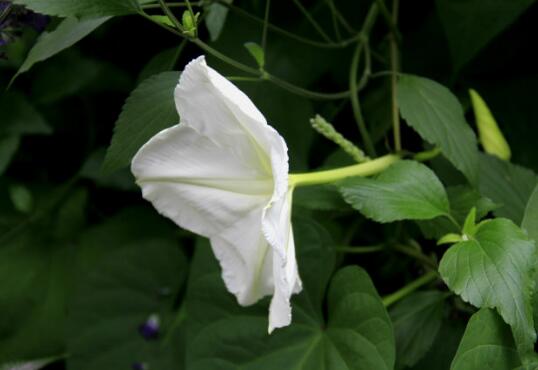
When it comes to how the moonflower is propagated, it is mainly by seed propagation. This propagation method, through countless trials by people, can be said to have a fairly high survival rate. As long as we operate properly and carefully during propagation, it can generally succeed. Below is a detailed introduction to the propagation methods of the moonflower. Interested friends can take a look.
II. Propagation methods of the moonflower
1. Propagation time, March to April
When we propagate the moonflower by seed, choosing a suitable time is very important. Its fruit generally matures in autumn each year. At this time, we can pick the mature fruit, then take out the seeds inside and store them, and wait until March to April of the following year to plant them.
2. Substrate selection, good drainage is required
Before propagating the moonflower, we must first choose a substrate, because only when it grows in a suitable substrate can it grow more robustly. Generally, we should preferably choose loose, fertile humus soil, because this kind of soil has relatively good drainage and aeration, and is rich in nutrients, allowing the moonflower to grow more rapidly.
3. Seed germination promotion, soaking in warm water
After choosing the substrate, there is still one pretreatment to do, which is to promote germination of the moonflower seeds. We can soak its seeds in warm water for about 24 hours, and take them out when the seeds begin to absorb water and swell. In this way, the seeds can also germinate faster during propagation.
4. Planting method, apply base fertilizer before planting
Before propagating the moonflower by seed, we must first apply an appropriate amount of base fertilizer to the soil, then evenly scatter the seeds on the soil surface. After scattering, cover with about 1 cm of soil and then water. When watering, it is best to use the pot-soaking method: place the flowerpot about halfway into water, let the water slowly soak up from the bottom, and take the flowerpot out once the soil has a certain degree of moisture.
5. Follow-up management, pay attention to daily care
After successful propagation according to the above methods, once the seeds germinate, we need to carry out daily care for the moonflower. During care, we need to pay attention to regular application of water and fertilizer, and to light management, etc. For specific details, everyone can refer to the article on moonflower cultivation methods, which has detailed teaching. The editor will not introduce them one by one here.
Moonflower Calonyction aculeatum (Linn.) House Moonflower illustrated guide: How to grow the moonflower / How to propagate the moonflower
Moonflower profileMoonflower Calonyction aculeatum (Linn.) House
Cultivation methods and precautions for the moonflower Introduction to the moonflower
The moonflower is in the Convolvulaceae family, genus Calonyction, an annual twining herb, reaching up to 10 m in length. It is introduced and cultivated in many places across our country, relatively commonly. It likes sufficient sunlight and warmth, is not cold-tolerant, and freezes to death when encountering frost and cold. It has no strict requirements for soil. The moonflower is native to tropical America.
Xiyan, also known as Chang'e Flying to the Moon (Yunnan), Tianqie'er, Tianqiezi, and moonflower, is a plant in the Convolvulaceae family, genus Ipomoea. It is native to the tropical and temperate regions of the New World, including the entire territory of South America, Central America, Mexico, and the US state of Florida. It is distributed throughout the tropics, tropical America, and in mainland China's Guangxi, Shaanxi, Jiangxi, Zhejiang, Yunnan, Guangdong, Sichuan, Jiangsu, and other places. It mostly grows in the wild and has now been widely cultivated artificially. The white flowers of the moonflower resemble a full moon, large and beautiful, and because they bloom at night, it got its name.
Morphological characteristics of the moonflower
The moonflower is an annual, large twining herb, reaching up to 10 m in length, with milky sap. The stem is green, cylindrical, nearly smooth or more or less with soft prickles. The leaves are ovate, 10-20 cm long, with a long acute or acuminate apex, a cordate base, and entire margins or slightly angular or lobed.
The flowers are large, opening at night, fragrant, 1 to many arranged in a raceme, sometimes the rachis is zigzag; sepals ovate, green, with long awns, the 3 outer sepals 5-12 mm long (excluding awns), the awns relatively long, the inner sepals 7-15 mm long (excluding awns), the awns shorter or absent; the corolla is large, snow-white, extremely beautiful, with a pale green band in the middle of the limb, the tube 7-12 cm long, about 5 mm wide, the upper part of the tube not expanded or slightly expanded, the limb shallowly 5-rounded-lobed, spreading, 7-12 cm in diameter; the style and stamens extend beyond the corolla; stamens 5, filaments cylindrical, inserted on the tube, anthers large, sagittate at the base, pale yellow; the disc is annular, thick, fleshy; the ovary is long-conical; the style is cylindrical, white; the stigma is large, 2-globose.
The moonflower capsule is ovate, about 3 cm long, with an acute tip, surrounded at the base by enlarged sepals, and the fruit stalk is thick.
Moonflower seeds are large, hairless, about 1 cm long and 7-8 mm wide, yellowish-white, brown, or black. The flowering period is August to October, and the fruiting period is September to November.
Ecological habits of the moonflower
The moonflower likes sufficient sunlight and warmth, is not cold-tolerant, and freezes to death when encountering frost and cold. It has no strict requirements for soil and grows well under sunny and moist conditions. Large seedlings are not tolerant of transplanting.
The moonflower is introduced and cultivated in many places across our country, relatively commonly.
Cultivation technique management methods for the moonflower
Seedbed management
Water appropriately, and do not let it become waterlogged; prevent and control mouse damage and insect damage: phoxim or trichlorfon mixed with wheat bran (poison bait) can be used; weed promptly and spray foliar fertilizer; when true leaves grow to 3-4, begin pinching to prevent excessive vegetative growth; the suitable seedbed temperature is 25-28°C, and not lower than 15°C at night.
Generally the seedling age is 35-40 days, and seedlings are hardened 5-7 days before planting;
Timely transplanting
(1) Dig large holes. Before transplanting, dig holes of 20 cm x 20 cm, with a plant spacing of 1.3-1.6 m, keeping about 80-100 seedlings per mu, and apply 5-7.5 kg of farmyard manure and 100-250 g of chemical fertilizer per hole (diammonium phosphate, potassium fertilizer, and magnesium powder in a ratio of 3:1:1) as base fertilizer.
(2) Manual transplanting. Before transplanting, water the nutrient bags thoroughly, transplant the seedlings into the holes, cover with soil, and water thoroughly. At the same time, cover with plastic film and cut holes to release the seedlings. Double-film transplanting can also be chosen, that is, adding an arched film after transplanting;
Field management
(1) Manual weeding, and timely prevention and control of diseases and insect pests.
(2) In combination with topdressing, level the empty ridges and spread straw. Use about 1 kg of rice straw or wheat straw per sq m to prevent weed infestation. When the main vine grows to about 50 cm, it is best to combine with irrigation and apply 100-250 g of urea per plant as topdressing. Do not apply topdressing too close to the main root, to prevent root burn. Do not scatter urea on the leaf surface, to prevent leaf burn.
(3) Vine direction, pinching, branch removal, and artificial pollination. Vine direction: keep two main vines per plant. Both main vines are laid horizontally on the empty ridges, and directional soil can be cultivated once. Pinching: for first-level branches, when they grow to 3 leaves, begin pinching, watch for and pinch off second- and third-level branches; pinch the main vines after August 23. Artificial pollination: generally for sweet gourd, branches are removed and tips pinched every morning, and pollination begins at 16:00 in the afternoon; pollination can be stopped after End of Heat, and generally two main vines bear 6-8 gourds;
Harvesting
Gradual harvesting begins in early August, that is, when the first crop of gourds grows to about 7-9 kg. In principle, harvest on the first day, and on the second day first peel off the gourd skin and then peel the gourd strips; from August to September, basically in September, when the gourd has grown to approximately white, the hairs on the surface are gone, but it is still relatively heavy, it can be picked. Otherwise, if the vine withers and turns yellow, the gourd may fall and be damaged. After picking, it still needs to be air-dried, and in this way a bumper harvest of fruit can be obtained.
Cultivation methods for the moonflower Planting methods
1. Crop rotation selection and land preparation
Choose flat plains and low-lying land with good drainage and fertile soil, as well as hilly land with irrigation conditions. Avoid continuous cropping or successive cropping with watermelon and other cucurbits. Land preparation: build ridges at the proper time and suppress promptly to preserve soil moisture. The transplanting ridges are long-mouth ridges. The ridge width is 9-13 cm, and the 7-8 empty ridges in the middle should also be ridged to help eliminate weeds;
2. Seed soaking and germination promotion
The variety selected is Japanese green-skinned gourd. Soak the seeds in 40°C warm water for 12-24 hours, take them out, wrap them in gauze, spin dry, and crack open the soaked sweet gourd seeds. Use a wooden trough or an ordinary basin, lay a layer of disinfected sawdust or sand, then lay a layer of gauze, place the soaked seeds evenly on the gauze, cover with a wrung-dry new towel, cover with a lid, and cover with a cotton quilt to promote germination. Use a new brush broom to sprinkle water twice a day. The germination temperature is generally 25-28°C. It is required to pick out the germinated seeds every day, place them in another basin, and put them in a cool indoor place to control bud growth;
3. Sowing in the seedbed
① Seedbed preparation
Place 8-10 cm of horse manure or chopped grass at the bottom of the seedbed, spread a layer of soil on top, and tread it flat. At the same time, disinfect with 70% dexon wettable powder at 0.3-0.6 g/sq m, and cover with a shed. After sowing the seeds, cover the seedbed with a small shed.
② Nutrient soil preparation
Choose soil that has not used herbicides such as Pursuit or chlorimuron-ethyl, screen it well, and mix it with screened decomposed farmyard manure in a ratio of 7:2.
③ Bagging and sowing
Put the nutrient soil into 10 cm x 15 cm plastic bags, and place 20-30 grains of diammonium phosphate at one-third of the bottom of the plastic bag as base fertilizer, fill it full and firm it, and cut open the bottom corners of the nutrient bag or punch 2-4 holes with a diameter of 8-10 mm at the bottom to allow water to pass through. The sowing time is based on the local season. Use a wooden stick to make holes 3-4 cm deep in the middle of the nutrient bag, place the germinated seeds with the bud eye facing down, cover with soil, and water once;
Propagation methods of the moonflower
The moonflower is native to tropical America and likes warmth. It prefers a humid climate and is not tolerant of severe cold; it has no strict requirements for soil, and can adapt to ordinary soil. It can be propagated by seed.
Collect seeds in late autumn, dry them, and store them. Sow in March to April of the following year. When direct sowing in the open field, seedlings should be transplanted and set out after true leaves grow. When setting out, the plant and row spacing is 40-60 cm x 60-80 cm. In addition, adventitious roots easily form at the nodes of moonflower vines, so it can also be propagated by cuttings and layering. Sow in the seedbed in early spring. When the seedlings produce 3-5 true leaves, they can be planted out at a flower trellis or fence and allowed to climb and grow. They can also be directly sown in the open field in March to April, at a distance of 40-80 cm.
Management during propagation
The moonflower likes a slightly moist and somewhat dry soil environment. The high-temperature period in summer is its vigorous growth stage, and at this time the water supply should be ensured. It has a relatively high demand for fertilizer. In addition to applying base fertilizer at planting, during the vigorous growth stage a dilute liquid fertilizer can be applied every 2-3 weeks.
The moonflower likes an environment with sufficient sunlight, and daily sunlight exposure should preferably be no less than 4 hours. It likes warmth and is not cold-tolerant, and grows better within a temperature range of 18-28°C. Supports should be set up in time to ensure that the seedlings have something to attach to after growing larger and can smoothly climb the trellis. In actual cultivation, the moonflower will be harmed by powdery mildew and other diseases, and will be attacked by harmful animals such as aphids. If these occur, measures should be taken promptly to deal with them.
Disease control of the moonflower
The moonflower has very good disease resistance. Its insect pests include aphids and whiteflies, which can be washed off directly with water, or a diluted insecticide can be applied.
The moonflower can successfully overwinter in a frost-free environment above 5.
Distribution range of the moonflower
The moonflower is native to the tropical and temperate regions of the New World, including the entire territory of South America, Central America, Mexico, and the US state of Florida. It is distributed throughout the tropics, tropical America, and in mainland China's Guangxi, Shaanxi, Jiangxi, Zhejiang, Yunnan, Guangdong, Sichuan, Jiangsu, and other places. It mostly grows in the wild and has now been widely cultivated artificially.
Domestic distribution
Shaanxi, Jiangsu, Zhejiang, Jiangxi, Guangdong, Guangxi, Sichuan, Yunnan, usually cultivated, and also wild.
Overseas distribution
The place of origin may be tropical America, and it is now widely distributed throughout the tropics.
Uses and purposes of the moonflower Uses and purposes
In the ancient civilizations of Central America, people used the moonflower to transform the latex in elastic castilla rubber trees and guayule into elastic rubber balls, because the sulfur element contained in the latex of this plant can vulcanize rubber.
Medicinal value
The whole plant of the moonflower can be used as traditional Chinese medicine. Its nature and flavor are bitter, pungent, and cool. It can neutralize snake venom; the seeds can treat bruises, swelling, and pain, and fractures.
The leaves contain the plant hormone calonyctin A, a glycoside composed of 11-hydroxyhexadecyl and ipomeaic acid methyl ester with 4 rhamnoses, which can promote plant growth and development, regulate plant metabolism, and increase yield.
Medicinal or dietary therapeutic value of the moonflower
The medical information and healthy dietary therapy information on Huhua.com is for reference only and cannot be used as a basis for diagnosis or medical treatment. Any health issues should be consulted with professional medical personnel, and any disease treatment should follow a doctor's advice.
Ultimate flower-protecting task: love yourself, start from reality, and strictly follow a doctor's advice. For illness, do not be careless, do not delay, do not give up hope, face it bravely, use love to warm the silent world, and use your heart to protect the flower field within.
Functions and indications
Whole plant: treats snake bites. Seeds: treat bruises, swelling and pain, and fractures.
Harvesting and processing
The stems and leaves are mostly used fresh. The seeds are harvested when mature and sun-dried for later use.
Utilization
The moonflower can also be used as a material for vertical greening. In a night garden, the large white flowers and fruit have a striking fragrance and can embellish the night scene, adding color to evening parties, and can also be used as temporary cut flowers at night. The whole plant or seeds of the moonflower can be used as medicine. The whole plant treats snake bites; the seeds treat bruises, swelling and pain, and fractures.
Source
Convolvulaceae moonflower, with the whole plant or seeds used as medicine.
Chemical composition
The leaves contain the plant hormone calonyctin A. Calonyctin A is a glycoside homolog composed of 4 rhamnoses and 2 aglycones, with two relative molecular masses differing by 28 mass units.
Garden uses of the moonflower Hedge and wall greening
It is mainly the greening of low walls, trellises, railings, wire mesh, and other places, using vines to turn hard and monotonous civil engineering components such as trellises, low walls, guardrails, and wire mesh into lush green enclosures with abundant branches and leaves. It not only beautifies the environment, but also insulates sound and keeps out dust, and can also form an enclosed space that makes people feel friendly and quiet. Hedge and wall greening generally does not have very strict requirements for the climbing ability of vines, but different suitable materials should be chosen for different hedge and wall types.
For the greening of bamboo fences, wire mesh, and small railings, herbaceous species with soft stems and small leaves are suitable, such as morning glory, moonflower, sweet pea, balloon vine, and Japanese bindweed. In shady places, Aconitum hemsleyanum, Aconitum alboviolaceum, Sargentodoxa cuneata, and Streptolirion volubile can also be chosen; for ordinary low walls, steel frames, and the like, Rosa multiflora, climbing roses, Caesalpinia decapetala, honeysuckle, Jasminum floridum, Pyrostegia venusta, and Campsis grandiflora can be chosen.
Cultural background of the moonflower Origin of the name
The white flowers of the moonflower resemble a full moon, large and beautiful, and because they bloom at night, it got its name.
Stories and allusions
In The Tale of Genji, Xiyan is the gourd flower. I always see online that "in The Tale of Genji, it refers to a small white flower of the radish flower type," but I do not know where this statement comes from. In Empresses in the Palace, there is a scene in which Consort Hua, because of the Xiyan flower woven from Shu brocade, gives that piece of fabric to Zhen Huan, precisely because she feels the flower's meaning is inauspicious.
Misunderstanding
Morning glory opens in the morning, so how could it be called "Xiyan"! The gourd flower opens in the evening and withers in the deep night, so it is called "Xiyan."
In addition, in the fourth chapter "Xiyan" of The Tale of Genji, there is also an annotation about morning glory: Asagao is morning glory.
"Xiyan" and "Asagao" are both women in The Tale of Genji, the world's first full-length realistic novel. Xiyan captured the hearts of the two great noble young men of the time, while Asagao refused Genji, the male protagonist of the first half, and never married in her life. Asagao and Xiyan are exactly opposite whether as women or as plants.
Flower language of the moonflower
Flower language of the moonflower: eternal love, fragile and fleeting beauty.
A face that never fades in the twilight, a warmth in life that is never lost.
Moonflower pictures
Appreciation and introduction of moonflower pictures
Speaking of the moonflower, it is natural to think of a song we often sang in childhood, "Moonlight." Some people ask whether the moonflower is the same as moonlight? Is the moonflower the same as the sun flower we usually grow? Actually, they are not the same. The moonflower is a flower that likes sunlight. It likes warmth. Although it is called moonflower, it does not face the sun like a sunflower. The flower color of the moonflower is white, appearing very pure, without the slightest pollution! You do not recognize it, right? Then let me show you pictures of the moonflower!
The moonflower is an annual twining herb, reaching up to 10 m in length. It is introduced and cultivated in many places across our country, relatively commonly. It likes sufficient sunlight and warmth, is not cold-tolerant, and freezes to death when encountering frost and cold. It has no strict requirements for soil. The moonflower is native to tropical America.
Morphological characteristics
Annual twining herb, reaching up to 10 m in length. The whole plant has milky sap. The stem is green, cylindrical, nearly smooth or more or less with soft prickles. Simple leaves alternate; petiole 5-12 cm long; leaf blade ovate, 10-20 cm long, 5-15 cm wide, with a long acute or acuminate apex, a cordate base, and entire margins or slightly angular or lobed. The flowers are large, opening at night, 1 to many arranged in a raceme, sometimes the inflorescence axis is zigzag; flowers bisexual, sepals 5, ovate, green, with long awns; corolla white, with a pale green band in the middle of the limb, the limb shallowly 5-rounded-lobed, spreading, 7-12 cm in diameter; stamens and style extend beyond the corolla; stamens 5, filaments cylindrical, inserted on the corolla tube, anthers sagittate at the base, pale yellow; the disc is annular, fleshy; the ovary is long-conical, the style cylindrical, the stigma large, 2-globose. Capsule ovate, about 3 cm long, with an acute tip, surrounded at the base by enlarged sepals. Seeds hairless, about 1 cm long and 7-8 mm wide, yellowish-white, brown, or black. The flowering period is August to October, and the fruiting period is September to November.
Ecological habits
It is introduced and cultivated in many places across our country, relatively commonly. It likes sufficient sunlight and warmth, is not cold-tolerant, and freezes to death when encountering frost and cold. It has no strict requirements for soil and grows well under sunny and moist conditions. Large seedlings are not tolerant of transplanting.
Propagation and cultivation
The moonflower is native to tropical America and likes warmth. It prefers a humid climate and is not tolerant of severe cold; it has no strict requirements for soil, and can adapt to ordinary soil. It can be propagated by seed. Collect seeds in late autumn, dry them, and store them. Sow in March to April of the following year. When direct sowing in the open field, seedlings should be transplanted and set out after true leaves grow. When setting out, the plant and row spacing is 40-60 cm × 60-80 cm. In addition, adventitious roots easily form at the nodes of moonflower vines, so it can also be propagated by cuttings and layering. Sow in the seedbed in early spring. When the seedlings produce 3-5 true leaves, they can be planted out at a flower trellis or fence and allowed to climb and grow. They can also be directly sown in the open field in March to April, at a distance of 40-80 cm.
You have also seen the moonflower pictures! Do they look somewhat familiar? The moonflower is mainly white. It gives people the impression of being as noble as a lotus emerging from mud unstained. It is not a flower that strongly attracts attention. It likes to grow silently and invisibly, completing its life of flowering and fruiting. The moonflower has few requirements for its growing place. As long as there is a place with sun, it likes it. So we can see the moonflower everywhere! I have given you moonflower pictures. Isn't the moonflower very beautiful!
- 请使用count标签查询 Industry News
- 请使用count标签查询 Agricultural Machinery
- 请使用count标签查询 Edible Gardening
- 请使用count标签查询 Grain Crops
- 请使用count标签查询 Fruit Tree Cultivation
- 请使用count标签查询 Flower Cultivation
- 请使用count标签查询 Macadamias
- 请使用count标签查询 Agricultural Products
- 请使用count标签查询 Pests & Diseases
- 请使用count标签查询 Flowers & Gardening
- 请使用count标签查询 Soil & Composting
- 请使用count标签查询 Vegetables
- 请使用count标签查询 Agricultural Technology
- 请使用count标签查询 Growing Techniques
- 请使用count标签查询 Succulents
- 请使用count标签查询 Agriculture Encyclopedia
- 请使用count标签查询 Flowers
- 请使用count标签查询 Plants
- 请使用count标签查询 News
- 请使用count标签查询 Birds
- 请使用count标签查询 Policy
- 请使用count标签查询 Fertilizer
- 请使用count标签查询 Pesticides
- 请使用count标签查询 Nursery Stock
- 请使用count标签查询 Mushroom Cultivation
- 请使用count标签查询 Medicinal Herb Cultivation
- 请使用count标签查询 Fodder & Green Manure
- 请使用count标签查询 Livestock Farming
- 请使用count标签查询 Apple Cultivation
- 请使用count标签查询 Coffee Cultivation
- 请使用count标签查询 Organic Farming
- 请使用count标签查询 Avocados
- 请使用count标签查询 Green Manure
- 请使用count标签查询 Orchids
- 请使用count标签查询 Livestock Farming
- 请使用count标签查询 Melons & Fruits
- 请使用count标签查询 General News
- 请使用count标签查询 Watermelons
- 请使用count标签查询 Oranges
- 请使用count标签查询 Wax Apples
- 请使用count标签查询 Tomatoes
- 请使用count标签查询 Strawberries
- 请使用count标签查询 Pears
- 请使用count标签查询 Cherries
- 请使用count标签查询 Passion Fruit
- 请使用count标签查询 Mangoes
- 请使用count标签查询 Dragon Fruit
- 请使用count标签查询 Blueberries
- 请使用count标签查询 Pepino Melons
- 请使用count标签查询 Pomelos
- 请使用count标签查询 Lychees
- 请使用count标签查询 Bird's Nest Fern
- 请使用count标签查询 Bananas
- 请使用count标签查询 Pothos
- 请使用count标签查询 Pineapples
- 请使用count标签查询 Figs
- 请使用count标签查询 Koi
- 请使用count标签查询 Lemons
- 请使用count标签查询 Cacti
- 请使用count标签查询 Muskmelons
- 请使用count标签查询 Goji Berries
- 请使用count标签查询 Sugarcane
- 请使用count标签查询 Soybeans
- 请使用count标签查询 Rice
- 请使用count标签查询 Cyclamen
- 请使用count标签查询 Peaches
- 请使用count标签查询 Jujubes
- 请使用count标签查询 Sugar Apples
- 请使用count标签查询 Plums
- 请使用count标签查询 Wampees
- 请使用count标签查询 Waxberries
- 请使用count标签查询 Longans
- 请使用count标签查询 Custard Apples
- 请使用count标签查询 Guavas
- 请使用count标签查询 Kiwis
- 请使用count标签查询 Grapes
- 请使用count标签查询 Mulberries
- 请使用count标签查询 Plant Pests & Diseases
- 请使用count标签查询 Salaks
- 请使用count标签查询 Persimmons
- 请使用count标签查询 Starfruit
- 请使用count标签查询 Mint
- 请使用count标签查询 Mangosteens
- 请使用count标签查询 Durians
- 请使用count标签查询 Papayas
- 请使用count标签查询 Cilantro
- 请使用count标签查询 Sweet Potatoes
- 请使用count标签查询 Bitter Melons
- 请使用count标签查询 Chili Peppers
- 请使用count标签查询 Ginger
- 请使用count标签查询 Millet
- 请使用count标签查询 Pumpkins
- 请使用count标签查询 Herbs
- 请使用count标签查询 Peanuts
- 请使用count标签查询 Cauliflower
- 请使用count标签查询 Loquats
- 请使用count标签查询 Coffee Cultivation
- 请使用count标签查询 Winemaking
- 请使用count标签查询 Organic Tea Garden
- 请使用count标签查询 Tea
- 请使用count标签查询 Seed Industry
- 请使用count标签查询 Livestock Farming
- 请使用count标签查询 Aquaculture
- 请使用count标签查询 Specialty Farming