What does vernalization mean for orchids? Teach you to promote flower bud growth
Growing orchids is a profound discipline, especially for beginner flower lovers, as there is so much to learn. For example, some flower lovers do not know what orchid vernalization means. Orchid vernalization refers to the low-temperature process that orchids must undergo during their reproductive growth period. Simply put, it is low-temperature treatment...
Growing orchids is a profound discipline, especially for beginner flower lovers, as there is so much to learn. For example, some flower lovers do not know what orchid vernalization means. Orchid vernalization refers to the low-temperature process that orchids must undergo during their reproductive growth period. Simply put, it is low-temperature treatment. Orchid vernalization plays an importance that cannot be ignored in promoting flower bud growth, and the vernalization time for orchids varies greatly depending on the region.
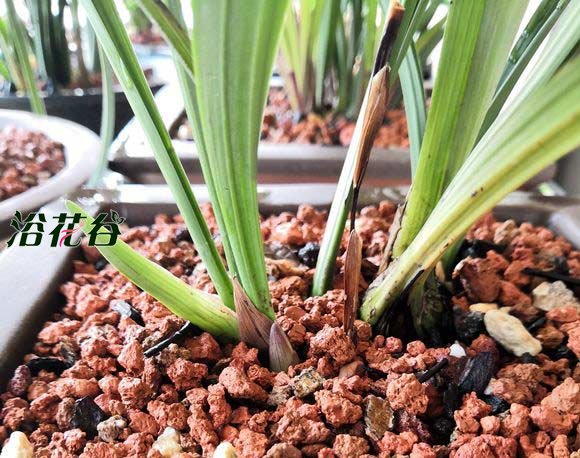
Different orchid varieties also have different requirements for vernalization temperature. For example, Cymbidium ensifolium (sword-leaf orchid), Cymbidium kanran (cold orchid), and Cymbidium sinense (Chinese cymbidium) do not need special low-temperature vernalization to bloom naturally, but for Cymbidium sinense, the temperature from the bud stage to before flowering and even during the flowering period is best kept between 10-15 degrees. If the temperature is too low or too high, Cymbidium sinense is prone to bud stagnation and bud abortion. Even if it manages to open, the flower quality is very unsatisfactory and its charm is greatly reduced.
Many orchid growers wonder: when is the most suitable time to vernalize orchid plants with flower buds? For orchid growers in orchid-producing areas, there is no need to worry about this question at all; just let nature take its course (except when controlling the flowering period for exhibitions) and let them bloom normally. For northern orchid growers, timing must be chosen appropriately. Usually, when the flower bud emerges about 3-4 cm, stops growing taller, and develops to look slightly round and plump, vernalization can begin as long as the vernalization location has a suitable temperature (4-10 degrees).
During vernalization, the ideal temperature is between 4-10 degrees. If the temperature is too low or too high, it will have a certain impact on flower bud growth, bud development, and nutrient accumulation. Humidity should not be too high, as it easily causes root rot and flower bud rot. Therefore, as much as possible according to the situation, keep the plants on the drier side and delay watering time.
The vernalization duration is for orchid growers' reference only. Of course, the more thorough the vernalization, the better. Usually Cymbidium goeringii (spring orchid) needs 30-40 days of vernalization. Spring orchids from the Yunnan-Guizhou-Sichuan area have lower vernalization requirements and are relatively easier, and some can even bloom normally without vernalization. For spring orchids from the Jiangsu-Zhejiang area, due to factors such as geography and climate, it is better to appropriately extend the vernalization time. For Cymbidium tortisepalum var. longibracteatum and Cymbidium tortisepalum, about 40-50 days is suitable. For Cymbidium faberi (Faber's cymbidium) and Cymbidium goeringii 'Songchun', it is best to have more than 60 days. To help orchid plants achieve the effect of vernalization and nutrient accumulation, before vernalization, spray the leaves once with a 1000-fold dilution of monopotassium phosphate, and then begin vernalization. This promotes nutrient accumulation, resulting in larger flowers and more vivid colors. During vernalization, avoid applying nitrogen fertilizer, because at lower vernalization temperatures orchid seedlings cannot absorb nitrogen fertilizer, which easily causes fertilizer burn and root rot.
After vernalization ends, water thoroughly (avoid getting water into the flower buds, which can cause bud rot). The orchid pot can be placed in a location around 15 degrees for 1-2 days, then moved to normal room temperature. This can effectively avoid heat-induced bud stagnation and bud abortion caused by a sudden temperature rise. After moving to normal room temperature (18-24 degrees), the flower stem usually elongates rapidly (except for certain varieties), and after about 5-15 days the buds line up and open.
For watering after vernalization is completed, handle it appropriately according to different potting media. Usually for petal-type flowers (lotus-petal type, plum-petal type, narcissus-petal type, etc.) and colored flowers (red flowers, golden-yellow flowers, pink flowers, etc.), try not to let the potting medium become too wet in the 7 days before and after flowering. Keep them slightly on the drier side for flowering; the petal type and color will be more ideal. Otherwise, the petals will elongate quickly, the shape will change, the color will fade, and the fragrance will also be greatly reduced (for colored flowers, after vernalization ends, it is best to keep the flowering period at a slightly lower temperature for better color). For odd-flowered types, the opposite applies. Especially for multi-petal odd flowers, keep them on the wetter side. If water is insufficient, some small petals will appear semi-dehydrated when blooming and will not look spirited enough. Sufficient water will make them bloom more outstandingly and beautifully.
These are just shallow remarks, and I hope they can be of some help to new orchid growers. For any shortcomings, I sincerely welcome teachers to offer generous guidance.