Key Points and Practical Tips for Restricted Feeding of Breeding Chickens
Breeding chickens have a strong feeding capacity, so they grow and develop rapidly and gain weight quickly, but if not controlled, the body weight of breeding chickens can easily exceed the standard, thereby affecting egg production.For this reason, restricted feeding must be carried out during the period from 4 weeks to 24 weeks of age for breeding chickens. The specific tips are as follows:
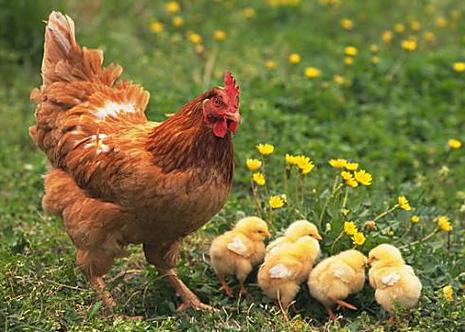
(Image from the internet)
Restricted feeding first of all can ensure that the body weight of breeding chickens meets the standard for the breed. If breeding chickens are overweight, especially if hens are overweight, egg production will be greatly reduced, and the qualification rate of hatching eggs will also decrease. Moreover, overweight often leads to leg disorders.
Restricted feeding can allow the bones and internal organs of broiler breeders to fully develop in the early stage, maintain appropriate body weight, delay the sexual maturity period of broiler breeders, and synchronize sexual maturity with body maturity. After 27 weeks of age, the laying rate of breeding chickens can exceed 50%, and at 30 weeks of age they enter the peak laying period. Therefore, by adopting restricted feeding, the age at first egg of breeding chickens can be relatively uniform, they start laying at the appropriate time, the laying rate rises quickly, the peak laying period lasts a long time, and the qualification rate of hatching eggs is high.
Restricted feeding can reduce the amount of feed input in the daily ration and reduce feed consumption. At the same time, it reduces the amount of abdominal fat deposition in breeding chickens, thereby lowering the incidence of prolapse of the oviduct and difficult labor after they start laying.
In production, how should the method of restricted feeding be mastered? At present, the methods of restricted feeding can be divided into the time restriction method, the quality restriction method, and the quantity restriction method, etc. In practical operation, it is not necessarily a single method used alone. For example, the time restriction method mainly controls the feed intake of breeding chickens by controlling their feeding time. This method can also be divided into three forms: daily restricted feeding, alternate-day restricted feeding, and weekly restricted feeding.
(Image from the internet)
Daily restricted feeding is based on the age of the breeding chickens, their weight gain, and the nutritional needs for maintaining growth and development, with a limited amount of feed provided each day or by limiting the number of feedings and the time of each feeding to achieve restricted feeding. The advantage of daily restricted feeding is that it causes relatively little stress to the chickens, and it is suitable for the late brooding period, the early growing period, and one week before transfer to the laying hen house.
Alternate-day restricted feeding concentrates the feed for two days of restricted feeding into one day, that is, feeding on one day and no feeding on the next day. This method causes greater stress to breeding chickens, but it can alleviate the phenomenon of competing for food, so that the amount of feed eaten by each chicken is roughly equivalent, thereby obtaining a flock with relatively high body weight uniformity and meeting the target requirements. This method is suitable for flocks in stages where growth speed is fast and difficult to control.
Weekly restricted feeding is feeding for 5 days and no feeding for 2 days each week, that is, evenly distributing the feed for 7 days over 5 days of feeding. This method is not used very often.
The quality restriction method mainly limits the nutritional level of the feed, making the content of certain nutritional components in the daily ration of breeding chickens lower than normal levels. Methods commonly used include reducing the levels of nutritional elements in the daily ration, such as energy, protein, and lysine. It is worth noting that vitamins, minerals, and trace elements, etc., cannot be reduced at will and still need to be supplied adequately.