To raise crayfish, first raise the water. What kind of water counts as good water?
The "algae" and "bacteria" you cannot figure out
What exactly is it in aquaculture water that constantly circulates and purifies the water quality???
In aquaculture, bacteria and algae should be considered one of the most basic things that farmers should understand. However, as a crayfish farmer, do you understand these two things? What role do they actually play in aquaculture water, what exactly are they, and how should we use and view them? Below is a simple introduction to bacteria and algae, hoping to help farmers recognize them and become aware of them, and help you succeed in farming!
Aquaculture is obviously more difficult than raising pigs, ducks, chickens, sheep, and so on on land. The reason is that things in the water cannot be seen with our eyes, and some changes in the water are greatly affected by climate and weather. Strong experience is needed to handle them well. This is the difficulty of aquaculture!
First, we can make an analogy, for example: raising chickens. Let us compare it with crayfish aquaculture! Suppose in a chicken coop, the chickens we raise constantly eat and drink, producing a large amount of manure, as well as unfinished feed on the ground, and so on. During the farming process, we can clearly see the presence of this farming waste with our eyes, so we handle it manually. But when we compare this to aquaculture, most farmers lose this awareness. They think that because there is a large amount of water in the water, they can ignore it. This is the biggest misunderstanding among farmers.
In the process of aquaculture, there will likewise be a large amount of animal waste that needs to be handled manually in order to create a good water environment, so that aquatic animals grow faster and do not get sick! It is understandable that most newly initiated crayfish farmers lack this awareness, because in nature there are many large water bodies, such as reservoirs, lakes, and so on, in which large numbers of aquatic animals constantly produce manure and waste, yet the water quality is still very good? Why is that? For example, a reservoir that has not been cleared for 20 years still has good water, and the fish still grow very well. Logically speaking, over such a long period as 20 years, the fish in it have produced a large amount of waste, so why can it still be like this?
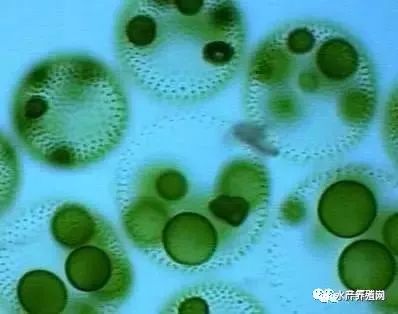
That is because within a water body itself there exist some things that can purify the water quality and constantly repair the water quality. These are the "algae" and "bacteria" in the water. What exactly are these two things?
Let us first talk about what algae are.
Algae exist in all water bodies in nature. They are a kind of microorganism in water. They are living things: they can be born, can die, can be active, and can be inactive.
When there is a large amount of algae in the water, it forms what we directly see with the naked eye: the water has color!! The most commonly seen is our fish pond water. Fish pond water is generally relatively dense. For example, green water, where the color of the water is green, means that algae are in the water and make our water appear green. Different water colors indicate different types of algae inside. The level of transparency is usually the amount of algae. The higher the transparency, the fewer the algae; the denser the water, the more algae there are.
This is algae! This algae is constantly purifying the water quality. The manure of aquatic animals and the uneaten portion of what we feed, if not for the purifying effect of algae, would cause an aquaculture water body to continuously accumulate a large amount of waste, and in the end the entire aquaculture water body would collapse and deteriorate!
This is our algae. It is a kind of living microorganism in water. We cannot see it with our eyes, but through the color of the water we can sense its existence. Many people's pond water has poor color, is turbid, and so on, indicating that the algae in our aquaculture water have not reproduced well enough to achieve the effect of purifying water. The reason is that not every aquaculture water body is suitable for this kind of algae to grow. We must create an environment that lets this algae grow well, so that our water color is good and the purifying effect of the algae is good. Only then can our aquaculture pond be clean and can aquatic animals grow quickly! How to create a good water environment to let algae grow well is what I will discuss in the next article. In this section, I first let farmers know what algae are called, and their role! In addition, what we usually call algae all refers to algae beneficial to aquatic animals, also called beneficial algae.
Because there are many kinds of algae in water, when our water color is poor and the color is bad, it means that bad algae dominate our aquaculture water. At this time, water quality deteriorates, and crayfish grow slowly! When the algae in our aquaculture water grow well, our aquaculture water has a good color. Generally, water close to green or tea-colored water is a relatively good water color. It gives us the feeling that the water is alive, fertile, and tender. The so-called fertile, alive, and tender describes good growth of algae in the water, and our crayfish then grow faster!
What are "bacteria"?
Bacteria refers to bacteria! As for bacteria, most farmers only know that they are bad, because we hear too much about them in daily life. However, the bacteria usually mentioned in aquaculture refers to beneficial bacteria, that is, a type of bacteria that is good for our aquaculture water and good for crayfish. This type of bacteria we call beneficial bacteria!
It is a type of bacteria that exists in water itself! But it brings more benefits. However, what role does it actually play in aquaculture water?
Like algae, it constantly purifies water quality. This is its characteristic. For example, crayfish manure, uneaten feed, and rotting grass roots, these aquaculture wastes all require this type of bacteria in the water to constantly decompose and repair an aquaculture water body. This is also bacteria that we cannot see with our eyes.
But it constantly plays a role in aquaculture water. When the density is low, this kind of bacteria existing in the water itself can decompose well and keep water quality from deteriorating. Like the algae in the water, it is also a living thing.
They complement each other and also inhibit each other, achieving the maintenance of a stable aquaculture water color!
The bacteria and algae discussed above, I hope farmers who have not yet encountered and understood them can read this and briefly understand some common-sense issues! In aquaculture, when we judge whether an aquaculture water body is good or not, we judge fundamentally based on these two. We call them "algae phase" and "bacteria phase."
That is, when we look with the naked eye at whether an aquaculture water body is good, we look at whether the algae in the water are good and whether the bacteria are good. These can be sensed by the eyes, and some simple tools can also be used to know whether they are actually good. In most cases, we can tell good from bad at a glance with the naked eye. Of course, this requires experience. Farmers need to look at more water bodies and learn some simple theoretical knowledge, and finally distinguish them well!
How can farmers tell whether it is good water?
In aquaculture, "water" is always the core. Farming starts with raising water, and crayfish farming follows the same principle. A saying widely circulated in crayfish farming goes: to raise shrimp, first raise grass; only with grass are there shrimp. This saying has its correct angle, but the misunderstanding it brings to crayfish farmers is quite large. This has led many novice farmers to ask about water not first, but first about what grass. This wrong-angle understanding is the fatal point in crayfish farming.
The eternal first core of aquaculture is "water." The growth and life activities of crayfish take place in water. Even though it can survive in mud or in places with dense aquatic plants, this is merely some stress behavior in response to the environment.
Only "in water" can true growth be achieved, and it has nothing to do with grass! Therefore, the issue of regulating aquaculture water is often ignored by farmers. Below are some issues in distinguishing aquaculture water.
First, what kind of water is good water?
Aquaculture is interconnected. For the farming of most aquatic animals, the required water color is basically the same, with differences in transparency! What can be called good water is determined by the following factors: first, relatively high dissolved oxygen; second, little pH fluctuation, with values within the normal range; low ammonia nitrogen concentration; relatively active plankton and zooplankton in the water; and beneficial bacteria in the water dominating the bottom layer!
However, these theoretical data are very dull and are often ignored by farmers. Traditional farmers often do not have this awareness to understand and distinguish! But even so, we can subjectively use experience to judge an aquaculture "water." When an aquaculture water body appears before our eyes, we can tell its quality at a glance, and we can judge some theoretical data of the water through experience. This kind of experience is what farmers lack and need to cultivate.
Second, what kind of aquaculture "water" is good?
Mainly look at the transparency and color of the water! It sounds very simple. Except for colorblind people, everyone can distinguish colors. However, in actual farming, it becomes a difficult point in farming! The colors of aquaculture water are bizarre and varied. Theory usually says: green, light green, tea color, light tea color…… are ideal water colors for aquaculture. This kind of water color is very suitable for raising crayfish!
But in actual practice for our farmers, they are confused and cannot distinguish clearly. Which waters exactly are the kind we describe? The reason lies in the fact that there are too many factors in aquaculture water, such as floating matter, suspended residue in the water, and the water color changing differently throughout the day due to light…… and so on. These factors make it hard for farmers to distinguish the color.
Third, the best way to distinguish
To distinguish whether it is "good aquaculture water," in aquaculture theory, 4 words are used to describe good water: "bacteria phase" and "algae phase."
The algae phase represents the general color of the water, and the bacteria phase represents the turbidity and activity of a water body! That is to say, for an aquaculture water body to be called good water, that is, its "bacteria phase is good" and "algae phase is good." How should the two be distinguished???
When farmers distinguish, the first issue is timing:
1. Entering noon is the most standard time to look at water color, because at this time light is sufficient;
2. Do not look at the water under the influence of floating matter on the water surface; set aside the floating matter on the water surface when looking at water color;
3. Look at the color of the water, whether it is somewhat green or the tea color of brewed tea,
4. Look at the transparency of the water. Transparency should remain at about 30 cm; in summer it can be slightly higher;
5. Look at how much suspended particulate matter is in the water, that is, the sense of turbidity. Some water has a good color but is obviously turbid;
6. The coverage rate of floating matter in the whole pond, the lower the better. The fewer the floating matter at the downwind outlet, the better the bacteria phase;
7. When the water is in a windless state, the sense of activity and freshness it gives people represents that the microorganisms in the water are in an active state;
Compare the differences in aquaculture water under different terrain conditions, for example, open plains. For example, areas with several mountains flanking a water body. For example, small water surfaces and large water surfaces. Under such differences in terrain conditions, where is the difference in an aquaculture water body?
Fourth, what are "bacteria phase" and "algae phase"?
"Bacteria phase" and "algae phase" are two keywords used in aquaculture to describe an aquaculture water body! We need to use theory to describe the differences and phenomena of aquaculture water in practice, so these two aquaculture terms appeared. Their significance lies in helping us express the quality of an aquaculture water body and convey aquaculture theoretical knowledge!
The so-called "bacteria phase," as the name suggests, is the surface phenomenon of bacteria. In aquaculture, there is a type of bacteria constantly treating the waste in the water for an aquaculture water body. This type of waste is what we artificially feed, the manure of aquatic animals, and rotting animals and plants in the water, all of which rely on this type of bacteria to decompose the waste. Therefore, we use "bacteria phase" to describe an aquaculture water body. Water with a good bacteria phase is not turbid. It gives people a refreshing feeling, with few suspended particulate substances. It represents that this type of beneficial bacteria has played a very good decomposition role!
The so-called "algae phase," as the name suggests, is the surface phenomenon of algae, referring to the sensory phenomenon presented to people by the microbial algae in an aquaculture water body. This type of algae, first, releases oxygen for the water under light conditions during the day; second, it is itself food for aquatic animals. Crayfish absorb this algae in the water 24 hours a day to achieve growth. Therefore, this "algae phase" must be good. First, the color must be good; good color represents that this type of algae in the water is suitable for crayfish to absorb. Second, the glossiness must be good and energetic, representing that the algae grow well in the water and are in an active state. Finally, transparency must be moderate. This represents that the algae density in the water is moderate. Not too much, not too low. Too low means the water is lean; too high means the water is too fertile. When the water is too fertile at high temperatures, algae respiration intensity is high at night, which also consumes oxygen severely!