How to prevent and control pests and diseases in chrysanthemums? Methods and key technical points
The most serious disease of chrysanthemums is chrysanthemum leaf spot, which starts on the lower leaves of the plant, with spots scattered across the leaves. At first they are chlorotic spots, then turn brown or black, and the spots gradually enlarge into round, oval or irregular shapes. They are 2 mm to 10 mm in diameter, gradually enlarging and increasing in number, spreading from the lower part of the plant upward, ...
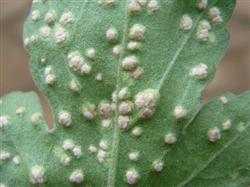
The most serious disease of chrysanthemums is chrysanthemum leaf spot, which starts on the lower leaves of the plant, with spots scattered across the leaves. At first they are chlorotic spots, then turn brown or black, and the spots gradually enlarge into round, oval or irregular shapes. They are 2 mm to 10 mm in diameter, gradually enlarging and increasing in number, spreading from the lower part of the plant upward; in severe cases the spots merge into patches, the leaves wither and droop, hanging down along the stem, affecting the whole plant. The pathogen of this disease overwinters as pycnidia on diseased plants or on diseased plant debris in the soil, is spread by wind and rain, and enters through the stomata. The disease period is from April to October each year, and it is especially severe in the hot and humid season from May to August. Therefore, management should be strengthened at ordinary times, and when watering, avoid splashing water onto the lower leaves.
Do not plant too densely, and improve ventilation and light penetration. Once diseased leaves are found, remove and destroy them promptly, and spray 65% zineb wettable powder at 500 times dilution, or 75% chlorothalonil wettable powder at 500 times dilution, or 10% Bordeaux mixture once every 7 to 10 days. Three to four consecutive applications can bring the disease under control, or before the disease appears, spraying 50% thiophanate at 1000 times dilution, or 50% carbendazim at 500 times dilution, both give good control results. Common pests of chrysanthemums include aphids and red spider mites. Aphids occur from the seedling stage until the end of flowering; aphids appear when new shoots sprout in spring, gather in groups on tender stems and leaves, and suck the sap. In autumn they can reproduce for dozens of generations, damaging the bud centers and petals. Affected plants turn yellow and become deformed, the flower buds are ruined, and the flowering period is shortened. After aphids are found, 40% omethoate at 1500 times to 3000 times dilution, 25% azinphos-methyl at 1000 times dilution, or 50% pirimicarb at 1500 times dilution can all be used. Red spider mites mostly occur in the hot, dry summer season, lurking on the dry undersides of leaves, piercing and sucking leaf sap, causing leaves to dry and yellow and flowers to wither. During the flowering period they also damage the petals, making the flowers fade quickly. After red spider mite damage is found, 40% omethoate at 1000 times dilution, or 80% dichlorvos at 1000 times dilution, or 40% dicofol at 1000 times to 1500 times dilution all have significant effects. During hot, dry summer periods, frequently spraying with clean water also has a certain control effect.