How to Grow a Sago Palm So It Flowers: A Detailed Guide to Cultivation Methods and Precautions
The sago palm likes a warm, humid, sunny and well-ventilated environment, and prefers deep, fertile sandy soil. It dislikes clay soil with poor drainage, likes fertilizers containing iron, and is not cold-hardy; when the temperature falls below 0 degrees it suffers cold damage.
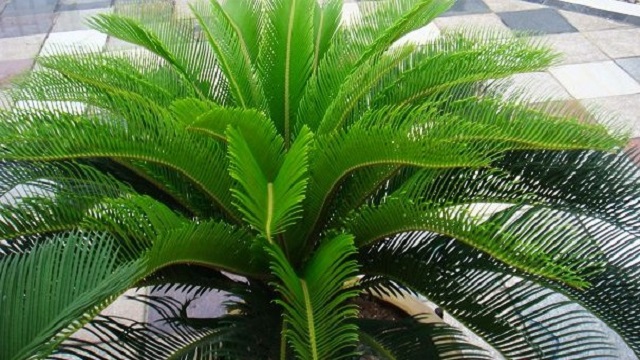
1. Soil selection
The sago palm has fairly strong adaptability and is not very demanding about soil, but if you want to grow a sago palm with a good appearance, lush branches and leaves, and higher commercial value, you still need to choose the soil that is best for its growth. The soil must have good drainage and irrigation capacity and strong permeability. It also must not be too barren, and the soil texture should be loose and deep. This kind of soil is the most suitable for the sago palm's growth.
2. Control the light
The sago palm loves light very much. Although insufficient light will not cause it to die, it will hinder the growth of new leaves, so the number of leaves is insufficient, the leaves are sparse and thin, and the color is poor. Therefore, during cultivation, you must ensure every sago palm receives even light and gets sufficient light duration and intensity. This is especially true in spring and autumn, because these two seasons are the key periods for the sago palm to grow new leaves. Insufficient light affects commercial value and leads to a decline in economic returns.

3. Water reasonably
The sago palm's growth requires little water, and it is not suitable for growing in a humid environment. It is not too much to water only after the soil has completely dried out. If too much water is added and the garden becomes waterlogged, the sago palm will develop root rot and rotten leaves. In spring and autumn, water about once every 4 days; in summer, when the temperature is high and it is relatively dry, it needs to be watered twice a day. In winter it is the opposite, and the watering frequency can be extended to 10 days.
4. Fertilize in time
Although the sago palm is an ornamental plant, its demand for nutrients is also very great, so during its growing period you must do a good job of topdressing. The fertilizer should be mainly nitrogen, phosphorus and potassium; pay attention to the amount when fertilizing and do not over-apply, following the principle of applying more frequently but in small amounts. This can effectively improve the color and luster of the leaves. You can also add an appropriate amount of ferrous sulfate to the fertilizer, which is likewise beneficial to leaf growth. It improves ornamental and commercial value and further increases your own economic returns from cultivation.
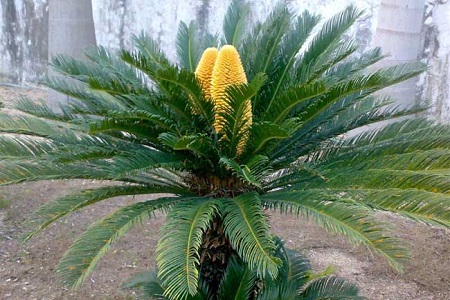
5. Prune at the right time
The sago palm has strong growth capacity and will grow at least two flushes of new leaves almost every year. Without proper pruning, its leaves will become chaotic and completely lacking in ornamental value, causing a serious drop in commercial value. Therefore, in order to keep the sago palm looking good and raise its commercial value, you should cut off the dead and old leaves every year and control overly dense and overly long branches and leaves. The specific pruning depends on the sago palm's growth; the main purpose is to keep it growing evenly and looking attractive, thereby increasing its value.
The sago palm's leaves are very hard and its disease resistance is fairly strong, so the incidence of pests and diseases is relatively low. However, pest problems can still occur; scale insects are one of them. After discovering pests, you can use manual removal, and if the infestation is more serious, appropriately spray agents such as diluted ferrous sulfate solution for control. That is all for today's introduction. This article is for reference only. Thank you for reading and your support.