How to prevent and treat difficult egg laying caused by salpingitis in laying hens
Oophoritis, salpingitis and peritonitis in chickens are among the common diseases of chickens, and are especially severe in laying hens. Affected laying hens show: pain and restlessness, and the eggs laid have bloodstains on the shell. Yellow and white pus-like discharge is often excreted from the oviduct of laying hens, contaminating the area around the cloaca and the feathers, and egg laying is difficult. As the disease progresses, the laying hen begins to run a fever, then the fever subsides; the bird is in pain and restless, stands motionless, with both wings drooping and feathers ruffled; some laying hens rest their abdomen on the ground or become lethargic. When the inflammation spreads to the abdominal cavity, it causes peritonitis, or rupture of the oviduct, causing yolk peritonitis in the laying hen.
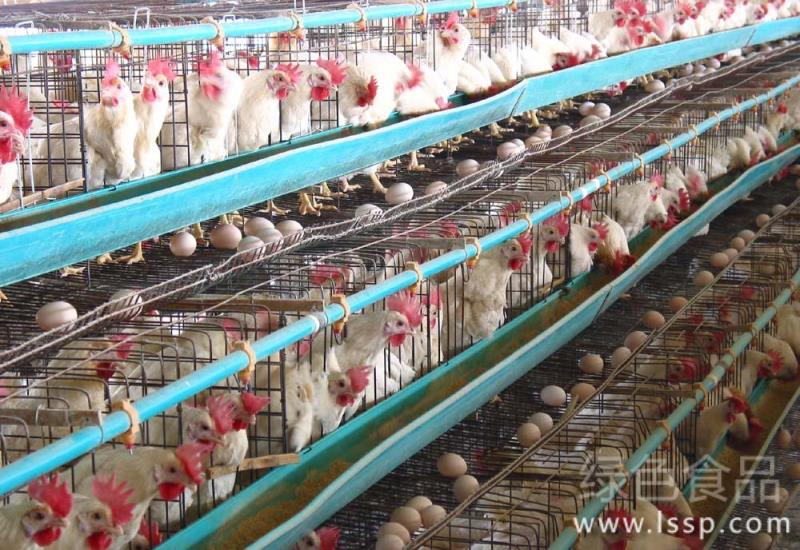
Laying hens
Clinically, it is characterized by inflammation of the ovary, oviduct and peritoneum in laying hens. In severe cases, the follicles become deformed, congested and hemorrhagic, red-brown or gray-brown, and may even rupture; the yolk fluid released into the abdominal cavity of the laying hen has a foul odor. Sometimes the follicles shrink, are irregular in shape, and appear golden yellow or brown with no luster. When the disease has lasted somewhat longer, the intestines become adherent, and there is yellow-white caseous material inside the oviduct of the laying hen.
Poor sanitary conditions in the laying hen house allow bacteria such as Salmonella pullorum, paratyphoid bacillus and Escherichia coli to contaminate the cloaca and invade the oviduct of laying hens; or feeding too much animal-based feed, laying oversized eggs or double-yolk eggs, and sometimes an egg breaking in the oviduct and damaging the oviduct; or laying too many eggs, or a lack of vitamins A, D, E, etc. in the feed, can all cause salpingitis in laying hens. When laying hens suffer from salpingitis, it leads to oviduct prolapse, difficult labor and so on.
Strengthen management, improve the sanitary conditions of the laying hen house, formulate the daily ration reasonably, and feed the laying hens some green fodder appropriately. Since salpingitis in laying hens is mostly caused by bacterial infection, laying hens that have recovered should not be kept for breeding.
It is generally a secondary infection (mostly variant infectious bronchitis). Main components: amoxicillin combined with antiviral drugs, and multivitamins in the drinking water. Do not use sulfonamide coccidiostats for laying hens. It is recommended to use antiviral drugs plus antipyretic drugs + antibacterial and anti-inflammatory drugs + vitamins mixed in the drinking water, for comprehensive treatment for 3 days.