How to prevent and control hypoxia and easy floating head in South American white shrimp
Under normal circumstances, the activity of shrimp in the water body is regular; when swimming, the directionality is obvious, the speed is relatively fast, and they are sensitive to stimuli. If the shrimp swim at the water surface, with the front end of the head out of the water (antennae and eyes exposed above the water surface), and when swimming there is no directionality (scattered swimming, loss of balance), and the response to stimuli is slow, then it is a manifestation of “floating head”.
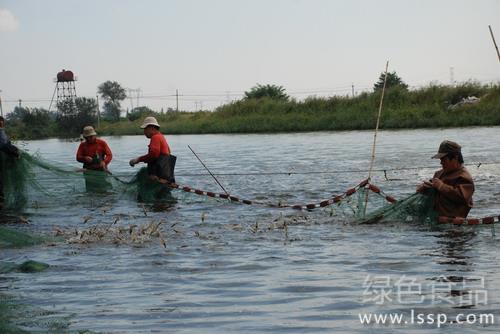
Shrimp farming
I. Signs before shrimp “floating head”:
1. Overcast clouds with no wind, stuffy and hot weather, low air pressure, pond water as calm as a mirror, and after nightfall a large number of mosquitoes suddenly appear within the shrimp pond area biting people;
2. Water temperature is high (exceeding 32°C), and the dissolved oxygen concentration in the water is lower than 3PPm;
3. The feed intake of shrimp suddenly decreases, and leftover bait in the pond increases noticeably;
4. The pond water is too dense, and a large amount of “moss” film floats out onto the water surface;
5. Snails crawl out of the water, and shrimp lie on the edge and move sluggishly.
II. Markers of light and severe shrimp “floating head”:
1. Limited to the middle of the pond, light; spreading across the whole pond, severe;
2. After being stimulated, shrimp can immediately sink, light; after being startled they do not sink, severe;
3. Floating head begins before dawn, light; in the evening or during the day, severe;
4. No prostrate individual shrimp have yet appeared on the shallow water flats at the pond edge, light; large numbers of shrimp swim in a scattered manner on the water surface, severe.
III. Solutions
1. Thin the stock in time. For shrimp ponds stocked with more than 8,000 tails per mu in the early stage, catch them for market after “Minor Heat” and before “Major Heat”.
2. On high-temperature and low-pressure days, turn on the aerator in time and aerate for 6 to 8 hours per day.
3. If the pond water changes, inject new water in time.
4. In weather with air temperature exceeding 35°C and water temperature exceeding 32°C, promptly deepen the pond water layer and use deep water to increase the temperature difference.
5. During morning and evening pond patrols, if diseased shrimp or fish are found at the pond edge and accompanied by signs of “floating head”, suspend feeding for 1 to 2 days, promptly remove dead fish and dead shrimp, and change or add water.
6. For shrimp ponds where pond-bottom moss “film” appears, change the water immediately, and after diluting 300 grams of EM bacteria per mu, splash it over the whole pond. For all shrimp ponds where dredging is not thorough, after diluting 200 to 250 grams of Bishui'an per mu at 1 m water depth, splash it evenly over the whole pond.