How to manage laying hens during the peak laying period? Poor management can affect egg production
Laying hens enter the pre-laying period from 16 weeks of age and can reach peak laying at 25 weeks of age. Whether the feeding and management level during this period meets the requirements for the growth, development and laying of laying hens has a huge impact on the egg production of the entire laying period.
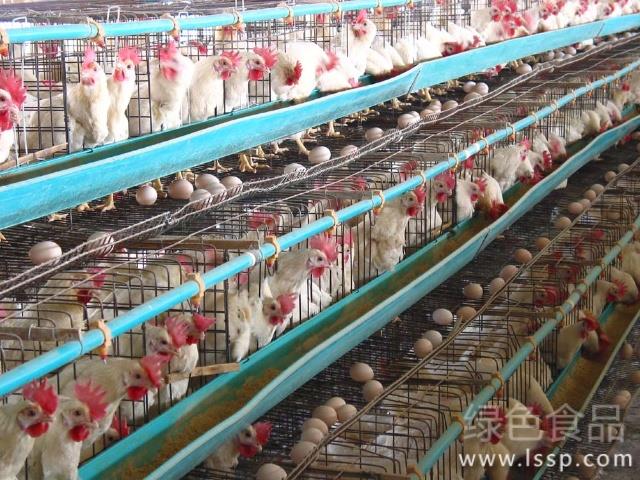
Laying hens
I. Characteristics of physiological changes
1. Laying hens enter the laying cycle at around 18 weeks of age. Their body weight increases rapidly, and the reproductive system also develops rapidly. The follicles on the ovary grow rapidly in large numbers, and the oviduct also rapidly becomes thicker and longer, with increased weight. Body weight gain and reproductive system maturation proceed simultaneously. At this time, some chickens begin to lay. In well-developed flocks, the laying rate reaches 5% at 20 weeks of age, 50% at 22 weeks of age, and 80% at 24 weeks of age. Therefore, during this period, chickens have very strict requirements for various nutrients in the feed and external environmental conditions.
2. After laying hens enter the pre-laying period, great physiological changes occur in the body. Both physically and mentally, they are in a state of physiological stress. Coupled with the effects of transfer to laying cages, immunization, deworming and so on, the body's resistance drops markedly, making them prone to various diseases.
II. Feeding and management measures
1. Transfer to cages at the proper time, and vaccinate and deworm on schedule. The caging of laying hens should preferably be completed before 18 weeks of age so that the hens can become familiar with the environment as early as possible. If done too late, some hens that have already started laying may stop laying, or the yolk may fall into the abdominal cavity and cause yolk peritonitis. Before or at the same time as caging, Newcastle disease oil vaccine plus live vaccine, egg drop syndrome inactivated vaccine and other vaccines should be administered. After caging, it is best to carry out a thorough deworming. For external parasites such as mites and lice, spraying drugs can be used. For internal parasites, albendazole can be given orally at 20-30 mg/kg body weight, or avermectin (chongkexing) can be mixed into the feed. Before and after transfer and vaccination, multivitamins and antibiotics should be added to the feed to reduce stress responses.
2. Switch to layer feed at the proper time. In order to adapt to the increase in body weight, the growth of the reproductive system and the demand for calcium in laying hens, layer feed can be started at 18 weeks of age, and peak-laying feed from 20 weeks of age. At the same time, add an extra double dose of multivitamins to the feed. During this period, the restricted feeding method should be discontinued and the hens should be allowed to feed freely. During the lighting period, make sure there is always feed in the trough.
3. Increase lighting time. Rural specialized households mostly use natural lighting during the growing period. At 18 weeks of age, if the flock weight has reached the standard, lighting can be increased by 30 minutes every two weeks until the total lighting reaches 15 or 16 hours per day when the laying rate reaches its highest peak. If the flock is lighter in weight and develops more slowly, lighting can be postponed until 20 weeks of age while increasing feed. During the laying period, the principle of lighting is that the time must not be shortened and the intensity must not be reduced.
4. Create comfortable environmental conditions for laying hens. The most suitable temperature for laying hens is 13°C-23°C. In winter, it is best to keep it above 10°C, and in summer, it is best to keep it below 30°C. Maintain indoor air circulation, prevent various noises, and keep the environment and feeding, drinking water, lighting and so on stable.
5. Do a good job in disease prevention and control. (1) After the laying hens are caged, add antibiotics such as norfloxacin, ciprofloxacin and gentamicin to the feed or drinking water, administering the drug for one week every 4-5 weeks to prevent colibacillosis, salmonellosis, enteritis and so on. (2) Regularly add an extra double dose of multivitamins to the feed to meet the laying needs of the hens, reduce various stress responses, and improve resistance to various diseases. (3) Strengthen sanitation management, implement a reasonable immunization program, adhere to the system of disinfecting laying hens and the environment, and prevent the introduction of diseases. Pay close attention to whether the rise in the laying rate meets the standard, and pay close attention to any slight influence of the external environment on the flock.