Points to note in Muscovy duck farming: high environmental temperature requirements cannot be ignored
The Muscovy duck, commonly known as the foreign duck, originated in the tropical rainforests of South America. Compared with water ducks, Muscovy ducks have higher environmental temperature requirements. They can be raised on dry land, or with a combination of dry and water conditions.
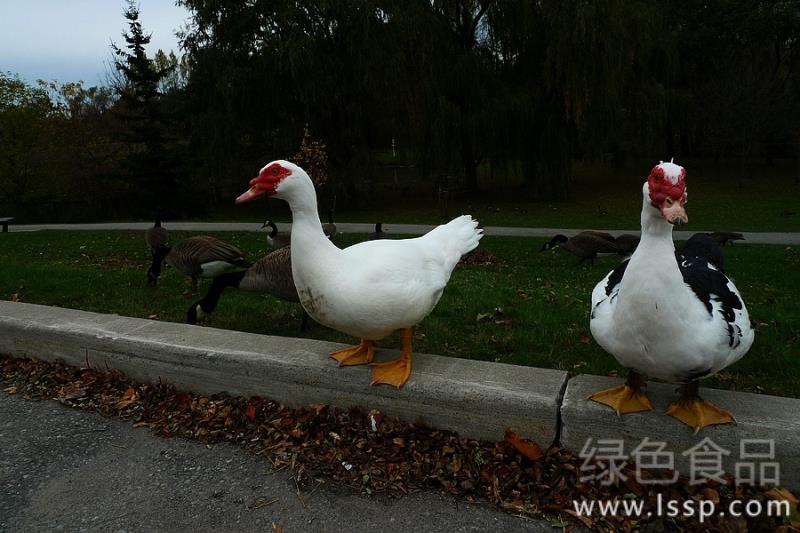
Muscovy duck
Muscovy ducks are more heat-tolerant than water ducks and have high environmental temperature requirements. The environmental temperature required by 1-day-old Muscovy ducks must reach 35°C, then decrease by 1°C per day, until the ducklings are weaned off heat at 20 days of age or at a temperature of 20°C. Therefore, attention must be paid to keeping Muscovy ducklings warm during the brooding period. In addition, during the first 10 days or so after the ducklings are placed in the house, they are highly prone to death because they often huddle in large piles to sleep at night. When raising Muscovy ducklings, the number of ducklings in each small pen should not exceed 200, and every 1 hour the huddled ducks must be spread apart until the flock no longer huddles.
Broken rice can be used to start Muscovy ducklings feeding. In the early stage, feed duckling feed; in the middle stage, feed grower duck feed; in the late stage, feed adult duck feed or add 10% rice bran. For newly hatched ducklings, drinking water is first supplied with bell-type drinkers, then broken rice and crushed corn are used to "start them eating." The broken rice and crushed corn should first be scalded with boiling water, and after cooling, provided all day in feed troughs.
At present, Muscovy ducks are generally fed water duck series feed. From the 4th day, gradually increase duckling pellet feed with no less than 19% crude protein, and by 6 days of age completely switch to 19% duckling pellet feed, no longer feeding corn or broken rice. At 30 days of age, feed grower duck pellets with no less than 16% crude protein; at 60 days of age, feed adult duck pellets with no less than 15% crude protein. If the ducks' feathers are growing too slowly, after 60 days of age add 10% rice bran to the adult duck feed.
Muscovy ducks are aggressive. If the rearing environment is crowded, dirty, poorly ventilated, and feeding is done in separate meals, pecking fights are very likely to occur in winter and spring, and sometimes Muscovy ducks peck each other until blood runs freely. Therefore, within 1 week of age, the front 1/4 of the ducklings' beaks should be cut off, and the cut surface disinfected with iodine tincture or a hot iron. Some duck raisers in rural areas rear them in open range or with water bathing in the middle and late stages, so the ducklings do not need beak trimming.
In the middle and late stages of rearing, Muscovy ducks produce a large amount of droppings, which easily contaminate the duck house, so special attention must be paid to the cleanliness and hygiene of the duck house. If rearing in hot weather, the duck house should be washed with water more than 2 times a day; if rearing in cold weather, litter such as straw and rice husks should be added more than 3 times a day, and the Muscovy ducks should not be allowed to sleep on manure. Otherwise, the feathers on the chest and abdomen of the Muscovy ducks will rot, or they will become manure ducks.