What feed is more nutritious for dairy cows? Key feeding points for various types of feed
1. Roughage:Dairy cows have physiological characteristics that favor green and roughage. To effectively realize the production potential of dairy cows, the problem of a balanced supply of high-quality green and roughage must be solved. (1) Green hay, the most important feed for dairy cows, includes legume hay and grass hay, with legume hay being better. When feeding, it should not be cut too short, generally 3—4cm, and impurities such as sand, iron wire and plastic should be removed before feeding. (2) Straw types include corn stalks, rice straw, wheat straw, bean stalks, etc. Their nutritional value is low, so feeding should be restricted; dairy cows should not consume large amounts of straw feed. If there is sufficient nutritional supplementation, straw can be used as winter feed for dry dairy cows, but it should not be fed directly; it should be processed and prepared before feeding.
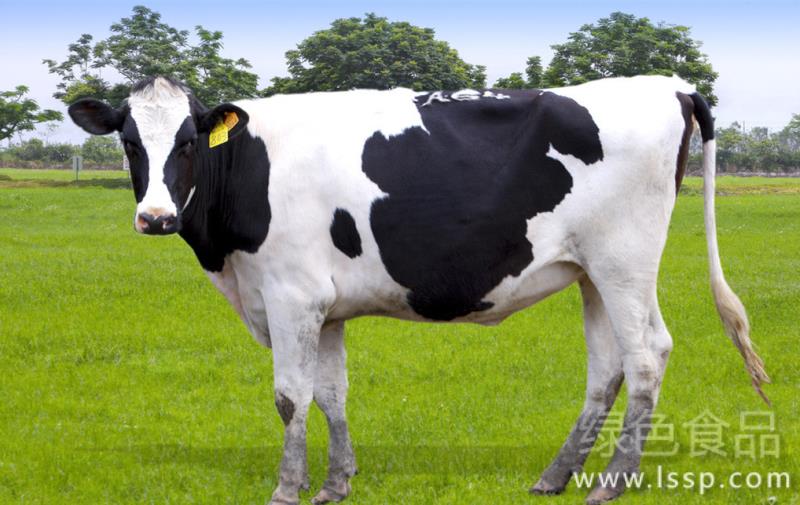
Dairy cows
2. Silage:Includes corn silage, grass silage, sorghum silage, etc. Among them, whole-plant corn silage is the most nutritious. Silage is an important feed for dairy cows and can be used as part of the daily ration or as the only roughage. Generally about 10—20 kg per dairy cow, with a maximum feeding amount of 25 kg. About 2.5—3 kg of silage can replace about 1 kg of green hay.
3. Green forage:Green alfalfa, green vegetables, wild green grass, etc. Green forage is rich in vitamins and calcium and is nutritious. It has good palatability and is easy to digest. However, it has a high moisture content and low energy, so for high-yielding dairy cows, feeding only green forage cannot meet their needs, and energy feed should be supplemented. The daily feeding amount of green forage is about 10% of the dairy cow's body weight, with a maximum of 50 kg, but when feeding legume green forage, care should be taken to control it, otherwise it will cause bloat in dairy cows and, in severe cases, death.
4. Root and tuber feeds:Carrots, pumpkins, fodder beets, etc. This type of feed has high moisture content and large volume. It has good palatability and can increase milk production in dairy cows, but its nutrient concentration is low, so for high-yielding dairy cows the amount used should not be too much, with a maximum of 10 kg per day. When feeding, it should be sliced to prevent choking.
5. Distiller's grains and residue feeds:Sugar beet pulp, brewer's grains, white distiller's grains, tofu residue, etc., with a maximum daily feeding amount of 10 kg. Among them, white distiller's grains should be below 5 kg per day, tofu residue 2.5—5 kg per day, and sugar beet pulp can account for 30% of dry matter per day, but do not overfeed, and never feed spoiled sugar beet pulp. Brewer's grains, 10-12 kg per day; too much affects the dairy cow's appetite.
6. Concentrate feed:The daily feeding amount of concentrate feed should not exceed 2—2.5% of the dairy cow's body weight. For high-yielding dairy cows, roughage feeding should be reduced and concentrate feed increased, but roughage should remain the main feed. Relying too much on concentrate feed cannot improve production and also violates economic principles.
7. Mineral feed:Salt, bone meal, stone powder, trace elements, additives, etc. Salt accounts for 0.5-1% of concentrate feed. The mineral elements in mineral feed can be divided into two categories: Macro elements (requirements measured in grams): including calcium, phosphorus, sulfur, magnesium, potassium and sodium. Trace elements (requirements measured in grams): including copper, iron, cobalt, iodine, manganese, selenium, etc. Among them, macro elements are the main components of the dairy cow's bone tissue or other tissues, and macro elements are also indispensable substances for maintaining acid-base balance, osmotic pressure and nerve conduction activity in the dairy cow's body. Trace elements, however, are present at low concentrations in the dairy cow's body and mainly serve as components of metalloenzymes or as cofactors in enzyme and hormone systems.