Layer hens' feather-pecking vice affects feed intake and egg production; how should it be prevented and controlled?
Feather-pecking vice is common in intensively raised chicken flocks kept at high density, and it seriously affects feed intake and egg production in layer hens. The main signs are birds pecking each other's feathers, pecking at the vent (in high-yielding flocks), pecking at toes, and pecking at eggs, which leads to poor growth and ruffled feathers, and in severe cases causes death.
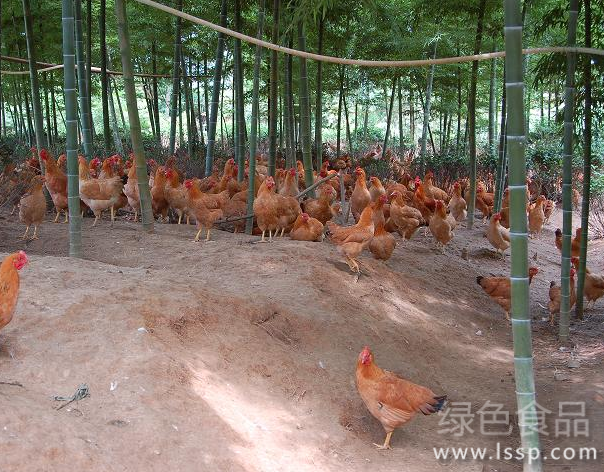
Layer hens
Causes of feather-pecking vice:
(1) High rearing density, insufficient space in the chicken house, too high brooding temperature, insufficient feed and drinking water, improper restriction feeding methods, insufficient feed allocation, too high light intensity, poor ventilation, flock transfer and regrouping, causing stress, excessive humidity, etc., can easily cause feather-pecking vice in layer hens.
(2) A single, monotonous diet lacking variety. In the diet, protein is insufficient, calcium salts are not enough, and the nutrient ratio is unbalanced. Crude fiber is insufficient, and the feed is moldy and deteriorated.
(3) Layer hens have many external parasites and were not dewormed in time; other secondary diseases were not treated in time; disease prevention has not kept up, and cleanliness and hygiene are poor; these are the predisposing causes of feather-pecking vice.
The key to preventing and controlling feather-pecking vice in layer hens lies in prevention; prevention is more important than treatment.
1. Timely beak trimming. Practice has proved that trimming the beak of layer hens twice, at 5—9 days of age and at 10—12 weeks of age, can prevent feather-pecking vice in chickens. The blowtorch beak-trimming method, the iron stove beak-trimming method, and the beak trimmer method can all be used. The requirement is to trim off 1/2 of the upper beak of the layer hen from the nostril to the beak tip, and trim off 1/3 of the lower beak. One day before and one day after beak trimming, add 2mg vitamin K3 and 0.25g erythromycin per kilogram of drinking water, mix well, and let the layer hens drink freely, to prevent disease infection caused by beak trimming.
2. Remove the pecked layer hen, and apply a layer of a substance with an unpleasant smell, such as machine oil or kerosene, to the pecked and injured part, so that this layer hen will no longer be pecked.
Layer hens
3. Control rearing density. Generally, for a chicken farm, 200—300 birds per group is appropriate. For rearing chickens, 100—200 birds per group is appropriate. For layer hens at 0—4 weeks of age, no more than 50 birds per sq m; at 5—8 weeks of age, no more than 30 birds per sq m; at 9—18 weeks of age, no more than 15 birds per sq m; after 18 weeks of age, raise them in cages, and the rearing density should not be too high.
4. Strengthen ventilation and air exchange. The suitable temperature for laying hens is 15—25°C, and the relative humidity is 55%—65%. Remove harmful gases in time. If the ammonia concentration in the chicken house is too high, reaching 15mg per cubic meter, there is a slight pungent odor; reaching 50mg per cubic meter, the chickens cough, shed tears, and develop conjunctivitis, etc. The ammonia concentration in the chicken house must be lower than 20mg per cubic meter. Mixing 4% copper sulfate and an appropriate amount of old lime into the litter, or spraying the litter with 2% benzoic acid or 2% acetic acid, can both eliminate the odor and reduce harmful gases.
5. Adjust lighting. The color of the light is related to the occurrence of feather-pecking vice in layer hens; excessive light easily causes layer hens to peck at the vent and feathers. Generally, the light intensity in the chicken house in the first week is 40—60 lux; during the laying period it can reach 20—25 lux; at other times it should not exceed 20 lux. Bulbs should be 2m above the ground, with a spacing of 3m between lamps. Bulb power should not exceed 25W.
6. Provide sufficient drinking water. Ensure every day that there is sufficient drinking water in the layer hens' drinking troughs, clean and fresh. Especially in summer, provide even more sufficient drinking water.
7. Rationally formulate the diet. Formulate a complete-price diet and diversify the feed so that nutrients complement each other.