Pheasant chicks are delicate and have a high mortality rate. How can you get the feeding and management right?
For pheasants, the period before 6 to 8 weeks of age is the brooding stage. Pheasant chicks are rather delicate, and if management is poor, the mortality rate is very high. Therefore, in terms of feeding and management, attention must also be paid to the following aspects of work.
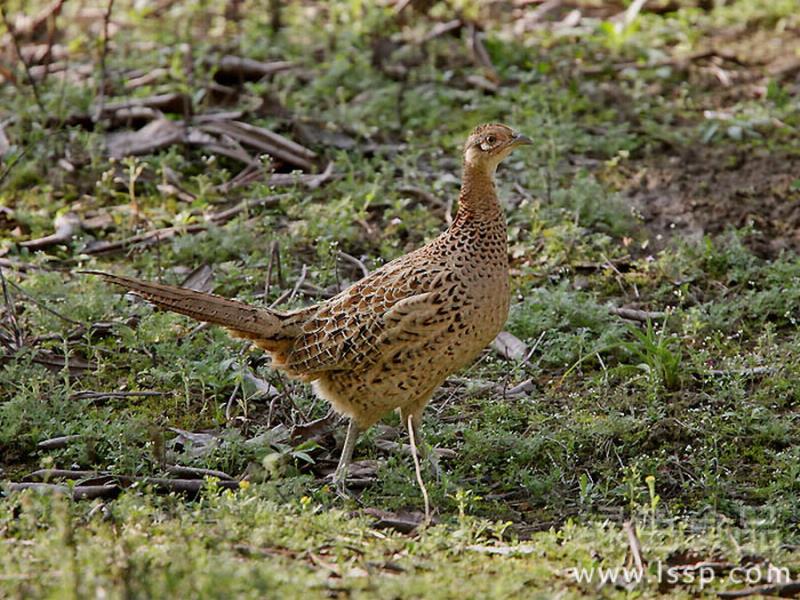
Pheasant
1. Careful feeding: Ensure nutrition. After pheasant chicks hatch for 12 hours, when they show pecking behavior, you can first give them some disinfected water (with potassium permanganate and antibiotics added to the water) or sugar water. Chicks that do not know how to drink should be taught. After giving water, wait 1 to 2 hours, then start feeding. Given that chicks eat little and their diet has a high protein level, on the first day of feeding you can feed cornmeal mixed with cooked eggs (add 3 to 4 eggs per day for 100 chicks), and by 2 days of age you can feed a complete feed containing more than 25% crude protein. However, when feeding, be careful to feed small amounts frequently. At the beginning, you can feed (to entice them) once every 2 to 3 hours, then increase the interval; from 4 to 14 days of age, feed 6 times a day, and from 15 to 28 days of age, feed 5 times a day; after 4 weeks of age, feeding 3 to 4 times a day is enough. Generally, as chicks grow older, their feed requirement gradually increases, and when they grow to near adult chicken body weight, the feed requirement tends to stabilize. From 0 to 20 weeks of age, a total of 6.4 to 6.5 kg of concentrate feed is needed.
2. Suitable temperature: Pheasant chicks, like domestic chicken chicks, have relatively high environmental temperature requirements, and controlling the temperature well is the key to successfully brooding pheasant chicks. The brooding temperature decreases as the pheasant chicks grow older: 34 to 35°C for 1 to 3 days of age; 33 to 34°C for 4 to 5 days of age; 32 to 33°C for 6 to 8 days of age; 28 to 31°C for 11 to 14 days of age; 28°C for 15 to 20 days of age. After 20 days of age, it is normal temperature; heating can be stopped during the day and continued at night. After 28 days of age, heating can be stopped entirely. However, heating should still be controlled flexibly according to changes in weather, the heating method, and the behavior and expression of the pheasant chicks, so as to achieve better brooding results.
3. Strengthen management: Brooding management is very important. Because pheasants are nervous by nature, they are especially susceptible to the influence of the external environment. The slightest disturbance can cause the flock to panic, running and crashing about and fleeing in all directions, and they may even injure their own heads or break their cervical vertebrae. Therefore, keep the environment as quiet as possible, reduce disturbances, and prevent harm from animals. As the days of age increase, the stocking density should be adjusted in time. Pheasants are very prone to pecking and fighting each other. By 2 weeks of age, pecking vice will occur in the pheasant chick flock. This bad habit is more widespread than in domestic chicken flocks, and once it occurs it is very hard to stop. If left unchecked, it will soon cause injury and death among the pheasant chicks. So, in addition to improving the causes in terms of coop ventilation, light intensity, and whether nutrition is complete, at 10 to 14 days of age you can carry out the first beak trimming; or fit metal rings on the pheasants' nostrils. Pheasants will begin wearing nose rings at 1 month of age, until they are sold at 4 months of age. If kept for breeding, the nose rings should be replaced with those for adult breeding pheasants. Nose rings do not hinder normal activities such as feeding, and are quite effective at preventing pecking vice.