How to prevent and treat rabbit salivation disease that causes reduced appetite
Kit rabbit salivation disease is an acute infectious stomatitis caused by a virus, in which the mucous membranes of the mouth, lips, tongue and other parts of young rabbits develop vesicular inflammation. Salivation disease mainly affects young rabbits under 3 months of age, and kit rabbits 1-2 weeks after weaning are especially susceptible. In the early stage of the disease, the oral mucosa of the sick rabbit becomes red and congested, and then millet-sized to lentil-sized blisters appear on the mucous membranes of the lips, tongue and hard palate. Because of the oral lesions, the sick rabbit has reduced appetite or refuses to eat, gradually becomes emaciated and weak, and the course of the disease drags on for 5-10 days before death. Today the editor has summarized some methods for treating rabbit salivation disease, hoping to provide help to the majority of breeders.
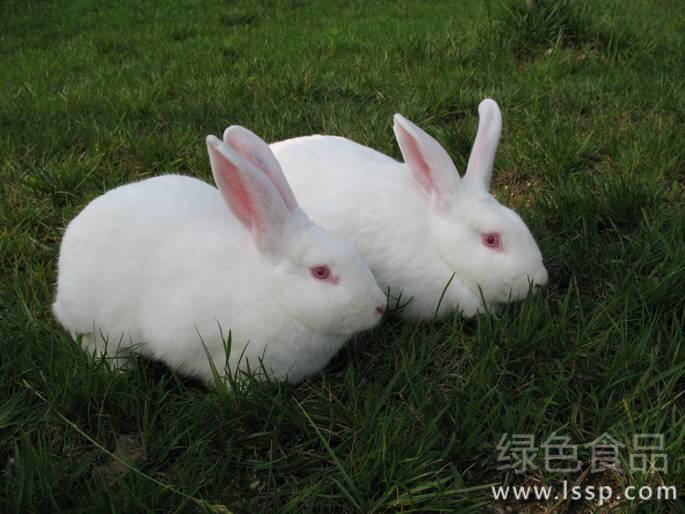
Rabbits
Method 1: Treating salivation with alum water. Draw up a 5% alum aqueous solution with a syringe and spray it directly into the oral cavity of the sick rabbit. The spray volume is 1 milliliter per kit rabbit, 2 milliliters per young rabbit, and 3 milliliters per adult rabbit. Spray once in the morning and once in the evening, and after 2-3 days of treatment the salivation symptoms can be eliminated.
Method 2: Using integrated traditional Chinese and Western medicine therapy to prevent and treat salivation disease has a very good effect.
① Take 10g each of indigo naturalis, Coptis chinensis and Scutellaria baicalensis, 6g each of catechu, borneol and Platycodon grandiflorus, and 3g of alum, grind them together into a fine powder, take an appropriate amount of the powder and sprinkle it inside the oral cavity of the sick rabbit, 3 times a day, combined with systemic treatment, and orally administer sulfadiazine at 0.4g per kilogram of body weight, once a day.
② Take 259 each of Scutellaria baicalensis and Coptis chinensis, and 20g each of Gardenia jasminoides, catechu and Lonicera japonica, grind them together into a fine powder, take an appropriate amount and apply it to the affected area, 3 times a day. At the same time, orally administer sulfadiazine at 0.2g per kilogram of body weight, twice a day. Using the above therapy, with 3-6 days of medication, the rabbit can recover. For kit rabbits that have not developed the disease, they can optionally be given Liushen pills, anti-inflammatory pills, long-acting sulfonamide tablets, or fed with water in which Lonicera japonica and wild chrysanthemum have been decocted and mixed into the feed, which can prevent the occurrence of this disease.
Editor's note: To prevent rabbit salivation disease, feeding management should be strengthened, environmental hygiene should be done well, and preventive work should be carried out properly; rabbit houses, rabbit cages, tools, feeding utensils and so on should be disinfected with 2% hotalkali water; sick rabbits must be isolated promptly and treated according to symptoms to prevent the spread of the disease.