How to prevent and treat slow growth in shrimp caused by enteritis?
Bacterial enteritis in shrimp: caused by infection with Escherichia coli or Salmonella. Symptoms of diseased shrimp: the digestive tract is red, most obvious in the stomach; the midgut turns red and swells; the rectum (hindgut) becomes cloudy with unclear boundaries. Diseased shrimp have reduced vitality, lose appetite, and grow slowly. It occurs frequently in spring and summer, caused by deteriorated water quality or spoiled feed.
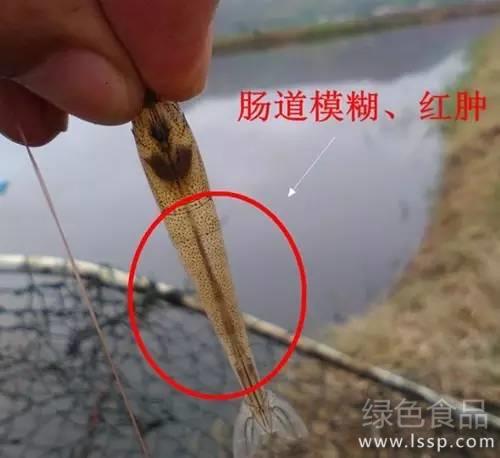
Shrimp enteritis
Prevention: ① Pond clearing and disinfection. Before stocking shrimp fry, clean out the sludge thoroughly, then disinfect with quicklime to kill pathogens and reduce the probability of disease occurrence. ② Water quality regulation. Commonly use water quality regulating preparations to adjust water quality, prevent the accumulation of harmful substances, and apply microbial preparations to improve water quality and enhance the disease resistance of shrimp. Keep water transparency above 30cm, which is beneficial to shrimp growth. While adjusting the water, use bottom quality improvers at intervals to improve the pond bottom and inhibit the reproduction of harmful bacteria.
Treatment: Add live bacteria microecological preparations to shrimp feed, 500 milliliters per bottle mixed with 50 jin to 100 jin of feed, for 3 days to 5 days consecutively; or splash over the whole pond, 1 bottle per mu.
Enteritis in shrimp caused by swallowing blue-green algae: after shrimp swallow blue-green algae, it is difficult to digest, or some blue-green algae contain toxins after digestion, causing poisoning in shrimp. Diseased shrimp in the late stage often have secondary bacterial infections.
Prevention and control measures: ① Focus on prevention, prevent blue-green algae from forming a population advantage. ② Adjust water and improve the bottom, prevent blue-green algae from reproducing, and avoid worsening of the disease. For water adjustment and bottom improvement measures, refer to the methods above.
Treatment measures: the same as the treatment method for bacterial enteritis in shrimp.