Duck diseases are frequent in summer and autumn, which is detrimental to duck farming. How can five common duck diseases be prevented and treated?
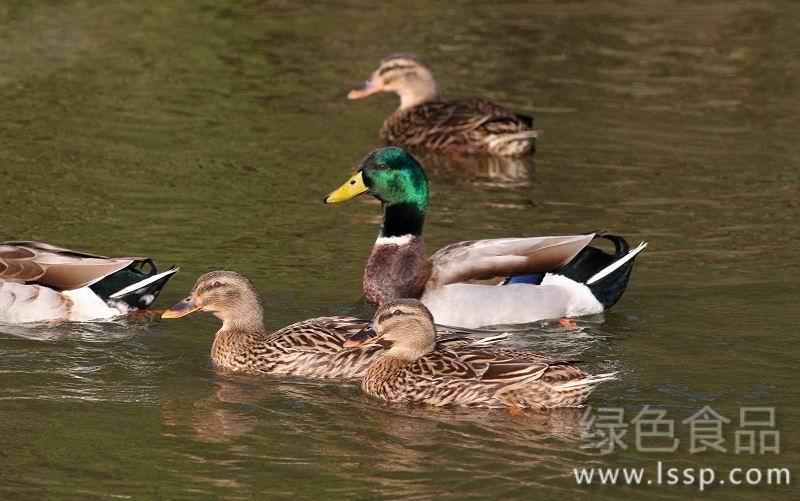
Duck
I. Duck plague
Both the incidence rate and the mortality rate are high.
Prevention: inject duck plague vaccine into ducklings at 10-15 days of age.
Treatment: for every 100 adult ducks, use 15 g each of Sichuan lovage rhizome and codonopsis root, 20 g each of talc, cinnamon and licorice, 10 g of honeysuckle flower, 12 g of turmeric root tuber, and 8 g of Sichuan pepper, decoct in water and take the juice, add 200 g of 50-degree baijiu, mix well, and give it to the ducks to drink. For those that cannot drink on their own, administer by gavage, 4-5 ml per duck, for 3 consecutive doses.
II. Duckling viral hepatitis
Ducks aged 1-3 weeks are susceptible, and it occurs mostly in those under 5 weeks of age; onset is acute and spread is fast.
Prevention: immunize breeder ducks twice a year.
Treatment: for every 100 ducks, use 100 g of yinchen (Artemisia capillaris), 40 g each of elsholtzia, rhubarb, gentian root, gardenia fruit, skullcap root, phellodendron bark and isatis root, decoct in water and take the juice, add 500 g of white sugar, and give it to the ducks as drinking water or mixed into feed, 1 dose per day for 3 consecutive days. At the same time, add 50 g of poultry multivitamin and 100 yeast tablets (crushed) per 50 kg of duck feed and mix well.
III. Duck infectious serositis
Prevention: usually add 2-4% sulfamethoxazole to the ducks' drinking water.
Treatment: use 7500 international units of gentamicin per kg of duck body weight, add it to the drinking water, for 2-3 consecutive days, and add an appropriate amount of poultry multivitamin to the duck feed to improve the therapeutic effect.
Duck flock
IV. Duck pasteurellosis
In the most acute form, diseased ducks show no symptoms and suddenly flap their wings a few times and fall to the ground dead. The course of the disease is 1-2 days, the duck's body temperature rises above 43°C, the tail and wings droop, water intake increases, frothy liquid flows from the mouth and nose, and the head is often shaken. For duck farms where this disease occurs frequently, mix olaquindox into the feed and feed it for 3 days every 10 days at 25 mg per kg of duck feed, or mix Andrographis paniculata powder into the feed and feed it for 2-3 days each week, or mix oxytetracycline base into the feed at 50 mg per kg of body weight and feed it for 2 days; these have a good preventive effect. For diseased ducks, inject penicillin and streptomycin intramuscularly at 50000 units each per kg of body weight, twice a day for 2 consecutive days, which takes effect quickly. Sulfonamide drugs, such as sulfadiazine and sulfadimidine, are mixed into the feed at 0.05%-0.1% and fed for 3-5 consecutive days.
V. Duck colibacillosis
Diseased ducks are listless, have reduced appetite and increased thirst, and in severe cases develop difficulty breathing. When laying ducks suffer from this disease, the feces often contain egg white, coagulated protein and egg yolk, and the drake's penis becomes swollen and partly exposed. Duck houses and equipment, etc., are usually disinfected once every 2 weeks, and once the disease is found, disinfect twice a week. Inject gentamicin intramuscularly at 10000 units per kg of body weight, once a day for 3 consecutive days, or add it to drinking water at 20000 units per kg of body weight and administer it for 3 consecutive days. Use norfloxacin premix according to the drug instructions for 3 consecutive days. The Chinese herbal medicines qinjunling and compound Andrographis paniculata have a good therapeutic effect on this disease.