Crayfish are easy to farm with good returns: remember 5 key points for freshwater farming
1. Pond conditions. The pond for farming crayfish should not be too deep, generally no more than 1.5 m, and should have a certain slope to help create a water environment that combines shallow and deep areas with differing water temperatures, then make full use of light energy to raise the water temperature and promote crayfish growth. Crayfish are strong at burrowing and escaping, so the pond banks must be compacted and tamped firmly, with no holes, and a width of more than 1.5 m; surround the perimeter with asbestos tiles or similar, and use double-layer filter screens at the inlet and outlet to prevent damage that could let the crayfish escape. New ponds need a layer of 60-80 mesh polyolefin netting covered around the slope edges or across the middle of the pond banks.
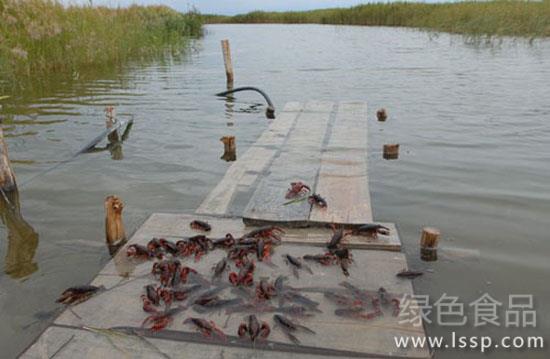
Crayfish farming
2. Planting aquatic plants. Many ponds for farming crayfish are converted from fish ponds and have no aquatic plants at all. In fact, crayfish, like oriental river prawns and Chinese mitten crabs, also need aquatic plants. One reason some farmers fail is that they did not plant aquatic plants. Aquatic plants can provide hidden places for crayfish to rest and molt, purify the water, increase dissolved oxygen, and also provide fresh natural plant-based feed for crayfish; their greatest benefit is that they can reduce cannibalism among crayfish. The main aquatic plant species include hornwort, Elodea, tape grass, and alligator weed, covering 20% to 30% of the farming area.
3. Feed feeding. Crayfish are omnivorous, like animal-based feed, and are greedy eaters with a large appetite; insufficient feed easily leads to cannibalism. At present, the internal organs of chickens, ducks, pigs, and other livestock and poultry are cheap, and some farmers feed the internal organs whole without blending them evenly, causing crayfish to fight each other while feeding, the water to turn black and stink, and diseases to occur very easily, resulting in failure for some farmers. Stick to combining concentrated feed with green feed, and flexibly control the feeding amount according to how much they eat.
4. Regulating water quality. Although crayfish have strong survival ability and tolerate low oxygen, fresh water quality is still one of the key factors for high crayfish yields. In a low-oxygen environment, crayfish lose appetite, grow slowly, and are prone to escaping and disease. Once large numbers of crayfish are found climbing onto the banks or floating on the tips of the grass, change the water immediately; especially in the middle and late stages of farming, change the water 1 to 2 times a week to maintain relatively high dissolved oxygen in the water.
5. Disease prevention and control. Crayfish have relatively strong disease resistance and are not prone to illness in natural waters, but after high-density pond farming, improper management can also easily cause disease, mainly ciliate disease, black gill disease, and hemorrhagic disease. Stick to prevention first, and regularly spread quicklime (20 ppm) over the whole pond, alternating its use. Crayfish are very sensitive to pesticides; pesticides such as trichlorfon and deltamethrin are prohibited, and you must also prevent large amounts of farmland pesticide water from flowing into the crayfish pond and causing unnecessary losses.