Key points for grazing goslings and growing geese: reasonable grazing helps healthy growth
1. Key points for grazing goslings. Goslings refer to geese from 0-30 days of age. For goslings to move from confined housing to grazing, it must be done gradually. The best time for the first grazing is when the outside temperature is close to that of the brooder room. In hot weather, do it 3-7 days after hatching; in cold weather, after 15-20 days. Let the geese enter the water freely for a few minutes, and after their feathers are dry, drive them back to the brooder house. The grazing site should be close, the path should be flat, and there should be a water source, green grass, and so on.
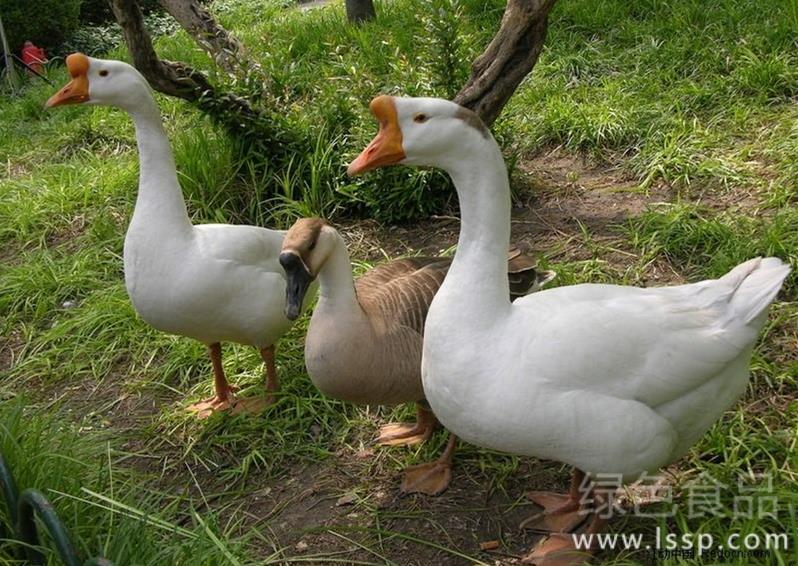
Geese
The herding personnel should be fixed and should not be changed casually. Before grazing, observe the goose flock; sick geese, weak geese, and listless geese should be left behind. When driving them out to graze, count the geese clearly. Grazing should be stopped on cloudy days. Pay attention to the weather forecast at ordinary times to prevent the goose flock from being exposed to the scorching sun and from being blown by wind and drenched by rain.
During grazing, observe the geese's movements, and wait until most of the geese have eaten their fill before letting them go into the water for activity. After a period, drive them onto the bank to rest in place. When most of the goslings become restless because of hunger, continue grazing again. Repeat this process. As the days of age increase, first let the goslings graze until they are full, and later strive for them to eat several full meals a day. When the goslings are resting in place, drive them at regular intervals so they do not sleep and catch cold. When returning to the brooder house, count the geese, and promptly supplement feed for goslings that have not eaten their fill.
2. Key points for grazing medium geese. Medium geese refer to geese from over 1 month of age until selection for breeding or transfer to fattening. During the growing period of medium geese, the capacity of the digestive tract increases, and digestive ability, resistance, and adaptability to the external environment are enhanced. They can consume large amounts of green feed. Grazing at this time can make full use of grassland and leftover grain and grain ears in the fields. Less supplementary feeding is needed, but medium geese may still grow relatively well.
For raising medium geese, grazing is the main method and supplementary feeding is secondary. Grazing medium geese requires a sufficient amount of green feed. Grazing sites include crop stubble fields or grassland, so that the geese can eat cereal-type concentrated feed while grazing to prevent insufficient energy. Grazing time should be extended as much as possible; the principle is to go out early and return late. When the temperature is relatively high, go out early and return early in the morning, and go out late and return late in the afternoon. On cloudy days and when sunlight is strong, excessive grazing is not suitable, to prevent the goose flock from being exposed to the sun and drenched by rain. Swimming can increase the geese's exercise, promote metabolism, strengthen their physique, improve the waterproof and moisture-resistant ability of goose feathers, improve feather glossiness, and prevent fleas and skin diseases. Therefore, there should be a good water source near where the geese are herded.
During grazing, count the geese clearly, and observe the geese's feeding and health status. If weak or sick geese are found, they should be raised in isolation and treated promptly. Before the goose flock enters the house, let the geese wash off the mud on their bodies in water, rest and receive supplementary feed outside the house, and only then drive them into the house. In hot summer, the goose flock may be allowed to spend the night outside the house.
3. Precautions for goose grazing. First, during grazing, if an infectious disease occurs among goose flocks in neighboring areas or upstream or among scattered goose-raising households, the goose flock should immediately be moved to a safe location. Second, do not drive the goose flock to release water in ditches that discharge industrial wastewater. For grassland, orchards, and farmland that have been sprayed with pesticides or fertilized with chemical fertilizers, graze only after 10-15 days. If green feed sprayed with organic phosphorus is accidentally eaten and poisoning occurs, use atropine immediately for rescue. Third, regular deworming should be carried out, because grazing makes them more susceptible to infection by some worm eggs. It is recommended that breeding geese be dewormed once each in spring and autumn every year, and commercial geese be dewormed once every 1-2 months.