The quality of brooding affects production efficiency; how to reduce chick mortality
Chicks have a poor ability to adapt to the environment in their early stage, and whether brooding succeeds directly affects production efficiency. In brooding management, besides vaccination and controlling infectious diseases, measures such as keeping warm, feeding at the right time, and strict disinfection should also be taken to reduce chick mortality.
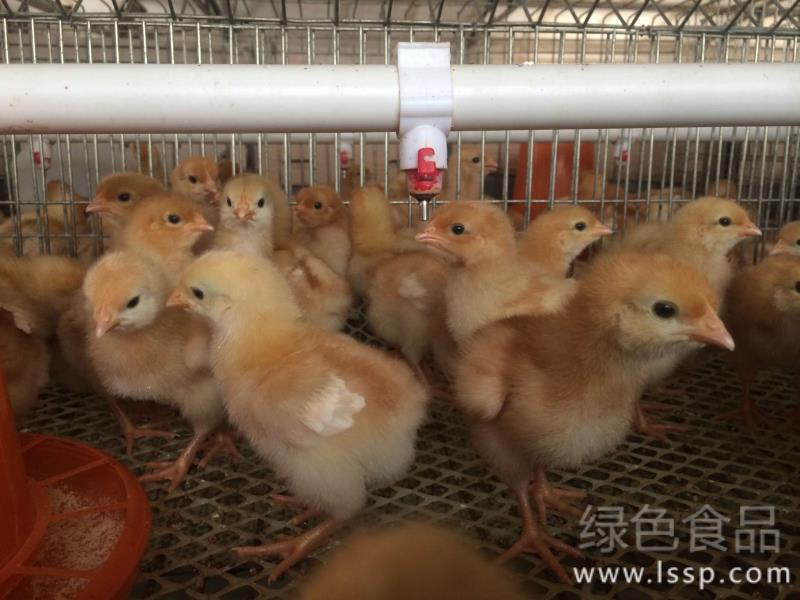
Chicks
1. Control the brooding temperature: if the temperature is too high, chicks easily die of heatstroke; if too low, they easily die from being crushed together. Generally speaking, before the chicks arrive, the temperature in the brooding room at 1 m above the ground should reach 33-35°C; after 3 days, 31-32°C; then reduce by 2-3°C per week until reaching natural temperature.
2. Provide water in time and feed at the right time: hatching generally takes 48 hours from the first chick breaking the shell to all chicks hatching; adding vaccination, loading and transport, some chicks take more than 72 hours to hatch. At this point the chicks are severely dehydrated, so before the chicks arrive, prepare enough drinkers filled with cooled boiled water and train the chicks by hand to drink. Let them rest for 4-5 hours before feeding, and combine this with 24-hour lighting within the first 2 days of age so the chicks regain strength as early as possible and ensure nutrient intake.
3. Strict disinfection to prevent omphalitis: omphalitis, also known as yolk sac infection, is the most common disease causing chick deaths. Poor closure of the chick's umbilical opening and infection by Escherichia coli, Salmonella and others are the main causes of this disease. Infected chicks have a moist, inflamed umbilicus, a distended abdomen and a foul odor, and most die from toxemia. Because chick omphalitis is mostly infected during the incubation period, incubating equipment and hatching eggs must be thoroughly disinfected. Hatching eggs can be disinfected by fumigation with formaldehyde and potassium permanganate; incubators should be disinfected using a combination of thorough cleaning, spray disinfection and fumigation with formaldehyde and potassium permanganate.
4. Control pullorum disease: because the pullorum bacteria in most breeder farms have not been completely eliminated, pullorum disease has become the primary bacterial disease causing chick deaths. Pullorum disease is caused by vertical infection from breeder chickens at the hatchery and occurs at a high rate in chicks within 7 days of age, so drugs such as gentamicin, kanamycin, ofloxacin and enrofloxacin can be used in drinking water or mixed into feed for prevention.
5. Reduce deaths caused by improper management. Feather pecking easily occurs in chicks at 3-5 weeks of age; as age increases, density rises, and together with poor ventilation and excessively strong ammonia, it causes feather pecking in chicks. To prevent feather pecking, ventilation must be strengthened and density reduced. Generally, stocking density is divided into two parts: first, the size of the trough space occupied by each chicken; second, the number of chickens accommodated per square meter of chicken house. The former affects feed intake, the latter affects air. Stocking density depends on the rearing method: for floor rearing, density should be smaller; for rearing on wire netting, density can be larger. In addition, during the brooding period, a single-type feed can cause vitamin deficiency. This is mainly deficiency of vitamins A, B2, E and K, so a complete formula feed must be prepared according to the nutritional standards for chicks. Furthermore, chicks within 7 days of age have relatively high maternal antibodies and generally no malignant infectious diseases; after 7 days of age, improper management can easily lead to mass deaths of chicks from infectious diseases.