Mountain free-range native chickens: low investment, high sale price, how to raise them?
In hilly, low-mountain and grassy slope areas with a good ecological environment, raising native chickens mainly by grazing, supplemented with supplementary feeding, requires low investment and commands a high sale price. It meets the requirements for green, pollution-free food and is highly favored.
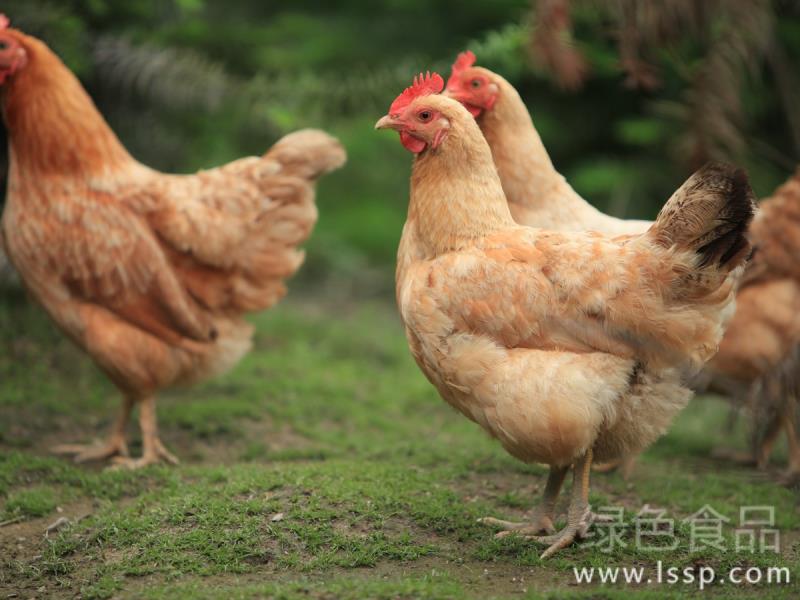
Native chicken
I. Mountain site selection
Choose a pollution-free site far from residential areas, industrial and mining areas and main roads, with a secluded environment and clean air, preferably mountain forest land with shrub thickets, thorny thickets and broad-leaved forests, and with a slope that is not too steep, for raising native chickens in hills and mountains.
II. Building shelters
In the free-range area, find a sheltered, sunny flat spot and use moso bamboo, tree bark, color steel, tar paper, canvas, etc. to build a simple chicken coop facing south with its back to the north by making use of the terrain. A plastic greenhouse can also be built. The shelter only needs to keep warm, block wind, keep out rain and not accumulate water.
III. Free-range scale
The seasonal free-range scale is best at 500——1000 birds per flock. Too large a scale is inconvenient to manage, while too small a scale yields low benefits. About 100 birds per mu of mountain land is suitable, and an “all-in, all-out system” should be adopted at marketing. The free-range density should be determined by the conditions of the mountain forest land. Where there are many shrubs and abundant grass, the raising density of native chickens can be appropriately increased.
The suitable season for free-range raising is from late spring to mid-autumn. At other times, because temperatures are low and insects and grass decrease, free-range raising should be stopped.
IV. Free-range methods
For native chicken breeds, Sanhuang chicken, native silkie, Jiuyuan black chicken and Daheng series meat chickens can be selected. Before 3—4 weeks of age, brooding is the same as for ordinary chicks: choose a room with good insulation for brooding, and after they are off heat, transfer them to mountain forest land for free-range raising. To help the chicks develop the habit of foraging on their own as early as possible, guide-training for the chicks to go up the mountain should be carried out every morning. Generally, 2 people work together: 1 person walks in front blowing a whistle to clear the way and scatters pelleted feed so the chickens follow and scramble for it, while the other person stays behind and drives them with a bamboo pole until all have gone up the mountain. To strengthen the effect, supplementary feeding can be given once at noon on the mountain with a whistle, and at the same time the keeper should persist in promptly driving away from the shelter any native chickens that return early, and control the range of activity of the flock, until in the evening the same method is used for return-to-shelter training. After about a week, the flock can establish the conditioned reflex of “whistle—feeding,” and afterward they will come whenever the whistle is blown.
V. Free-range management
During the first few days of free-range raising, to prevent stress, an appropriate amount of electrolyte multivitamins or compound vitamins can be added to the feed or drinking water. To ensure the quality and safety of native chickens, antibiotics and deworming drugs are prohibited 1 month before sale.