How to prevent and treat weight loss, exhaustion, paralysis and death caused by true abomasitis in dairy cows?
True abomasitis in dairy cows is one of the more common diseases of the gastrointestinal tract in dairy cows. It can occur in all four seasons, but is most common in spring and autumn. If treatment is not timely or is delayed, it will affect the health of the dairy cow. If it does not heal over a long period, the animal's body will become emaciated and exhausted, and it may even die of paralysis.
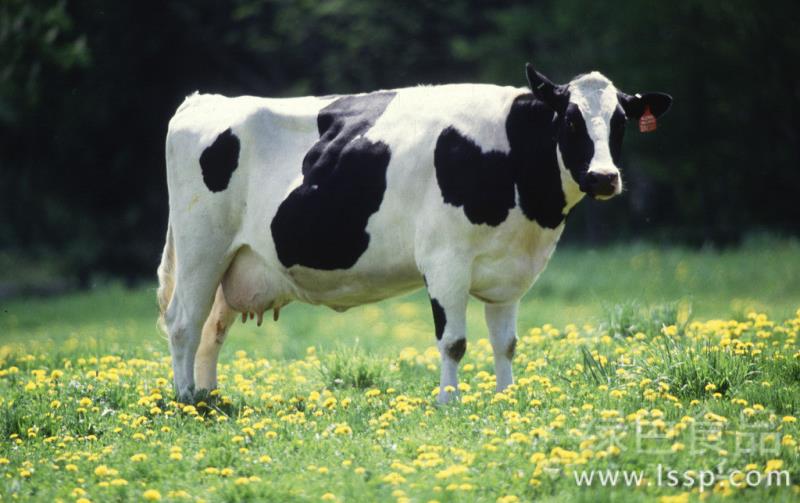
Dairy cow
Early symptoms: The dairy cow is slightly depressed, has reduced appetite, reduced rumination, shows no interest in concentrate feed, often leaves feed uneaten, and also has reduced thirst. As time goes on, the sick cow becomes depressed, the muzzle is dry, and the eyeballs are sunken. The coat is rough, disordered and lusterless, skin elasticity is reduced, and there is obvious emaciation. The visible mucous membranes are pink, the heart sounds are hyperdynamic and rapid, and the rhythm is irregular. Sometimes there is teeth grinding, drooling, reduced thirst, refusal to eat or hiding from feed, and reduced rumination frequency. The amount of feces passed is small and dry and hard; the feces are smooth with mucus, and the grass in them is coarse and long. Sometimes the dairy cow has diarrhea, and when the abomasal area is pressed or after pressing, the cow shows a pain response.
For treatment, use a traditional Chinese medicine formula, one dose per day, for 3-5 consecutive days. Formula: Atractylodes lancea 20 g, Cyperus rotundus 15 g, licorice 15 g, dried tangerine peel 30 g, Magnolia officinalis 20 g, dandelion 50 g, Viola mandshurica 50 g, honeysuckle 40 g, Forsythia suspensa 40 g, Curcuma aromatica 20 g, bitter orange 25 g, and refined salt 50 g.
Strengthen the heart and supplement fluids, correct acidosis and detoxify; the amount of fluid supplemented should be determined according to the degree of dehydration and acidosis in the dairy cow. Generally, the daily fluid supplementation volume is 1-5 liters. While supplementing fluids, combine with antibiotic treatment; when necessary, inject streptomycin, ciprofloxacin, etc. into the omasum.
For true abomasitis in dairy cows, prevention should be the main focus. Strengthen the feeding and management of dairy cows, ensure a reasonable feed mix, prohibit feeding moldy or poor-quality feed, and enhance the disease resistance of dairy cows. When dairy cows develop diseases of the forestomach, uterus, etc., attention should be paid to preventing secondary true abomasitis, and once it is found, it should be treated promptly.
To treat secondary true abomasitis in dairy cows, the primary disease should be treated promptly; otherwise, the cure rate of true abomasitis will be reduced. Early detection and early treatment can improve the cure rate.