Squabs not fattened have low grade price differences; how to fatten them quickly and rationally?
Some meat pigeon farmers do not pay attention to squab fattening, resulting in poor squab grades, low selling prices, no market competitiveness, and reduced pigeon farming income. In response to this situation, the editor below introduces several methods for quickly fattening and increasing the weight of squabs.
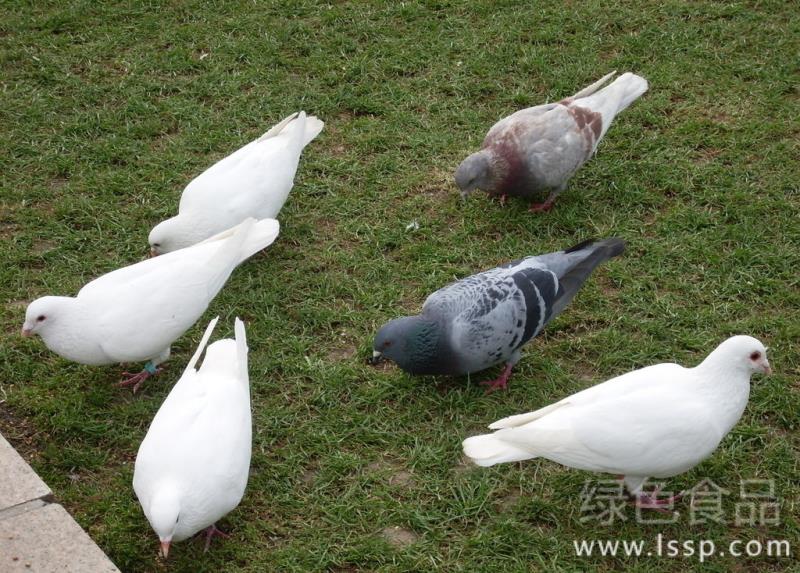
Pigeon
I. Feed the parent pigeons well
From hatching to more than 20 days of age, squabs depend entirely on the care and feeding of their parent pigeons to grow and develop. If you want squabs to grow well, the parent pigeons need good nutrition. During the period of feeding squabs, first, provide the parent pigeons with high-quality feed that is nutritionally complete and of moderate pellet size. Legume protein feeds such as peas, adzuki beans, and mung beans should account for 35%-40% of the pigeon feed. In addition, supplement 3% hemp seed or rapeseed, because they can improve squab skin color and weight gain. Add health sand once a day, keep clean drinking water available at all times, and give the parent pigeons quick supplement 14 or cod liver oil once every 3-5 days. Second, feed pigeons with squabs 4-5 times a day, with a daily feeding amount of 125-200 grams per pair of pigeons, feeding them well and sufficiently to ensure nutritional supply. Third, observe how the parent pigeons feed their squabs. If the parent pigeons are not feeding the squabs effectively or the individuals in the same nest differ greatly in size, promptly adjust and merge them, that is, adopt the method of merging large with large and small with small, so that the squabs develop evenly and to prevent "uneven feeding" from causing a low commercial rate of squabs. Adjustment and merging are generally carried out at 7-10 days of age.
II. Artificial tube feeding for fattening
This is a main measure for concentrated artificial tube feeding and fattening of squabs in the later growth stage and for increasing the reproduction rate of breeding pigeons. (1) Fattening targets: 15-17 days of age, individual weight above 350 grams. (2) Fattening feed: Formula 1: corn meal 57%, soybean meal 25%, fish meal 5%, flour 5%, bone meal 2.6%, yeast powder 2%, salt 0.3%, 1% poultry trace element additive, poultry compound enzyme 0.1%, vegetable oil 1%, poultry multivitamins (add according to instructions). Formula 2: complete feed for broiler chicks 95%, flour 5%. (3) Feeding method: first weigh out the required feed, add hot water at a feed-to-water ratio of 1:3, mix the feed into a paste, and after 30-60 minutes, use a tube feeder to press the feed paste through the squab's esophagus into the crop. When tube feeding, move quickly and gently. Feed 50-100 grams per bird, 4 times a day. After feeding, dim the light in the fattening house to make it easier for the squabs to rest and gain fat. Generally, after 7-10 days of fattening, squab weight gain increases by 7-12% compared with natural feeding. The tube feeder can be a poultry tube feeder or made from a soft plastic bottle.
III. Supplementary feeding of nutritional pills:
Squabs gain more than 20 grams per day, grow quickly, and have high nutritional requirements. To prevent malnutrition in squabs during rapid fattening, nutritional pills can be fed supplementarily to squabs. For squabs over 0 days of age, feed once each morning and evening, 2-3 pills each time, for 10-15 consecutive days, and squabs gain 100-150 grams. The nutritional pills are made by mixing 50 grams of light fish meal, 50 grams of milk powder, 50 grams of meat and bone meal, 50 grams of growth hormone, 2 grams of multivitamins, 100 grams of health sand, and 250 grams of corn meal, etc., prepared with honey, rolled into granules the size of corn kernels, dried, bottled, and set aside for use.
Squab
IV. Skillfully plucking pigeon feathers
At 2-3 weeks, squabs grow feathers very quickly and consume a lot of energy, and squabs tend to become thin. At this time, if 3-5 each of the squab's primary wing feathers and tail feathers are plucked, nutrient loss can be reduced, and squab muscle growth can be stimulated and enhanced. After feather plucking, the muscles of the rear body and both wings of the squab become enlarged, and weight can increase by about 10%.
V. Sell in time:
Squabs are a specific commodity with strong timing. Generally, at 22-28 days of age, when individual weight is about 600 grams, they can be sold or slaughtered in time, which can ensure squab quality and flavor. At this time, squabs are highly nutritious and strongly nourishing, with fine meat, tender bones, and good fatness, and the returns are also the best.