What to do after orchids bloom? A detailed guide to flower stem pruning
Potted plants are different from those grown in the ground. For example, some gardening friends ask what to do after orchids bloom. If an orchid is grown in the ground, it does not matter much if you do nothing, but for potted orchids, in order not to waste nutrients, we need to promptly cut off the faded flowers, and we also need to replenish fertilizer in time...
Potted plants are different from those grown in the ground. For example, some gardening friends ask what to do after orchids bloom. If an orchid is grown in the ground, it does not matter much if you do nothing, but for potted orchids, in order not to waste nutrients, we need to promptly cut off the faded flowers, and we also need to replenish fertilizer in time. The orchids of the vast majority of gardening friends can bloom, and the post-bloom handling methods mainly consist of two parts: one is cutting off the faded flowers, and the other is fertilizing in time.
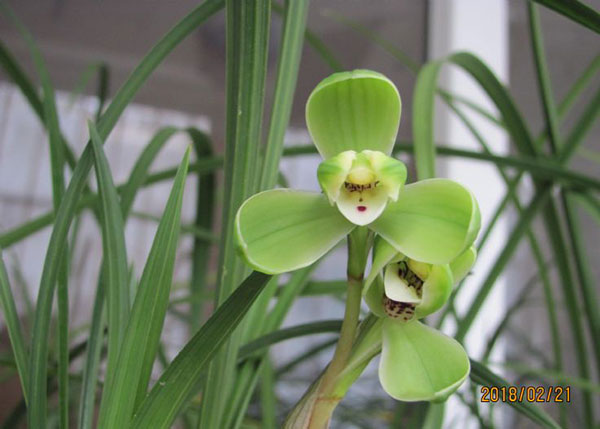
1. Cutting off faded flowers
It is not mandatory to cut off orchid flowers; rather, cut according to the actual situation. For example, if it is an ordinary grass orchid, since there are no particular expectations for it, you can let it wither naturally, and if you have the energy, you can also cut off the faded flowers. For some precious orchids, because we often have higher expectations for them, when the orchid begins to fade, in order to avoid it sending too many nutrients to the later faded flowers, we cut off the flowers in advance.
As for how the orchid should have its flowers cut off, cutting them at about 6 cm above the pot surface is enough.
2. Care after blooming
After an orchid blooms, we do not need to water too much; keeping the potting soil moist but not wet is enough, and if there are consecutive rainy days, there is no need to water. At this time we can begin periodic fertilization, generally using a nitrogen-phosphorus-potassium compound fertilizer type, as this helps the orchid produce more side shoots.
It should be noted that orchids themselves do not have a very large demand for fertilizer, and they are prone to fertilizer damage from accumulated fertilizer, root burn from too large a fertilizer amount, and other situations, so if fertilizing, it must be with dilute fertilizer, and fertilization must be reasonably arranged according to the fertility of your own growing medium. Do not fertilize blindly.
In addition, after an orchid blooms, if the temperature is between 10°C and 15°C, division and repotting can be carried out!