What are the methods for preventing and controlling lily pests and diseases?
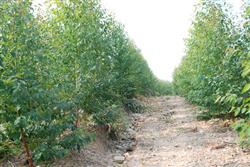
Planted for just over a year, the eucalyptus grew to 15 m, increasing by more than 1 m per month on average! This is the eucalyptus growth rate achieved by Zhang Quanhai, a forest farmer in Min'an Town, Fogang County. Zhang Quanhai revealed that scientific planting management and the rational application of compound fertilizer and calcium-magnesium fertilizer are the secret to the rapid growth of his eucalyptus. Being both a fertilizer dealer and a wood...
 There are many types of lily pests and diseases, but the main ones affecting the lily harvest are lily fusarium wilt, gray mold, leaf blight, viral disease, root rot, aphids, cutworms, mole crickets, and so on, among which the most serious damage and losses are caused by lily fusarium wilt and lily gray mold.
Principles of pest and disease control: prevention first, integrated control. The greatest threats to lily production are lily fusarium wilt and gray mold. Especially for lily fusarium wilt, prevention work must be done well starting from links such as crop rotation, seed selection, and disinfection, with agricultural control as the main approach. When lily fusarium wilt first begins to show symptoms, if the appropriate pesticide is used immediately for control, the control effect is only 70-80%. In addition, when it occurs and causes damage, it is exactly the rainy season of April-May, which is also unfavorable for chemical control, so doing prevention work well is extremely important in pollution-free cultivation techniques. At the same time, highly effective, low-toxicity, and low-residue pesticides should also be selected, and they must be used in strict accordance with the pesticide safety interval.
1. Fusarium wilt
It is a fungal soilborne disease caused by infection with Fusarium oxysporum and Fusarium solani, with Fusarium oxysporum having the highest isolation frequency and pathogenicity, and it is the main pathogen.
The process of fusarium wilt occurrence is as follows: initially the lower leaves turn yellow, the stem tip turns light purple, and bends slightly; next, the lower leaves of the diseased plant turn yellow or one quarter to one half wither; then more than half of the leaves of the diseased plant wither, and the upper part of the stem bends severely; finally the whole plant shows symptoms, the entire plant dies, and the basal plate of the bulb turns brown and rots.
Control method: When lily fusarium wilt just begins to show symptoms, immediately use 5 g of Lüheng No. 1 mixed with 10-15 kg of water, or a 300-fold solution of 5% JunDuQing liquid, or a 400-fold solution of 50% metalaxyl-copper wettable powder, or a 500-fold solution of 60% Baijuntong wettable powder, and in each case pour 200-250 mL of the medicinal solution per plant; it should not be too little, nor too much. Continue pouring once every 5-7 days, and continue pouring 2-4 times depending on the severity of the disease.
2. Gray mold
It is a common disease in lily cultivation and production. It mainly harms leaves and also infects stems, flowers, and so on. Initially, round or oval lesions of varying sizes appear on the leaves, reddish-brown around the edge and grayish-white inside. On the affected parts (surface), the pathogen densely produces a gray mold layer, which spreads through wind, rain, and airflow. It generally begins to occur in April-May, and spreads rapidly and causes damage when encountering hot and humid weather. Suitable environmental conditions for pathogen growth: it prefers moisture, with a temperature of 20-25°C, and the pathogen overwinters in the damaged parts.
Control method: You may choose Bordeaux mixture at 1:1:100, or spray with a 1000-fold solution of 86.2% Copper Master or 53.8% Kocide, once every 7-10 days, spraying continuously 2-3 times. The pesticides should be used alternately, and spraying should be uniform and thorough.
3. Leaf blight
It is also a common disease in lily cultivation. The initial symptom of the disease is the appearance of small reddish-brown spots on the leaves; afterward the spots develop and connect into an oval shape, the center of the lesion turns yellowish-brown, and in severe cases it spreads to the entire leaf. The necrotic parts can form a yellow halo when the weather is humid. The lesions on old leaves of Longya lily sometimes show yellow markings.
Control method: At the early stage of disease onset, spray Bordeaux mixture at 1:1:100, or a 600-fold solution of 65% zineb, or an 800-fold solution of 50% carbendazim.
4. Viral disease
Symptoms appearing on leaves are the most common. Generally, the leaves become smaller and slanted, irregular round markings of varying sizes appear on the upper surface of the leaves, and the leaves grow densely; the diseased plants are obviously stunted, the flower buds are deformed, and the color becomes lighter. In severely affected plants, the bulbs become smaller.
Control method: Spray pesticides to eliminate aphids. Per mu, use 10-20 g of Gaoxinglong Dagongchen, or 10-20 g of Yashitongsha, or 20 g of Yibianjing, or 20-30 g of PushiYa mixed with 40 kg of water for uniform spraying.
5. Root rot
It initially manifests as the death of the lower leaves of the plant, and then develops upward, causing the death of the upper leaves and even the stems. The symptoms are light brown roots, partial root rot, and in severe cases the entire bulb rots. After the bulb rots, it causes the stem and roots to rot.
Control method: At the early stage of disease onset, use a 200-fold solution of 50% amobam or a 500-fold solution of 70% chlorothalonil to irrigate the roots, pouring 200 L of solution per plant, and repeat irrigation 2-3 times every 7-10 days.
6. Aphids
They mainly harm the tender leaves and stems of lilies. Especially when the leaves unfold, aphids parasitize on the leaves and suck the sap, causing lily plants to become stunted, grow poorly, and have deformed flower buds; at the same time, they also transmit viruses, causing the plants to become diseased.
The control method is the same as for viral disease.
7. Other pests and diseases
Mainly cutworms and mole crickets gnawing on seedlings (stems), and ants, earthworms, nematodes, and so on harming the underground bulbs and basal plates, causing root rot and dead seedlings.
Control methods: (1) Before planting, broadcast 30-50 kg of quicklime per mu in the planting furrows (holes). (2) Before planting, weeds must be cleared, and farmyard manure must be fully decomposed before use. (3) Place tea seed cake or a small amount of tung seed cake at the roots of the seed bulbs. (4) Use a 500-600-fold solution of dichlorvos to irrigate the roots to control mole crickets and cutworms.