Detailed Explanation of Cucumber and Lily Rotation Cultivation Techniques
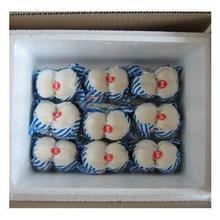
(1) Selecting storage-tolerant varieties. China is the country of origin of lilies, and there are many types and varieties under cultivation. The main ones are Longya lily, Chuan lily and lancifolium lily and other variants. Among them, the Chuan lily, which is white, flat-spherical, tightly closed, large and sweet, has good quality and is storage-tolerant. Lilies are generally harvested in early November, and the bulbs are mostly dug out with a shovel...
 1. Time Schedule
In mid-to-late June, the lily bulbs are given low-temperature treatment. They are planted in August, flower production begins in December (cucumber seedlings are raised at the same time), and harvesting is completed in January; the land is prepared at the end of January for cucumber planting. Cucumber seeds are sown and seedlings raised in late December, planted at the end of January or early February, the first cucumbers are harvested in March, and harvesting is completed in May to June. The land is then prepared for planting the next crop of lilies.
2. Cultivation Techniques
With the goal of marketing lilies around New Year's Day and Spring Festival, the planting time is early to mid-August. Before planting, apply 400 kg of organic fertilizer, 100 kg of cake fertilizer and 30 kg of diammonium phosphate per mu. After deep ploughing, make flat beds 1 m wide with 40 cm wide furrows. The planting density is 25-30 cm between rows and 7 cm between plants, with the depth depending on the size of the bulb; generally the distance from the top of the bulb to the ground surface is 6-8 cm.
After the lilies are harvested at the end of January, fertilizer is applied immediately and the land is prepared for cucumber planting. Apply 4000 kg of high-quality organic fertilizer, 250 kg of cake fertilizer and 50-70 kg of diammonium phosphate per mu. After mixing evenly with the soil, make raised beds for cultivation, with beds 65 cm wide and 10 cm high, and 45 cm between beds. Plant 2 rows per bed, with 30 cm between plants.
Irrigate before planting lilies, do not water within 10 days after planting, and keep the soil moist during the growing period. Topdressing begins 1 week after the shoots emerge. Two topdressing solutions can be used alternately: 100 liters of water containing 375 g of ammonium sulfate and ammonium carbonate, and 100 liters of water containing 250 g of potassium sulfate, until the flower buds are 1-2 cm long. In the later stage, fertilization is mainly based on monopotassium phosphate, and nitrogen fertilizer should not be excessive.
With the goal of marketing cucumbers from April to June, water once after cucumber planting and keep the greenhouse closed for 5-6 days to raise the air temperature and thereby promote an increase in soil temperature. After the seedlings have recovered, control the daytime temperature at 25-27°C and the nighttime temperature at 12-15°C to promote cucumber root growth and coordinate the relationship between vegetative growth and reproductive growth. When the first fruit reaches 10-12 cm, begin the first fertilization and watering; the amount of water should be small to avoid excessive vegetative growth of the plants, and also to prevent the area from becoming too large and the field from closing in too early, which would slow fruit setting in the middle and upper parts or even cause fruit abortion. After the first fruit has formed and the 2nd and 3rd fruits are developing normally, appropriately raise the temperature to 28-30°C during the day and 16-18°C at night, and appropriately increase fertilizer and water.
In lily cultivation, when the flower buds have elongated to 1-2 cm, if they encounter low-temperature and low-light weather, bud abortion is very likely to occur. Bud abortion usually occurs from the end of October to March of the following year. In November, supplementary lighting is necessary; the method is simply to hang one 100-watt incandescent lamp per square meter.
3. Disease Control
Common lily diseases include: lily viral disease and lily bacterial soft rot; common cucumber diseases include: damping-off, downy mildew, powdery mildew and bacterial angular leaf spot. Attention should be paid to their control.