Detailed Explanation of Key Points on Aloe Pests and Control Techniques
The main pests of aloe are red spider mites, aphids, cotton bollworms, and scale insects. These pests mainly damage aloe seedlings or tender leaves, and their occurrence is not heavy. 1. Red spider mites, aphids. They mainly occur in spring, summer, and autumn. (1) Physical control. When the number of pests is not large, they can be washed off with a spray of clean water, or killed by pinching them with your hands...
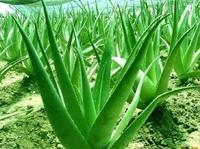
The main pests of aloe are red spider mites, aphids, cotton bollworms, and scale insects. These pests mainly damage aloe seedlings or tender leaves, and their occurrence is not heavy.
1. Red spider mites, aphids.
They mainly occur in spring, summer, and autumn.
(1) Physical control.
When the number of pests is not large, they can be washed off with a spray of clean water, or killed by pinching them with your hands.
(2) Chemical control.
Spray with a 2000-fold dilution of 40% dimethoate, once every 3 to 4 days, and several consecutive sprays may be applied.
2. Cotton bollworm.
It is currently the most dangerous pest occurring on aloe, causing severe damage. Cotton bollworms mainly bite and feed on tender leaves and flowers, causing incomplete leaves and flower drop.
(1) Morphological characteristics.
The adult is 14 to 20 mm long, with variable body color, including yellow-brown, gray-yellow, gray-brown, and reddish-brown. The antennae are filiform; the forewings are mostly dark yellow, with 7 black dots arranged along the outer margin between the wing veins; the hindwings are pale yellow, with a diagonal stripe at the end of the discal cell, and the part near the outer margin is tea-brown, containing a gray crescent-shaped spot.
The egg is hemispherical and glossy, milky white when first laid, gradually turning pale green, with a reticulate surface.
The mature larva is 40 to 45 mm long, reddish-brown or blackish-brown, with a pair of blackish-brown pincer-shaped spines at the posterior end.
(2) Occurrence pattern.
In South China, this pest has 6 to 7 generations per year, with severe overlapping of generations, and it overwinters as pupae in the soil. Adults come out at night to mate and lay eggs; the eggs are mostly laid on tender shoots and tender leaves, with an egg stage of 3 to 7 days. Adults have a strong taxis toward light and wilted poplar trees. Damage is generally severe from July to September. When the larvae are mature, they spin silk and hang down, enter the soil to make cocoons and pupate, at a depth of 2.5 to 6 cm. Completing one generation generally takes 35 to 45 days.
(3) Control methods.
① Use black light lamps or poplar groves to trap and kill adults.
② Do a good job of unified coordination with other plants around the planting area (such as cotton and corn).
③ Chemical control. At the early larval hatching stage, choose either a 1000-fold dilution of 50% fenitrothion emulsifiable concentrate, or a 2000-fold dilution of 50% phoxim emulsifiable concentrate, etc., for spray control.
3. Scale insects.
They mainly occur on soap aloe, and occur less on other aloes. Scale insects often attach as larvae to the underside of leaves, and sometimes also on the upper surface of leaves. After the larvae choose a place to settle, they begin to lie still and form a shell to become adults, and they suck leaf sap for a long time in one place, while excreting large amounts of honeydew that contaminates the leaves, leading to the occurrence of sooty mold.
The characteristics of scale insects are rapid reproduction, and the adults are covered with a shell, making them not easy to kill by contact with chemicals.
The control methods are as follows:
(1) If there are relatively few affected leaves, they can be killed by manually removing and pinching them to death.
(2) When the infestation is severe, an 800-fold dilution of 80% dichlorvos emulsifiable concentrate can be used, applied with a writing brush dipped in the solution to the scale insects. Note that the interval between the last application and harvest should be no less than 5 days.